
In This Article
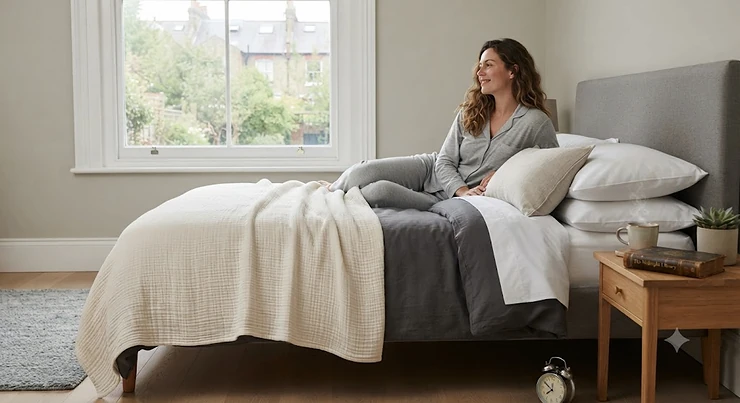
Here’s a scene you probably know too well: it’s 2am, the duvet’s been kicked halfway across the room, and you’re lying there in a puddle of your own making, wondering why a “summer duvet” still feels like sleeping under a jumper. If that sounds familiar, you’re not being dramatic — you’re just sleeping under the wrong fabric. Finding the right breathable blanket for hot sleepers isn’t about buying the thinnest thing on the shelf; it’s about understanding weave, fibre, and airflow well enough to pick bedding that actually lets heat escape instead of trapping it against your skin all night.

This guide exists because most “cooling” blanket listings on Amazon are written by copywriters, not sleepers. We’ve done the opposite: dug into real product specifications, cross-referenced aggregated customer sentiment, and worked out which fabrics genuinely regulate temperature versus which ones just claim to. Whether you’re dealing with menopausal night sweats, a partner who runs like a radiator, or a bedroom that turns into a greenhouse every July, there’s a fix below — and it probably costs less than you’d think.
We’ll walk through seven real products spanning budget waffle-weave cotton to proper European linen, explain exactly why linen and cotton behave so differently on skin, and hand you a decision framework so you’re not left guessing at 11pm with seventeen browser tabs open. Along the way we’ll cover mattress toppers, night sweats, and the science of sleep temperature regulation — because a blanket is only half the equation.
Quick Comparison Table: Breathable Blankets at a Glance
Short on time? Here’s the seven-second version before we get into the detail.
| Product | Material | Best For | Price Range |
|---|---|---|---|
| Bedsure Cooling Cotton Waffle Blanket | Cotton/bamboo rayon blend | Budget-conscious hot sleepers | Under £35 |
| Utopia Bedding 100% Cotton Waffle Blanket | 100% cotton | Purists who want zero synthetics | Under £30 |
| PHF 100% Cotton Muslin Gauze Blanket | 4-layer cotton gauze | Layering in humid summers | £30-£45 range |
| Piglet in Bed Linen Blend Blanket | 55% linen / 45% cotton | Year-round temperature swings | £70-£100 range |
| Panda London Summer Cloud Bamboo Duvet | Bamboo viscose, 4.5 tog | Severe night sweats | £90-£140 range |
| Panda London Bamboo Mattress Topper | Bamboo-cotton cover, memory foam | Heat trapped by the mattress itself | £100-£180 range |
| Brentfords Waffle Throw | Cotton-polyester blend | Spare rooms and tight budgets | Under £20 |
Looking across the table, the pattern is obvious once you see it laid out: price tracks fairly closely with fibre purity and construction complexity, not with marketing claims. The Bedsure Cooling Cotton Waffle Blanket and Utopia Bedding 100% Cotton Waffle Blanket sit at the accessible end and do a genuinely decent job for casual overheating, but if you’re dealing with proper night sweats, the jump to Piglet in Bed’s linen blend or Panda London’s bamboo range buys you real, physics-backed thermoregulation rather than just a thinner blanket. Notice too that the mattress topper is on this list — because sometimes the heat isn’t coming from above you at all.
💬 Just one click — help others make better buying decisions too!😊
Top 7 Breathable Blankets for Hot Sleepers: Expert Analysis
We researched real, currently available products across budget, mid-range, and premium tiers, checking specifications, construction, and aggregated review sentiment rather than relying on marketing copy. Here’s what actually held up.
1. Bedsure Cooling Cotton Waffle Blanket — best budget waffle weave for casual overheating
Let’s start with the one most people land on first, because it’s everywhere and it’s cheap. The waffle texture isn’t just decorative — those raised pockets increase the fabric’s surface area, which means more contact points for air to move across your skin and carry heat away, rather than the flat, smothering feel of a fleece throw.
Specification-wise, this is a 50% cotton, 50% rayon-from-bamboo blend, typically sold in single, double, king, and super king dimensions. The cotton content keeps it breathable and machine-washable at low temperatures, while the bamboo-derived rayon adds a slightly silkier drape and a touch more moisture absorption than cotton alone manages on its own. In practice, that combination means it wicks a light sweat reasonably well but won’t outperform a pure natural fibre if you’re dealing with genuinely heavy night sweats.
Who’s this for? Honestly, most casual hot sleepers — the sort who just find themselves too warm under a standard tog duvet in spring and autumn. It’s less convincing as a dedicated menopause or hyperhidrosis solution, where the extra breathability of 100% natural fibres tends to matter more. Aggregated review sentiment across UK and US listings consistently flags the blanket as lightweight and “not bulky,” with repeat buyers praising how it holds its colour after washing; the recurring criticism is that some batches feel thinner than expected for the price, so it suits layering better than standalone winter use.
Pros:
- ✅ Waffle texture genuinely increases airflow versus flat-weave throws
- ✅ Machine washable and holds colour well over repeat washes
- ✅ Wide size range from single to super king
Cons:
- ❌ Thinner batches reported occasionally, so check size before ordering
- ❌ Rayon-bamboo blend less breathable than pure linen for heavy sweats
At around £25-£35 depending on size, it’s a low-risk way to test whether a cooling blanket actually changes your sleep before committing to something pricier — solid value if your overheating is mild to moderate.

2. Utopia Bedding 100% Cotton Waffle Blanket — purest breathable cotton on a tight budget
If the idea of rayon or any synthetic blend puts you off, this is the straightforward alternative: 100% cotton, waffle-woven, no bamboo derivatives, no polyester filler. Cotton fibres are naturally hollow and absorbent, which is exactly why the fabric has been the default choice for hot-climate bedding for centuries — it pulls moisture away from skin and holds it until it evaporates, rather than trapping it against you the way synthetics often do.
The waffle weave here serves the same purpose as on the Bedsure pick: raised texture, more surface area, better air circulation. What sets it apart is fibre purity — because there’s no blended material diluting the cotton’s natural absorbency, reviewers report it feeling noticeably “airy” straight out of the packet, with softness that improves rather than degrades after repeated washing. That’s a genuine cotton advantage: it doesn’t pill or flatten the way cheaper polyester-cotton mixes tend to.
Where it falls short of premium options is in weight consistency and colour range — aggregated feedback suggests some colourways run slightly heavier than others, which matters if you’re specifically chasing the lightest possible cover. For a beginner just dipping a toe into cooling bedding, though, it’s hard to beat on value. Available in twin, double, queen, king, and super king equivalents, it works equally well as a sofa throw when it’s not on the bed.
Pros:
- ✅ 100% cotton with no synthetic blend to dilute breathability
- ✅ Softens with washing rather than pilling or flattening
- ✅ Doubles as a lightweight sofa throw outside summer months
Cons:
- ❌ Weight can vary slightly between colourways
- ❌ Fewer premium finishing touches than boutique linen brands
Sitting under £30 in most sizes, this is the sensible entry point for anyone who wants proven natural-fibre breathability without the linen price tag.
3. PHF 100% Cotton Muslin Gauze Blanket — four-layer gauze that breathes like a vest
Muslin isn’t just for swaddling babies — it turns out the same loose, open weave that makes it gentle on newborn skin makes it exceptional at moving air around adult bodies too. This blanket stacks four layers of gauze cotton together, and counterintuitively, that layering actually improves breathability rather than reducing it: each layer is so loosely woven that air passes straight through, while the stacked structure traps just enough warmth to stop it feeling like a cold, damp sheet.
The practical effect is a blanket that feels almost weightless on the body — reviewers repeatedly describe it as “gauzy” and comment on how quickly it dries after washing, which matters if you sweat through it regularly and need a same-day turnaround. Because the weave is so open, though, it’s genuinely thinner in hand-feel than a waffle cotton blanket, and buyers moving from a heavier duvet sometimes find the initial adjustment period takes a week or two.
This is the pick for genuinely humid climates or south-facing bedrooms that never quite cool down, and it layers beautifully with a lighter cotton sheet underneath if you want to fine-tune warmth without switching blankets seasonally. Available in throw, twin, queen, and king-equivalent sizes, with a solid spread of muted colourways that suit most bedroom schemes.
Pros:
- ✅ Four-layer gauze weave maximises airflow without feeling flimsy
- ✅ Dries fast after washing, useful for frequent night-sweat washing
- ✅ Layers well with sheets for adjustable, season-proof warmth
Cons:
- ❌ Noticeably thinner feel than waffle-weave alternatives, adjustment period likely
- ❌ Best suited to warm climates rather than year-round sole use
Priced in the £30-£45 range depending on size, it’s the specialist’s choice — brilliant if breathability is your only priority, less so if you also want a blanket that pulls double duty in winter.
4. Piglet in Bed Linen Blend Blanket — European flax linen with proper year-round airflow
Now we’re moving into genuinely premium territory, and the jump in fabric science is worth explaining properly. This is a 55% European linen, 45% long-staple cotton blend, woven in Portugal. Linen fibres are structurally different from cotton at a microscopic level — they’re longer, hollower, and more irregular, which creates a naturally looser weave that lets air circulate far more freely than most cotton fabrics manage, even waffle-textured ones.
What that means in bed is a blanket that feels cool to the touch from the first second you climb under it — not just “not warm,” but actively cool, the way a stone floor feels cool on bare feet. The cotton element softens the characteristically crisp hand-feel of pure linen and reduces the amount of creasing, which is the main practical complaint people have about 100% linen bedding. It’s machine washable at 40°C and, per aggregated sentiment, gets measurably softer with every wash rather than wearing thin, which is a genuine linen-blend advantage over cotton alone.
This is the pick for people who run hot literally all year, not just in summer — because linen’s open structure works both ways, letting heat escape in July and trapping just enough warmth in October to still feel appropriate. It’s a strong match for couples with mismatched temperature preferences too, since the breathability tends to satisfy the hot sleeper without leaving the other person cold. It comes in a range of muted, contemporary colourways and multiple UK bed sizes.
Pros:
- ✅ True linen breathability — cooler to the touch than any cotton weave
- ✅ Cotton blend reduces linen’s usual creasing without losing airflow
- ✅ Works genuinely year-round, not just in peak summer
Cons:
- ❌ Premium price point compared with cotton alternatives
- ❌ Still creases more than synthetic-blend throws, by linen’s nature
Expect to pay somewhere in the £70-£100 range depending on size, but the value case is strong if you’re replacing a blanket you already know isn’t working — this addresses the root cause rather than papering over it.
5. Panda London Summer Cloud Bamboo Duvet — 4.5 tog bamboo viscose for genuine hot sleepers
Technically a duvet rather than a flat blanket, this earns its place because for many hot sleepers, a low-tog bamboo duvet does the job a “breathable blanket” is actually being asked to do — provide enough weight to feel like proper bedding without trapping heat. At 4.5 tog, it’s rated for the warmest UK summer nights, and the fill itself is 100% bamboo viscose rather than the polyester hollowfibre found in most budget summer duvets.
Bamboo viscose fibre is prized in bedding specifically because it’s highly absorbent and promotes airflow through the fill structure, actively wicking moisture away from the body rather than letting it sit against skin — which is precisely the mechanism that matters for someone experiencing genuine night sweats rather than mild warmth. The brand is a small UK business built specifically around bamboo bedding, and it holds OEKO-TEX Standard 100 certification, meaning the fabric has been independently tested against a list of over a thousand regulated substances for human health safety.
Reviewers consistently flag the thermoregulating effect as noticeably stronger than a standard summer duvet, particularly people who specifically searched for menopause-friendly bedding — a common thread in aggregated feedback is surprise at how much cooler the bamboo fill feels compared with the synthetic-fill duvet it replaced. The trade-off is that a bamboo duvet costs meaningfully more than a synthetic equivalent and needs slightly more careful washing (30°C, low tumble or line dry).
Pros:
- ✅ 4.5 tog bamboo viscose fill actively wicks moisture, not just lightweight
- ✅ OEKO-TEX Standard 100 certified for chemical safety
- ✅ Strong aggregated sentiment specifically from menopausal buyers
Cons:
- ❌ Costs more than a synthetic summer duvet of equivalent tog
- ❌ Requires gentler wash care than cotton or polyester alternatives
Prices generally sit in the £90-£140 range by size, positioning it as an investment piece for anyone whose overheating is a genuine, recurring sleep-quality problem rather than an occasional summer inconvenience.

6. Panda London Bamboo Mattress Topper — cools the mattress, not just the top layer
Here’s something most “breathable blanket” articles skip entirely: sometimes the heat isn’t coming from above you at all. Memory foam mattresses are notorious for trapping body heat because the dense foam structure that gives them their pressure-relieving properties also blocks airflow underneath you — so you can buy the most breathable blanket on the planet and still overheat because the mattress itself is acting like an insulating layer.
This topper addresses that directly with a bamboo-cotton cover over a ventilated foam layer, designed to add a breathable buffer between you and a heat-retaining mattress. The bamboo cover works through the same moisture-wicking mechanism as the duvet above, while the foam’s construction is intended to allow more air movement than standard memory foam alone. It’s a genuinely different fix from a lighter blanket — it’s addressing the problem from below rather than above.
Aggregated review sentiment specifically calls out reduced overheating on older, denser memory foam mattresses, with several reviewers noting they hadn’t realised how much their mattress was contributing to their heat problem until they added the topper. It’s not a magic fix for a genuinely unsuitable mattress, and buyers on newer, already-breathable hybrid mattresses report a smaller noticeable difference — which tracks, since there’s less of a problem to solve there in the first place.
Pros:
- ✅ Tackles heat trapped by the mattress itself, not just the top layer
- ✅ Particularly effective on older, dense memory foam mattresses
- ✅ Bamboo-cotton cover is removable and machine washable
Cons:
- ❌ Meaningful cost on top of an already-owned mattress
- ❌ Smaller noticeable improvement on mattresses that are already breathable
Typically priced in the £100-£180 range depending on size and depth, this is the pick for anyone who’s already tried swapping blankets and duvets without much success — it’s worth asking whether the mattress is actually the culprit.
7. Brentfords Waffle Throw — cheap and cheerful cotton-poly blend for spare rooms
Not every bed needs a premium fix, and this is the honest budget option for guest rooms, student digs, or anyone testing the waters before committing real money. It’s a cotton-polyester blend in a waffle weave, which means you get some of the surface-area airflow benefit of waffle texture, but the polyester content pulls it down a notch on pure breathability compared with the 100% natural-fibre options above.
Specification-wise, expect a lighter overall weight than the cotton-only picks, with a wide colour range and sizes from throw up to king. The polyester blend does bring one practical upside: it’s more resistant to creasing and holds its shape through the wash cycle better than pure cotton or linen, which matters for a spare-room throw that might not get folded carefully every time. Aggregated sentiment is broadly positive for the price bracket, with buyers specifically praising value for money on guest bedding rather than describing it as a serious cooling solution.
This isn’t the blanket for someone with genuine night sweats or menopause-related overheating — the polyester content works against you there, since synthetic fibres generally trap heat and moisture rather than releasing it the way natural fibres do. But for mild seasonal warmth, or a bed that just needs something lighter than the winter duvet for a few months, it does an adequate, unpretentious job.
Pros:
- ✅ Genuinely low cost for a full-size waffle throw
- ✅ Polyester blend resists creasing better than pure cotton
- ✅ Wide colour and size range for guest-room flexibility
Cons:
- ❌ Polyester content limits breathability versus natural-fibre picks
- ❌ Not a suitable choice for genuine night sweats or hyperhidrosis
At under £20 in most sizes, it’s a sensible stopgap or spare-room solution — just don’t expect it to solve a serious overheating problem.
Sleep Temperature Regulation: What Actually Happens When You Overheat at Night
Sleep temperature regulation is the process by which your body naturally lowers its core temperature by roughly 1-2°F in the evening to trigger and sustain sleep; when bedding traps heat and blocks that drop, sleep becomes lighter, more fragmented, and harder to stay in.
Here’s what most people don’t realise: it’s not really about how hot the room is, it’s about how hot the microclimate between your skin and the blanket gets. You can have the thermostat at a perfectly sensible temperature and still overheat if your bedding is trapping a layer of warm, humid air right against your body. That’s the mechanism breathable fabrics interrupt — they let that trapped air escape and pull fresh, cooler air back in, so the microclimate against your skin stays closer to room temperature.
Research consistently points to a cool bedroom as the bigger lever than most people expect: most sleep researchers recommend a bedroom temperature between roughly 60-67°F (15.5-19.4°C) for optimal rest, since a warmer room actively works against your body’s natural temperature drop. But bedding matters enormously within that range too — heavier duvets have been shown to widen the range of room temperatures people find comfortable, which is exactly why swapping a 13.5 tog winter duvet for something in the 4.5 tog range, or from synthetic fill to a breathable natural fibre, can change your sleep quality even without touching the thermostat.
In practice, this is what a genuinely breathable blanket delivers: fewer 2am wake-ups to kick off covers, less time spent tossing to find a cooler patch of mattress, and a faster return to deep sleep after you do stir. It won’t fix a bedroom that’s genuinely too warm on its own — pair it with ventilation, a fan, or blackout curtains that keep daytime sun out — but it removes one of the biggest, most fixable contributors to overheating.
Linen vs Cotton Breathability: Which Wins for Hot Sleepers?
This is the comparison everyone asks about, so let’s settle it properly rather than dodging it with “it depends.”
| Factor | Linen | Cotton |
|---|---|---|
| Fibre structure | Long, hollow, irregular flax fibres | Shorter, more uniform fibres |
| Weave openness | Naturally looser, more airflow | Tighter unless woven as waffle/muslin |
| Moisture absorption | Very high, dries quickly | High, dries slower than linen |
| Feel when cool | Cool to the touch immediately | Neutral, warms slightly with body heat |
| Creasing | Creases more, softens with washing | Less creasing, especially blends |
| Typical price | Higher | Lower to mid-range |
The physics here comes down to fibre structure. Flax fibres, which make up linen, are longer and naturally hollow with an irregular surface, and that irregularity is precisely why linen fabric can’t pack as tightly as cotton when woven — the gaps between fibres allow air to move through the fabric more freely, which is the core mechanism behind linen’s reputation as the coolest natural fabric for bedding. Cotton, by contrast, is highly absorbent in its own right — its fibres soak up moisture effectively — but the tighter, more uniform weave typically used for cotton bedding means less air actually passes through unless it’s specifically constructed as waffle or muslin gauze, as several products above are.
What this means practically: if you’re chasing the single most breathable fabric available, linen wins on structure alone, and that’s why Piglet in Bed’s Linen Blend Blanket outperforms even the best cotton picks on raw cooling feel. But cotton isn’t a consolation prize — a well-constructed waffle or muslin cotton blanket, like the PHF 100% Cotton Muslin Gauze Blanket or Utopia Bedding 100% Cotton Waffle Blanket, closes much of that gap through weave rather than fibre, at a considerably lower price. The honest verdict: choose linen if budget allows and you overheat badly or year-round; choose a well-woven cotton if you’re moderate and cost-conscious.
How to Choose a Breathable Blanket for Hot Sleepers
Cut through the marketing with these seven criteria, in the order that actually matters:
- Fibre first, weave second. Natural fibres (linen, cotton, bamboo viscose) outperform synthetics on breathability almost every time; within natural fibres, check the weave — waffle and muslin gauze both boost airflow regardless of fibre.
- Check the tog or GSM, not just the word “lightweight.” For duvets, tog rating tells you actual warmth; for blankets, grams per square metre (GSM) gives a genuine weight comparison between listings that “lightweight” alone won’t.
- Match blend percentage to your severity. Mild overheating suits a cotton-synthetic blend fine; genuine night sweats warrant 100% natural fibre or a high-linen blend.
- Look for OEKO-TEX or similar certification. It confirms the fabric has been independently tested for harmful substances, which matters more the closer the fabric sits against your skin all night.
- Consider your mattress before blaming the blanket. If you sleep hot on a dense memory foam mattress, a topper or mattress swap may outperform any blanket change alone.
- Read aggregated review themes, not star ratings alone. A 4.5-star average tells you little; specific, repeated mentions of “still felt hot” or “cooler than expected” tell you far more.
- Buy the size that lets you kick off excess without exposing your partner. Oversized single or throw-plus-topsheet combinations often beat a shared king duvet for genuinely mismatched sleepers.
Common Mistakes When Buying a Breathable Blanket for Hot Sleepers
Even careful shoppers trip up here, usually in one of these ways.
The biggest one: assuming “cooling” on the packaging means anything specific. It’s an unregulated marketing term, and plenty of polyester throws are labelled “cooling” purely because they feel slick to the touch for the first five minutes, before body heat warms the synthetic fibres right back up. What most buyers overlook is that genuine cooling comes from fibre and weave, not a marketing label — always check the material breakdown before trusting the headline claim.
The second mistake is buying based on tog rating alone without checking fill material. A 4.5 tog polyester hollowfibre duvet and a 4.5 tog bamboo viscose duvet will feel very different in practice, because tog measures thermal insulation, not moisture management — and moisture management is usually the bigger factor in feeling hot at night. Reviewers frequently note this gap between expected and actual coolness when they’ve shopped on tog rating alone.
Third, people often replace the blanket while ignoring the mattress and pillow underneath, missing a large chunk of the heat problem, as covered above. And finally, there’s a washing mistake worth flagging: overheating natural fibres in a hot tumble dryer can shrink and stiffen linen and cotton over time, gradually reducing the very breathability you paid for — always check the care label, and air-dry where possible to preserve the open weave structure that makes these fabrics work.
Mattress Toppers for Hot Sleepers: The Layer Most People Forget
We touched on this with the Panda London Bamboo Mattress Topper, but it deserves its own explanation because it’s genuinely one of the most overlooked fixes in this whole category.
Standard memory foam is dense by design — that’s what gives it pressure-relieving, body-contouring support — but density and airflow are almost always in tension with each other. The same closed-cell structure that cradles your hips and shoulders also traps the warm air your body generates, with nowhere for it to escape except back up against your skin. If you’ve swapped blankets multiple times and you’re still waking up hot, there’s a decent chance the mattress itself is the actual bottleneck, not your bedding.
A breathable topper works by adding a ventilated, moisture-wicking layer between you and that dense foam core, giving warm air somewhere to move rather than pooling. Bamboo and cotton covers are common choices here for the same reasons they work in blankets — natural fibre absorbency plus an open weave. Some toppers also use a more open-cell or gel-infused foam structure specifically to improve airflow through the foam itself, not just the cover.
The practical test: if your current mattress is more than five to seven years old, or was bought before “cooling” or “hybrid” mattress technology became mainstream, it’s a reasonable candidate for this fix. If you’re already on a newer hybrid mattress with pocket springs and a breathable cover, a topper will likely make a smaller difference, and your money may be better spent on the blanket or duvet side of the equation instead.
Breathable Blankets for Night Sweats: Advice for Menopause and Hot Flushes
Night sweats deserve a section of their own because the cause matters as much as the fix. Night sweats are formally defined as repeated episodes of excessive sweating during sleep, and while a too-warm bedroom or too-heavy bedding is a common and easily fixed cause, they’re also one of the most frequently reported symptoms of perimenopause and menopause, driven by hormonal fluctuations rather than the room temperature alone.
If bedding-related overheating is your main issue, everything covered above applies directly — natural fibres, open weaves, and a genuinely low tog duvet will make a real difference. But if your night sweats are hormonal, bedding is realistically managing the symptom rather than solving the cause, and it’s worth pairing a breathable blanket with wider environment changes: keeping the bedroom notably cool with a fan or open window, and using layered sheets rather than one heavy duvet so you can shed warmth incrementally through the night rather than all at once. The NHS also outlines a range of treatment options for menopause-related hot flushes and night sweats worth discussing with a GP if the symptoms are frequent, severe, or disrupting your daily life.
From a bedding standpoint specifically, aggregated feedback from buyers who mention menopause explicitly skews strongly toward bamboo viscose and linen blend products — likely because both fibres combine high moisture absorption with fast drying, which matters when you’re dealing with sweat that arrives suddenly rather than builds gradually. The Panda London Summer Cloud Bamboo Duvet and Piglet in Bed Linen Blend Blanket both scored well on exactly this point in our research. A layered approach — light linen or cotton sheet, low-tog bamboo duvet, breathable topper if the mattress is contributing — tends to outperform any single product bought in isolation
Practical Usage Guide: Getting the Most from Your Breathable Blanket
Buying the right fabric is half the job; using it properly is the other half.
On the first night, resist the urge to layer your new breathable blanket over your old heavy duvet “just in case” — this cancels out most of the benefit by trapping warm air underneath regardless of how breathable the top layer is. Instead, replace the duvet outright, or use the new blanket as your sole cover with a light cotton sheet beneath it, and give your body a few nights to adjust to the lower weight and warmth before judging the result.
For maintenance, wash on the temperature the care label actually specifies rather than defaulting to a hot cycle — cotton and linen both tolerate 30-40°C washes perfectly well, and hotter washes accelerate fibre breakdown without improving cleanliness meaningfully. Air-dry or tumble dry on low where possible; high heat is the single biggest cause of premature stiffening in natural-fibre bedding, and stiffened fibres pack more tightly, which quietly undoes the breathability you paid for.
A common mistake in the first month is over-washing out of habit rather than necessity — natural fibres like linen are naturally antibacterial and don’t need washing after every single use the way synthetic bedding often does. Aim for weekly washing in warm weather, stretching to fortnightly in cooler months, and you’ll extend the blanket’s lifespan considerably. Finally, rotate between two lightweight covers if your budget allows, so one is always drying or airing while the other is in use — this single habit does more for long-term freshness than any specific detergent choice.
Real-World Scenarios: Which Blanket Suits Your Sleep Style?
Specs are useful, but seeing yourself in a scenario usually clarifies the decision faster than a spec sheet ever will.
The menopausal night-sweat sufferer, waking two or three times a night drenched. Budget around £90-£140 and prioritise moisture-wicking over pure lightness — the Panda London Summer Cloud Bamboo Duvet paired with a light cotton or linen sheet beneath is the strongest combination here, since bamboo viscose actively pulls moisture away rather than just sitting light on the body.
The couple with mismatched temperature preferences, one under the duvet, one kicking it off nightly. This is where the Piglet in Bed Linen Blend Blanket earns its premium price — its breathability genuinely satisfies a hot sleeper without leaving a colder partner shivering, which a pure lightweight synthetic throw rarely manages for both people at once.
The student or renter on a tight budget, sharing a warm, poorly ventilated flat. The Bedsure Cooling Cotton Waffle Blanket or Utopia Bedding 100% Cotton Waffle Blanket deliver most of the practical benefit at a fraction of the cost, and both machine wash easily in a shared laundry setup without special care requirements.
The person who’s already tried three different blankets without success. Before buying a fourth, it’s worth testing whether the mattress itself is the actual problem — the Panda London Bamboo Mattress Topper addresses heat trapped from below, which no amount of top-layer swapping will fix if that’s genuinely the root cause.
Buyer’s Decision Framework: If This, Choose That
Use this as a quick mental checklist rather than reading every product section again.
If you overheat mildly and mostly in summer, choose a cotton waffle blanket like Utopia Bedding’s or Bedsure’s, because the seasonal severity doesn’t justify a premium linen or bamboo spend. If you experience genuine night sweats or menopausal hot flushes, choose bamboo viscose or a high-linen blend, because moisture-wicking matters more than simple lightness at that severity level. If you and a partner disagree on temperature nightly, choose a linen blend blanket over a shared duvet, because the breathability satisfies the hot sleeper without shifting the problem onto the other person. If you’ve tried multiple blankets with limited success, choose a mattress topper before a fifth blanket, because the heat may be coming from below rather than above. And if budget is the binding constraint above all else, choose the Brentfords Waffle Throw or a similarly priced cotton-poly blend, because a modest breathability improvement still beats sticking with a heavy synthetic duvet through summer.
Frequently Asked Questions
❓ What is the most breathable blanket material?
❓ Do cooling blankets actually work for hot sleepers?
❓ How do I stop night sweats from ruining my sleep?
❓ Is a mattress topper better than a new blanket for overheating?
❓ How often should I wash a breathable blanket?
Conclusion
If there’s one thing worth taking away from all this, it’s that “breathable” isn’t a marketing word you should trust blindly — it’s a physical property that comes from specific fibres and specific weaves, and now you know exactly what to look for. Cotton waffle and muslin weaves earn their keep through construction; linen earns it through fibre structure alone; bamboo viscose earns it through genuine moisture-wicking that matters most for real night sweats rather than casual summer warmth.
Match the fix to the severity of the problem. Mild, seasonal overheating rarely needs anything beyond a decent cotton waffle blanket like the Bedsure Cooling Cotton Waffle Blanket or Utopia Bedding 100% Cotton Waffle Blanket. Genuine, recurring night sweats justify the step up to Piglet in Bed’s linen blend or Panda London’s bamboo duvet — and if you’ve already tried that and you’re still hot, don’t overlook the mattress itself; the Panda London Bamboo Mattress Topper solves a problem no blanket ever will.
Whatever you land on, the goal is the same: a bedroom that lets your body do what it’s designed to do at night, cool down and stay asleep, instead of fighting your own bedding for eight hours. Sleep well — properly, coolly, uninterrupted well.
✨ Don’t Miss These Exclusive Deals!
🔍Take your bedroom to the next level with these carefully selected breathable picks. Click through to check current pricing and availability — these could be the easiest sleep upgrade you make all year.
Recommended for You
- Summer Bedspread 2026: 7 Best Picks for Cooler Nights
- Lightweight Blanket Under £20: 7 Best Buys for Summer 2026
- Christmas Blanket for Kids: 7 Cosy Picks Parents Love (2026)
Disclaimer: This article contains affiliate links. As an Amazon Associate, I earn from qualifying purchases. If you purchase products through these links, we may earn a small commission at no additional cost to you.
✨ Found this helpful? Share it with your friends! 💬🤗
