
In This Article
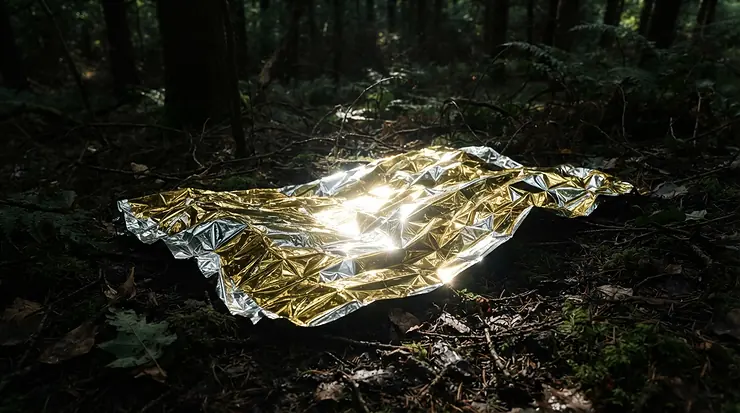
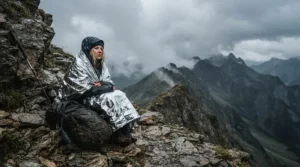
It weighs less than a bar of chocolate. It folds down smaller than your phone. And on a wet, windy hillside at dusk, an emergency blanket for survival kit duty can be the thing standing between you and a very bad night. That’s a ridiculous amount of responsibility for a crinkly sheet of foil.
Here’s the trouble: most people buy one, toss it in a drawer and never think about it again. Then the day comes when they need it, and they discover it’s too small, too flimsy, or tangled into a ball of silver origami. Choosing the right emergency blanket for survival kit use is less about finding the “best” product and more about matching the blanket to the situation you’re actually preparing for.
Hypothermia is the threat that matters here. St John Ambulance defines it as a body temperature below 35°C, and lists wrapping a casualty in a foil survival blanket among its first-aid steps when you can’t get them indoors. A blanket is no cure, but it’s a proven stopgap.
This guide covers seven real products across budget, mid-range and premium tiers. It also explains what the specs mean in practice, how to use a blanket properly, and where it fits inside a wider kit. You’ll find advice on survival kit essentials, a compact emergency blanket versus a heavy-duty one, an outdoor safety kit for UK hills, a bug-out bag, mountain rescue expectations and survival preparedness at home. Everything is based on published specs and aggregated review commentary, not invented testing.
Quick Comparison Table: Emergency Blanket for Survival Kit at a Glance
| Product | Type | Best For | Price Range (check current price) |
|---|---|---|---|
| Lifesystems Thermal Blanket 210x140cm | Foil sheet, single | Everyday carry on a budget | Under £10 |
| Koolpak Medical Foil Emergency Blanket (6 pack) | Foil sheets, multipack | First-aid kits and car boots | £10-£20 range |
| Swiss Safe Emergency Mylar Thermal Blankets (25 pack) | Foil sheets, bulk | Groups, clubs, spares everywhere | £15-£30 range |
| SOL Heavy-Duty Emergency Blanket | Reusable reinforced sheet | Repeat use and shelter-building | £10-£25 range |
| SOL Emergency Bivvy | Reflective bag | Solo hillwalkers | £15-£30 range |
| Survival Frog Tact Bivvy 2.0 | Bivvy with accessories | All-in-one emergency kit | £25-£40 range |
| Arcturus Heavy Duty Survival Blanket | Insulated tarp-blanket | Car kits and home bins | £20-£40 range |
Looking at the table, the Lifesystems Thermal Blanket 210x140cm is the cheapest way to get a properly adult-sized sheet, while the Swiss Safe Emergency Mylar Thermal Blankets win on cost per blanket if you’re kitting out a group. If you want warmth you can crawl inside rather than drape over yourself, the bivvy formats (SOL Emergency Bivvy, Survival Frog Tact Bivvy 2.0) are the sensible step up.
💬 Just one click — help others make better buying decisions too!😊
Top 7 Emergency Blanket for Survival Kit Picks: Expert Analysis
A quick note on method. Prices are ranges at the time of research and may vary. Review commentary below is aggregated from published roundups, not invented. Where I couldn’t verify a meaningful sample of reviews for a product, I say so.
1. Lifesystems Thermal Blanket 210x140cm — generous size at a bargain price
A 210x140cm sheet is bigger than the bog-standard 160x210cm foil many cheap packs offer, and that extra width matters when you’re shaking and trying to tuck edges under yourself. A 2026 Testix roundup named it best in test and reported a weight of roughly 110g plus decent resistance to tearing after being stuffed back into its pouch repeatedly.
On paper, that means you get a reflective layer that bounces back radiant body heat, which is useful when you’re sitting still. What the spec sheet won’t tell you is that foil does nothing about heat lost to cold ground, so you still need something under you.
Who’s it for? Anyone building a first emergency blanket for survival kit use: day-walkers, cyclists, new parents’ car boots. Reviewers in the roundup liked the durability-for-the-price. Verified amazon.co.uk review counts couldn’t be confirmed, so check the live listing.
Pros:
- ✅ Large sheet wraps an adult with room to tuck
- ✅ Light enough to forget in a jacket pocket
- ✅ Reported tear resistance beats the cheapest foil
Cons:
- ❌ Noisy and clammy against bare skin
- ❌ No insulation from cold ground
Price: in the under-£10 range, which is superb value for a first blanket.

2. Koolpak Medical Foil Emergency Blanket — six-pack for first-aid kits
The Koolpak Medical Foil Emergency Blanket comes as a six-piece set of 130x210cm adult sheets. That sizing is the industry-standard “first-aid” cut, long enough to cover a person lying down but narrower than the Lifesystems Thermal Blanket.
The real value is distribution. One in the car glovebox, one in the first-aid kit, one in each rucksack, one at the office. Because foil blankets are essentially single-use once crumpled, having spares lets you hand one to someone else without leaving yourself exposed.
In practice, this is a “medical-grade-style” product: thin, light, and designed to be unfolded fast over a casualty. It appeared in a 2026 comparison list, but I couldn’t verify detailed independent test results or a reliable sample of customer reviews, so treat it as a sensible multipack rather than a proven standout.
Where it shines is for volunteers, scout leaders and families. Where it struggles is repeated use, because the foil creases along every fold and weakens each time.
Pros:
- ✅ Multipack covers several kits for one purchase
- ✅ Standard adult cut covers a lying casualty
- ✅ Folds small enough for any first-aid pouch
Cons:
- ❌ Thin foil is realistically a one-or-two-use item
- ❌ Limited independent test data found
Price: in the £10-£20 range, giving good per-blanket value.
3. Swiss Safe Emergency Mylar Thermal Blankets — bulk value for groups and spares
With a 25-pack plus a bonus blanket, the Swiss Safe Emergency Mylar Thermal Blankets are the cheapest-per-sheet option here. A published roundup lists each blanket at about 2oz (roughly 57g), which is genuinely pocket-friendly.
The marketing leans on NASA heritage. Treat that as branding rather than proof of quality; mylar space blankets share the same basic technology across dozens of makers. What matters is what 25 sheets lets you do: stash one in every bag, every coat, every glovebox, and still have a stack for a club walk or school trip.
My honest take is that this pack suits organisers more than individuals. If you only need one blanket, you’re buying 24 you’ll never use. If you lead walks, coach a team, or run a community group, it’s the practical answer.
A 2026 roundup tagged it best bulk value. As ever, I couldn’t verify a robust amazon.co.uk review sample, so inspect the packaging and film thickness when it arrives.
Pros:
- ✅ Lowest cost per blanket in this list
- ✅ Around 57g each, so spares are painless
- ✅ Ideal for groups, clubs and events
Cons:
- ❌ Far more blankets than a solo hiker needs
- ❌ Single-use feel; won’t survive rough handling
Price: in the £15-£30 range for the pack, which works out cheaply per sheet.
4. SOL Heavy-Duty Emergency Blanket — reusable and tougher than foil
Standard foil is a crumple-and-bin product. The SOL Heavy-Duty Emergency Blanket is built thicker and tougher, aimed at being unfolded, used and refolded more than once. Published 2026 roundups include it among their reusable picks.
Why does that matter? A sturdier film resists the tiny tears that spread like ladders in cheap foil, and it’s easier to rig as a windbreak or ground sheet. For an outdoor safety kit, that flexibility is worth a lot: the same item warms a casualty, blocks wind, and keeps a wet bum off a wet bank.
The trade-off is weight and pack size. It’s heavier than the sub-60g sheets above, and I’d check the listing’s exact dimensions and weight before buying since variants exist.
Who should buy it? Regular hillwalkers and campers who want one blanket that earns its place on repeat outings rather than a throwaway. Verified review counts weren’t something I could confirm for the UK listing, so lean on the published roundup mentions and the retailer’s own review page.
Pros:
- ✅ Thicker film resists tearing and creasing
- ✅ Reusable as windbreak or ground sheet
- ✅ Respected brand in the outdoor first-aid world
Cons:
- ❌ Heavier and bulkier than basic foil
- ❌ Costs several times more than a budget sheet
Price: in the £10-£25 range, decent value if you’ll reuse it.
5. SOL Emergency Bivvy — a reflective bag instead of a sheet
A sheet leaks heat from every gap. A bag doesn’t. The SOL Emergency Bivvy (sold with a reflective claim of around 90% of body heat) is essentially a sleeping bag made of reflective film, and it appears in 2026 roundup lists.
The practical difference is huge. You slide in, zip or tuck the opening, and your own warmth builds inside a sealed pocket instead of drifting off in the breeze. That’s a better fit when you may be waiting hours for help, as in mountain rescue situations where you’re told not to move.
The catch is condensation. Reflective film doesn’t breathe, so moisture builds inside; you’ll feel damp even as you stay warm. Wearing dry layers beneath helps, and a spare sheet underneath adds ground insulation.
For solo walkers, runners on long routes, and cyclists in remote areas, this is the logical upgrade from a loose sheet. It’s a single-person item though, so a pair or family needs one each. I couldn’t verify a robust review sample for the UK listing.
Pros:
- ✅ Bag format traps heat far better than a sheet
- ✅ Stays put in wind
- ✅ Packs surprisingly small for a bag
Cons:
- ❌ Condensation makes the inside clammy
- ❌ Fits one person only
Price: in the £15-£30 range, fair for a bag-format shelter.
6. Survival Frog Tact Bivvy 2.0 — all-in-one emergency kit in a pouch
One 2026 roundup named the Survival Frog Tact Bivvy 2.0 its best overall survival bivvy. The notable features are HeatEcho thermal reflective material, reinforced taped seams, and a bundle of included survival accessories.
Taped seams are the clever bit. Cheap bivvies tear along stitched or glued edges when you scramble inside with cold, clumsy hands; reinforced seams reduce that risk. The extras, which can include signalling and fire-starting items, turn the purchase into a mini kit, handy if you’re building a bug-out bag from scratch and want to tick several boxes in one go.
My take: it suits people who’d rather buy one thing and trust it than assemble pieces. It’s also pricier, so if you already carry a whistle, torch and fire-starter, you may be paying for duplicates.
Reported reviewer themes centre on the solid build and complete kit. Still, check the current UK listing for shipping times, since this brand is US-based.
Pros:
- ✅ Reinforced taped seams resist tearing
- ✅ Bundled accessories add real value
- ✅ Compact enough for a bug-out bag
Cons:
- ❌ Dearer than a plain foil sheet
- ❌ Accessories may duplicate your existing kit
Price: in the £25-£40 range, strong value if you use the extras.
7. Arcturus Heavy Duty Survival Blanket — tarp-tough warmth for car kits
Think of the Arcturus Heavy Duty Survival Blanket as the happy marriage of a tarp and a mylar blanket. One 2026 roundup ranks it best overall, another calls it the most versatile multi-use pick, and a third notes it’s about 1.4lb, roughly 635g.
That heft is both strength and weakness. It’s tough enough to be a ground sheet, a lean-to roof, a wind barrier, or a wrap; the same roundup also says it’s too heavy for ultralight backpackers counting every gram. For a car boot, home bin, or group outing, weight barely matters and durability matters a lot.
Where it makes the most sense: winter breakdown kits, flood-prep bins, and family outings where one blanket might serve several purposes. It also pairs well with a thin foil sheet inside.
Availability on amazon.co.uk can vary, so check the live listing before planning around it.
Pros:
- ✅ Tarp-grade durability for repeated use
- ✅ Doubles as shelter, ground sheet or wrap
- ✅ Frequently top-ranked in 2026 roundups
Cons:
- ❌ Too heavy for ultralight packing
- ❌ Bulkier than any foil alternative
Price: in the £20-£40 range, good value as a reusable shelter item.
Top 7 Specs and Value Compared
| Product | Format | Weight Tier | Reusable? | Best For |
|---|---|---|---|---|
| Lifesystems Thermal Blanket 210x140cm | Sheet | Ultralight (~110g reported) | Limited | Budget carry |
| Koolpak Medical Foil Emergency Blanket | Sheet multipack | Ultralight | Limited | First-aid kits |
| Swiss Safe Emergency Mylar Thermal Blankets | Sheet bulk pack | Ultralight (~57g each reported) | Limited | Groups and spares |
| SOL Heavy-Duty Emergency Blanket | Heavy sheet | Light-medium | Yes | Repeat outings |
| SOL Emergency Bivvy | Bag | Light | Moderate | Solo hillwalkers |
| Survival Frog Tact Bivvy 2.0 | Bag plus kit | Light-medium | Moderate | All-in-one packs |
| Arcturus Heavy Duty Survival Blanket | Insulated tarp | Heavy (~635g reported) | Yes | Car and home kits |
The pattern is clear: thin sheets win on weight and price, bags win on heat retention, and heavy-duty blankets win on versatility. If your priority is a compact emergency blanket you’ll genuinely carry every day, the Lifesystems Thermal Blanket 210x140cm and Koolpak Medical Foil Emergency Blanket are the easiest to justify. If a vehicle kit is your goal, the Arcturus Heavy Duty Survival Blanket earns its bulk.
How to Use an Emergency Blanket Properly: A Practical Guide
Most people never practise. They unfold a blanket for the first time in a gale, and the film snaps like a sail. Do a dry run at home instead.
Before you go out: Unfold your blanket once in the garden, then refold it loosely rather than creasing along the same lines. Foil weakens at repeated folds, so a loose accordion pack lasts longer.
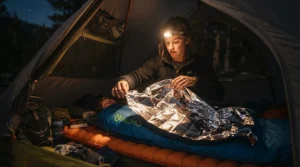
In a real emergency: Get out of the wind first. Remove wet clothing if you can replace it with dry layers, and cover the head. The Red Cross’s hypothermia first-aid guidance stresses sheltering the person and calling 999. Then wrap the blanket around the body with the shiny side facing in, to reflect heat back. Tuck the edges under your legs and shoulders to stop drafts, and pull a corner over your head.
Insulate from the ground: Sit or lie on a pack, spare clothing, bracken or heather. Ground contact steals heat faster than air does, so a foil blanket alone often disappoints.
Common mistakes in the first 30 days: Keeping the blanket in a hot car where it degrades, never checking it’s still intact, and storing it somewhere you can’t reach in a hurry. Pop one in an outside pocket, not the bottom of the bag.
Fire warning: Foil and plastic films can melt or burn. Keep them well away from stoves and flames.

Real-World Scenarios: Matching the Right Blanket to Your Life
Scenarios beat feature lists. Here are three profiles, with the reasoning.
The weekend hillwalker (budget about £30, 6-8 hours out, mostly UK uplands). Weight matters and you’ll be moving most of the time. A SOL Emergency Bivvy as your main shelter plus a spare Lifesystems Thermal Blanket 210x140cm for a companion keeps the pack light and covers two people.
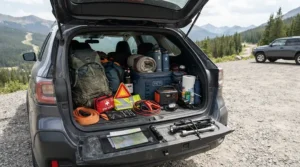
The family driver (winter commuting, kids in the back, motorway miles). You won’t carry this on your back, so go for durability. The Arcturus Heavy Duty Survival Blanket lives in the boot, with a couple of Koolpak Medical Foil Emergency Blanket sheets in the glovebox for quick access if you’re stuck in traffic for hours.
The club organiser (20 people, three trips a month). Here, cost per head rules. A box of Swiss Safe Emergency Mylar Thermal Blankets gives everyone a backup, while one SOL Heavy-Duty Emergency Blanket acts as the leader’s reusable shelter.
Notice what’s missing: nobody needs the most expensive option in every situation. Matching format to risk is the whole game.
Problem → Solution: Fixing Common Emergency Blanket Headaches
Problem: it won’t refold. Foil resists being tidy. Fix: accordion-fold it loosely and keep it in a small zip bag, not its original tight packaging.
Problem: you feel damp inside. Reflective films don’t breathe. Fix: wear dry baselayers, vent the opening slightly, and avoid sweating before you climb in.
Problem: it keeps blowing off. Wind loves a loose sheet. Fix: wrap and tuck, or use a bivvy such as the SOL Emergency Bivvy or Survival Frog Tact Bivvy 2.0, which hold their own shape.
Problem: you’re still cold. Foil reflects radiant heat but won’t heat you from nothing. Fix: add insulation beneath, eat something sugary if you can, and don’t stay still in the wet.
Problem: it tears at the creases. That’s the cheap-film curse. Fix: upgrade to the SOL Heavy-Duty Emergency Blanket or Arcturus Heavy Duty Survival Blanket, which are built to be reused.
What Is an Emergency Blanket for Survival Kit Use?
An emergency blanket for survival kit use is an ultralight, reflective film sheet or bag, typically metallised polyester, designed to reduce heat loss by reflecting body heat back to the wearer. It’s compact, inexpensive, and intended as short-term protection against cold, wind and hypothermia while awaiting rescue or reaching shelter.
Think of it as a thermos for people. The reflective surface bounces radiant heat back; the film stops wind carrying warmth away. What it can’t do is generate heat, so it works best when you’re sheltered, dry, and insulated from the ground.
How to Choose an Emergency Blanket for Survival Kit Use
- Decide your scenario first. Day walk, car boot or home bin each favour different formats; pick the use case before the product.
- Check dimensions. An adult needs at least about 130x210cm. Larger, like the 210x140cm Lifesystems Thermal Blanket, gives more tucking room.
- Weigh the weight. Under 100g is easy to carry daily; around 600g like the Arcturus Heavy Duty Survival Blanket suits vehicles.
- Sheet or bag? Bags retain heat better and resist wind; sheets are lighter and cheaper.
- Think reuse. If you’ll deploy it regularly, choose a heavy-duty film, not basic foil.
- Buy spares. Having backup sheets, such as in a Swiss Safe Emergency Mylar Thermal Blankets pack, means you can help others.
- Verify the listing. Read the live reviews and check the stated size; don’t trust marketing alone.
Survival Kit Essentials: What Else Belongs Beside the Blanket
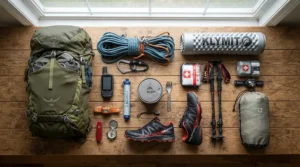
A blanket is one organ in a whole body. These survival kit essentials turn it into a working kit:
- Whistle: Mountain rescue guidance recommends carrying one and learning the distress signal (six blasts a minute).
- Head torch plus spare batteries: Hands-free light beats a phone torch every time.
- Insulating layer and hat: A dry spare layer weighs little and works wonders.
- Food and water: High-energy snacks fuel shivering, which is your body’s furnace.
- First-aid kit: Plasters, dressings, gloves and a spare foil sheet.
- Map and compass: Phones fail; paper doesn’t.
- Fire-starter and sturdy lighter: Useful, but only with training.
- Power bank: A charged phone is how most rescues start.
Weight-wise, the whole set can come in under about a kilogram, particularly if you pick a bundled option like the Survival Frog Tact Bivvy 2.0 that already includes some accessories.
Compact Emergency Blanket vs Heavy-Duty Blanket
Choosing a compact emergency blanket versus a heavy-duty one comes down to one question: will you carry it, or store it?
A compact emergency blanket such as the Lifesystems Thermal Blanket 210x140cm or a Koolpak Medical Foil Emergency Blanket sheet is a “just in case” tool. It disappears into a pocket, costs next to nothing, and gives instant reflective cover. The downside is fragility.
A heavy-duty blanket like the SOL Heavy-Duty Emergency Blanket or Arcturus Heavy Duty Survival Blanket is a “just in case, and again” tool. You pay in grams and pounds, and you get something that doubles as shelter and survives repeated use.
| Factor | Compact Foil Sheet | Heavy-Duty Blanket | Traditional Wool/Duvet |
|---|---|---|---|
| Weight | Ultralight | Light to heavy | Heavy |
| Pack size | Pocket-sized | Bag-sized | Rucksack-hogging |
| Wet performance | Waterproof | Waterproof | Poor when soaked |
| Reuse | Limited | Good | Excellent |
| Best For | Daily carry | Vehicles and repeat use | Home and car comfort |
The table shows why foil remains the default for emergencies: it’s the only option that stays functional when soaked. Wool wins on comfort but loses on weight and wetness, while a heavy-duty blanket splits the difference. If you can only choose one, pair a compact sheet in your pocket with a heavier Arcturus Heavy Duty Survival Blanket in the car.
Outdoor Safety Kit: Where Your Blanket Fits
Your outdoor safety kit is a layered system, and the blanket is the last layer, not the first. Before you reach for foil, you’d have used your waterproofs, a dry mid-layer, food, and sensible decisions about turning back.
Here’s how to place it. Keep the blanket in an outside pocket or the lid of your rucksack, not buried. Pair it with a whistle and head torch in a small waterproof pouch. For bigger groups, carry one blanket per person plus a spare.
What most walkers overlook is the group angle. One person’s emergency becomes the whole party’s emergency, because stopping to treat a casualty chills everyone. A pack such as the Swiss Safe Emergency Mylar Thermal Blankets means each companion has their own protection while you tend to the injured person.
For day-to-day use, a single Lifesystems Thermal Blanket 210x140cm in every walking jacket is a sensible baseline.
Bug-Out Bag Blanket Strategy
A bug-out bag is a pre-packed grab bag for leaving home quickly: floods, fire, power failure, evacuation. In the UK, that’s less about doomsday and more about a flooded street or a prolonged winter outage.
Blankets suit this role superbly because they weigh almost nothing. For a household of four, a sensible split looks like this:
- One reusable heavy-duty blanket, such as the SOL Heavy-Duty Emergency Blanket, for shelter and ground cover.
- One foil sheet per person, from a multipack like the Koolpak Medical Foil Emergency Blanket.
- A bivvy for each adult if space allows, such as the SOL Emergency Bivvy.
Pack the items near the top, check them every six months, and swap any with cracked or sticky film. Keep your bug-out bag where you can grab it in the dark. And remember: it’s a short-term kit for roughly 72 hours, not a bunker.
Mountain Rescue: What UK Teams Expect You to Carry
British hills punish the unprepared, yet most incidents are avoidable. Mountain rescue in England and Wales is run by volunteers, with 47 teams and about 3,500 volunteers according to the Ordnance Survey mountain safety guide, and it’s free to the casualty.
The call-out sequence is simple: dial 999 or 112, ask for the Police, then ask for Mountain Rescue. Crucially, do not change your position until the team contacts you. That’s where an emergency blanket for survival kit duty earns its keep, because waiting for a team can take hours.
Mountain rescue guidance also recommends carrying a whistle, a torch, spare clothing, food, a first-aid kit and a survival bag. A bivvy such as the Survival Frog Tact Bivvy 2.0 or SOL Emergency Bivvy is a lightweight stand-in for a proper survival bag, though it’s not a replacement for the real thing on serious winter days.
Register your phone for the emergencySMS service by texting “register” to 999, since a text can sometimes get through when voice can’t.
Survival Preparedness: Long-Term Cost, Storage and Maintenance
True survival preparedness is boring. It’s checking kits twice a year, replacing batteries, and rotating supplies.
Cost over time: A budget foil sheet in the under-£10 range might serve for years if stored flat and unopened. A heavy-duty piece such as the Arcturus Heavy Duty Survival Blanket costs more upfront but spreads the cost over repeated use, so your cost per use can end up lower.
Storage: Keep blankets in cool, dry places. Hot cars can degrade film and seals, so rotate or replace car-kept items every year or two.
Maintenance checklist: Inspect for cracks, sticky film and punctures; refold loosely; replace anything damaged; check expiry dates on accompanying first-aid items.
Knowledge counts too: The Northern Ireland government’s hypothermia prevention advice is a handy read, covering who’s most vulnerable and how to reduce the risk.
FAQ
❓ Which emergency blanket for survival kit use is best for a bug-out bag?
❓ Are compact emergency blankets waterproof?
❓ How many emergency blankets should an outdoor safety kit hold?
❓ Can I reuse a foil emergency blanket?
❓ What should I do if I'm stuck on a hill and need mountain rescue?
Conclusion
An emergency blanket for survival kit use is the cheapest insurance you’ll ever buy, but only if it matches your situation. For most people, a large budget sheet like the Lifesystems Thermal Blanket 210x140cm in every jacket is the easy first step. Groups should consider the Swiss Safe Emergency Mylar Thermal Blankets, vehicles deserve something tougher like the Arcturus Heavy Duty Survival Blanket, and solo hillwalkers will appreciate the heat retention of a bivvy such as the SOL Emergency Bivvy or Survival Frog Tact Bivvy 2.0.
Remember the limits, too. A blanket buys time, not safety. Pair it with a whistle, torch, spare layers, food and a plan, and keep the mountain rescue procedure in your head: 999, Police, Mountain Rescue, then stay put.
Pick your blanket, practise unfolding it once, and tuck it where you can reach it. You’ll probably never need it, which is exactly the point.
✨ Ready to build your kit?
🔍 Click through to check current pricing and availability on your favourite pick today, and stay warm out there! 🧣
Recommended for You
- Camping Blanket For Car Camping: 7 Best Cosy Picks For 2026
- Insulated Camping Blanket Vs Sleeping Bag Liner: 7 Best Picks (2026)
- Top Camping Blankets: 7 Warm, Wallet-Friendly Picks (2026)
Disclaimer: This article contains affiliate links. As an Amazon Associate, I earn from qualifying purchases. If you purchase products through these links, we may earn a small commission at no additional cost to you.
✨ Found this helpful? Share it with your friends! 💬🤗
