
In This Article
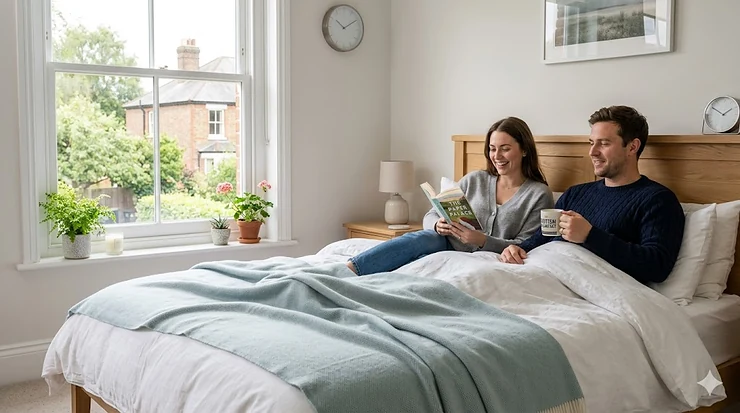
Picture this: it’s 2am on a chilly March night, and you’re either sweating under your winter duvet or shivering beneath your summer sheet. Sound familiar? If you’re tired of playing musical chairs with your bedding every time the British weather has a mood swing, you’re in precisely the right place.
All season blankets have become the unsung heroes of UK bedrooms, offering that elusive Goldilocks zone of comfort—not too hot, not too cold, but just right. Unlike traditional duvets that force you to swap between winter and summer options, these clever blankets adapt to your body temperature throughout the year. Whether you’re dealing with an unseasonably warm October evening or an unexpectedly frosty June morning (because, let’s face it, British weather is gloriously unpredictable), an all season blanket has you covered—literally.
The magic lies in their construction. Most versatile throws uk feature breathable materials like cotton, bamboo-derived fibres, or specially engineered microfibre that trap warmth when you need it but release excess heat when temperatures rise. According to NHS guidance, the ideal bedroom temperature sits between 16-18°C, and all season blankets help you maintain comfortable sleep within this range without constantly adjusting your heating.
Quick Comparison Table
| Blanket | Material | Weight (GSM) | Price (£) | Best For | Rating |
|---|---|---|---|---|---|
| Bedsure Fleece Throw | 100% Microfibre | 220-260 | £13-20 | Budget-conscious buyers | 4.5/5 |
| Bedsure Sherpa Dual-Sided | Microfibre/Sherpa | 480 | £19-25 | Extra warmth layering | 4.6/5 |
| Utopia Cotton Waffle | 100% Cotton | 300 | £22-28 | Hot sleepers | 4.4/5 |
| PHF Cotton Thermal | 100% Cotton | 350-400 | £25-35 | Eco-conscious buyers | 4.5/5 |
| Bedsure Cotton Herringbone | 100% Cotton | 350 | £28-35 | Style & sustainability | 4.6/5 |
| Slumberdown Heated Throw | Fleece | N/A | £26-60 | Winter supplementation | 4.3/5 |
| Brentfords Cellular Thermal | 100% Cotton | 300 | £16-24 | Traditional thermal comfort | 4.4/5 |
💬 Just one click – help others make better buying decisions too!😊
Top 7 All Season Blankets: Expert Analysis
1. Bedsure Fleece Throw Blanket – Best Budget All-Rounder
The Bedsure Fleece Throw has become a staple in thousands of UK homes, and for good reason. Priced between £13-20 depending on size, this microfibre marvel offers exceptional value without sacrificing quality. Available in multiple sizes from throw (130×150cm) to king (200×230cm), it’s constructed from 100% premium microfibre polyester that’s been awarded the 2025 Good Housekeeping Best Bedding Award.
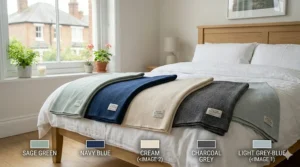
Key specifications: 220GSM weight, machine washable at 30°C, anti-static treatment, available in 12 colours including Silver Grey, Ivory, and Navy Blue. The fleece construction provides surprising versatility—light enough for summer evenings yet cosy for transitional months when you’re not quite ready to bring out the heavy artillery.
UK buyers consistently praise its durability, with many reporting it remains soft after hundreds of washes. One reviewer noted: “My original one from years ago is still going strong after countless washes.” The anti-static technology is particularly appreciated during winter months when synthetic materials can become clingy.
✅ Pros: Exceptional value, machine washable, multiple colour options
❌ Cons: Not as breathable as cotton options, may be too warm for peak summer
2. Bedsure Sherpa Fleece Throw – Best Dual-Sided Design
The Bedsure Sherpa takes versatility to another level with its reversible design. One side features velvety smooth flannel (220GSM) whilst the reverse offers plush Sherpa fleece (260GSM), giving you two blankets in one. Priced around £19.54 for Double/Twin size (150×200cm), it represents outstanding value for those seeking adaptable bedding.
Key specifications: Total weight 480GSM, 100% microfibre construction, reinforced hem stitching, OEKO-TEX certified for safety. The dual-sided design means you can use the lighter flannel side during mild weather and flip to the Sherpa side when temperatures drop. It’s particularly clever for households where partners have different temperature preferences.
According to OEKO-TEX certification standards, this blanket has been tested against over 1,000 potentially harmful chemicals, ensuring it’s safe for sensitive skin. UK buyers appreciate this reassurance, especially for family use.
✅ Pros: Two textures in one, excellent warmth-to-weight ratio, certified safe
❌ Cons: Slightly heavier than alternatives, requires careful washing (no tumble dry)
3. Utopia Bedding Cotton Waffle Blanket – Best for Hot Sleepers
If you’re someone who runs warm at night, the Utopia Cotton Waffle blanket deserves your attention. Its distinctive waffle-weave pattern creates air pockets that regulate temperature beautifully, keeping you comfortable whether it’s a balmy July night or a crisp December evening. Priced between £22-28 for Queen size (230×230cm), it’s available on Amazon.co.uk with quick UK delivery.
Key specifications: 300GSM 100% cotton, ring-spun technology for enhanced softness, self-binding edges, available in 8 colours. The waffle weave isn’t just aesthetically pleasing—it’s engineering genius. Those tiny honeycomb pockets trap warmth when needed whilst allowing excellent air circulation to prevent overheating.
The 100% cotton construction makes it hypoallergenic and suitable for sensitive skin. Unlike synthetic alternatives, cotton is naturally breathable and becomes softer with each wash. UK buyers note it’s particularly brilliant for those unpredictable spring and autumn months when you need “just something” rather than full bedding.
✅ Pros: Exceptional breathability, hypoallergenic, increasingly soft
❌ Cons: May wrinkle easily, requires careful first wash to prevent shrinkage
4. PHF Cotton Waffle Weave Thermal – Best Premium Natural Option
For those willing to invest in quality, the PHF Cotton Waffle Weave represents the premium end of 4 season bed blankets. Priced between £25-35 depending on size, this blanket features pre-washed 100% natural cotton with enhanced 3D waffle weave that’s 80% more snag-resistant than standard loose weaves.
Key specifications: 350-400GSM weight, OEKO-TEX certified, pre-washed to prevent shrinkage, reinforced hexagonal cell structure, moisture-wicking properties. The pre-wash treatment is particularly valuable—it eliminates that stiff feel many cotton blankets have initially and prevents the disappointment of shrinkage after your first laundry cycle.
Research shows that in testing at 35°C, users experienced 20% less perspiration under this blanket compared to alternatives. For UK summers when temperatures occasionally spike, this moisture-wicking capability is invaluable. The tight hexagonal weave also makes it remarkably durable for families with pets—those cat claws won’t easily snag the fabric.
✅ Pros: Premium durability, pre-shrunk, excellent moisture management
❌ Cons: Higher price point, limited colour selection
5. Bedsure Cotton Herringbone Blanket – Best for Style & Sustainability
The Bedsure Cotton Herringbone proves that climate adaptive blankets don’t have to sacrifice aesthetics. With its elegant herringbone texture and available in sophisticated colours like Linen Beige and Smoke Grey, this blanket complements modern interior design whilst providing year-round comfort. Priced around £28-35 for Queen size (230×230cm).
Key specifications: 350GSM 100% cotton, herringbone weave pattern, breathable and lightweight, machine washable, OEKO-TEX certified. The herringbone pattern isn’t just decorative—the diagonal weave creates a slightly denser fabric that retains warmth better than plain weaves whilst maintaining breathability.
What sets this apart for eco-conscious buyers is its sustainability credentials. Made from 100% natural cotton with safer chemical certifications, it aligns with the growing UK trend towards environmentally responsible bedding. The sophisticated texture also means it doubles beautifully as a decorative throw on sofas or armchairs when not in use.
✅ Pros: Elegant design, sustainable materials, versatile décor piece
❌ Cons: Premium pricing, may shed slightly during first wash
6. Slumberdown Heated Throw – Best Winter Supplement
Whilst not a traditional all season blanket, the Slumberdown Heated Throw deserves mention for UK households dealing with rising energy costs. Currently available at £26.50 (reduced from £60) on Amazon.co.uk, this electric blanket offers 10 heat settings and can significantly reduce heating bills during winter months.
Key specifications: Soft fleece construction, 10 heat levels, 10-hour timer, overheat protection, machine washable (controller removed), 130×160cm size. With UK energy prices remaining elevated in 2026, many households are using heated throws to create personal warmth zones rather than heating entire rooms.
The 10-hour timer ensures you won’t accidentally leave it running, whilst the overheat protection provides peace of mind. UK buyers appreciate that it heats quickly—reaching comfortable warmth in just minutes—making it perfect for those chilly spring evenings when you’re reluctant to restart central heating.
✅ Pros: Energy-efficient alternative to heating, rapid warmth, timer function
❌ Cons: Requires electrical outlet, not suitable for year-round use
7. Brentfords Cellular Thermal Blanket – Best Traditional Choice
For those who prefer traditional British bedding, the Brentfords Cellular Thermal blanket represents classic quality. Available on Amazon.co.uk for £16-24 depending on size, this 100% cotton cellular blanket has been a UK favourite for generations, now updated with modern safety certifications.
Key specifications: 300GSM pure cotton, cellular/honeycomb weave, multiple sizes from single to king, machine washable at 40°C, traditional edge binding. The cellular construction creates thousands of tiny air pockets that trap warmth efficiently—the same principle that makes bubble wrap such an effective insulator.
According to Wikipedia’s textile standards, cellular blankets have been used in UK healthcare settings for decades due to their temperature-regulating properties and ease of sterilisation. This hospital-grade quality now benefits home users seeking reliable, long-lasting multi season throws.
✅ Pros: Time-tested design, excellent durability, hospital-grade quality
❌ Cons: Less modern aesthetic, can feel scratchy when new
Understanding All Season Blanket Materials
The material composition of your blanket fundamentally determines its performance across seasons. Let’s examine the science behind the most popular options available on the UK market.
Cotton: The Breathable Classic
Cotton remains the gold standard for year round blankets reviews, and there’s solid scientific reasoning behind this. As a natural fibre, cotton’s structure allows exceptional air permeability—roughly 400-500 cubic centimetres of air per square centimetre per second. This means heat and moisture escape readily when you’re warm but the weave can still trap warmth when temperatures drop.
The specific construction matters enormously. Waffle weaves create dimensional air pockets that enhance insulation without adding bulk. Herringbone patterns offer increased durability through their diagonal structure. Cellular weaves, as used in hospital blankets, maximise the warmth-to-weight ratio through their honeycomb architecture.
For UK homes dealing with variable humidity, cotton’s moisture absorption capacity (7-8% of its weight) prevents that clammy feeling synthetic materials can create. When you consider that the average person releases approximately half a litre of moisture during sleep, this absorption capability becomes rather crucial.
Microfibre: Modern Engineering
Modern microfibre blankets represent impressive textile engineering. These ultra-fine polyester fibres—typically less than one denier in thickness—create fabrics with exceptional softness and impressive insulation properties. The Bedsure fleece options, for instance, use fibres finer than silk, resulting in that luxurious hand-feel.
Microfibre’s advantages include superior durability (resistant to pilling and fading), easier maintenance (dries quickly, resists staining), and impressive warmth-to-weight ratios. However, being synthetic means reduced breathability compared to natural fibres. This makes microfibre better suited for autumn and winter use rather than peak summer months.
The anti-static treatments applied to quality microfibre blankets address one of synthetic materials’ main drawbacks. Static electricity builds up more readily on synthetic fibres, but modern treatments using conductive polymers effectively dissipate these charges.
Blended Materials: Best of Both Worlds
Increasingly, manufacturers are creating blended fabrics that combine natural and synthetic fibres. Bamboo-cotton blends offer the breathability of cotton with bamboo’s natural antibacterial properties. Cotton-polyester combinations provide cotton’s comfort with polyester’s durability and wrinkle resistance.
These blends particularly excel in UK climates where adaptability matters. A 60% cotton/40% bamboo blend, for example, offers excellent moisture wicking for summer whilst maintaining adequate warmth for cooler months. The key is finding blends where natural fibres dominate—aim for at least 60% natural content for optimal breathability.
Weight Ratings and GSM Explained
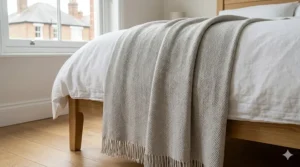
If you’ve been shopping for blankets online, you’ve likely encountered GSM ratings that seem as mysterious as they are important. GSM stands for “grams per square metre,” measuring fabric density. Think of it as the blanket equivalent of thread count in sheets—higher numbers generally indicate heavier, warmer fabrics, though construction matters equally.
Decoding GSM for UK Seasons
For transitional bedding that works year-round, the sweet spot typically falls between 300-400 GSM. This provides adequate warmth for British winter nights (especially when layered with other bedding) whilst remaining light enough for summer use.
- 200-300 GSM: Lightweight, ideal for summer or warm sleepers
- 300-400 GSM: Medium weight, true all-season performance
- 400-500 GSM: Heavier, best for cold sleepers or layering
- 500+ GSM: Winter-weight, too warm for year-round use
However, GSM only tells part of the story. A 300 GSM waffle weave cotton blanket performs differently from a 300 GSM plain weave fleece. The weave structure, fibre type, and finishing treatments all influence the final thermal properties.
Layering Strategies for Variable UK Weather
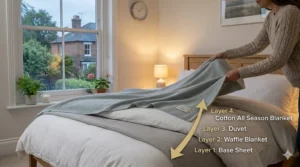
The most versatile approach involves strategic layering. Start with a breathable sheet, add your all season blanket as the middle layer, then top with a lighter duvet or additional blanket as needed. This system allows you to adjust warmth levels by adding or removing layers rather than switching entire bedding sets.
During July heatwaves (yes, they do happen occasionally), use just the blanket over a sheet. Come December frost, layer it under your duvet for additional insulation. This adaptability is precisely why these blankets have become essential in UK households—our weather demands flexibility.
Health Benefits of Proper Bedding Selection
Selecting appropriate bedding extends beyond comfort into genuine health territory. NHS research on sleep environments emphasises maintaining optimal bedroom temperatures between 16-18°C for quality sleep, and your blanket choice directly impacts this.
Temperature Regulation and Sleep Quality
Your body’s core temperature naturally decreases during sleep—dropping approximately 0.5-1°C through the night. This thermoregulation process is crucial for entering and maintaining deep sleep stages. Blankets that trap excessive heat interfere with this natural cooling, resulting in fragmented sleep and reduced REM cycles.
All season blankets support this process through their breathable construction. Unlike heavy duvets that can cause overheating, properly designed year-round blankets allow your body to release heat whilst preventing excessive cooling. This creates what sleep scientists call the “thermal neutral zone”—conditions where your body expends minimal energy on temperature regulation, allowing deeper, more restorative sleep.
Research indicates that even slightly elevated sleep temperatures—just 1-2°C above optimal—can reduce deep sleep by up to 10%. For UK residents already struggling with sleep quality (roughly 36% according to recent surveys), optimising bedding choice represents a simple yet effective intervention.
Allergy Considerations
Natural fibre blankets like cotton offer distinct advantages for allergy sufferers. Cotton’s breathable structure inhibits dust mite proliferation—these microscopic creatures thrive in warm, humid environments, conditions that synthetic blankets can create. Additionally, cotton blankets can be washed at higher temperatures (60°C+) to eliminate allergens without damage.
The OEKO-TEX certification mentioned earlier becomes particularly relevant here. This independent testing ensures blankets contain no harmful chemicals that might trigger sensitivities. For the estimated 20% of UK residents with some form of textile allergy, choosing certified products isn’t merely prudent—it’s essential.
Care and Maintenance for Longevity
Proper maintenance dramatically extends your blanket’s lifespan whilst maintaining its performance characteristics. Here’s how to care for different materials found in all season blankets.
Washing Cotton Blankets
Cotton blankets benefit from regular washing but require specific care to prevent shrinkage and maintain softness. Wash in cold or lukewarm water (maximum 40°C for regular cotton, 60°C for pre-washed varieties) using gentle, pH-neutral detergents. Avoid fabric softeners on waffle-weave blankets—they coat fibres and reduce breathability.
For the first wash, cotton blankets should be laundered separately as they may release excess dye and lint. The good news? Cotton becomes progressively softer with washing as fibres relax and open up. That slightly stiff feeling new cotton blankets have will transform into luxurious softness after several wash cycles.
Air-drying is ideal for cotton blankets, preserving fibre integrity and preventing shrinkage. If using a tumble dryer, select low heat and remove whilst slightly damp to minimise wrinkling. The cellular structure of cotton makes it prone to creasing, but this relaxes when laid on the bed.
Maintaining Microfibre Blankets
Microfibre requires gentler treatment than you might expect. Wash in cold water (30°C maximum) on a delicate cycle, again avoiding fabric softeners which coat the fine fibres and reduce their softness. Never use chlorine bleach, which can permanently damage polyester fibres.
The anti-static treatments on quality microfibre blankets can degrade over time, particularly with hot water or harsh detergents. To maintain their effectiveness, add half a cup of white vinegar to the rinse cycle periodically—this helps dissipate static whilst softening fibres naturally.
Microfibre blankets dry quickly—a significant advantage for UK households dealing with limited drying space. Air-drying is preferable, but if tumble drying, use the lowest heat setting or air-fluff mode. High heat can melt polyester fibres, creating irreversible damage.
Storage Between Seasons
Even all season blankets benefit from proper storage during periods of non-use. Clean thoroughly before storing—any residual body oils or moisture can attract pests or develop mildew. Store in breathable cotton bags rather than plastic containers; cotton and natural fibres need air circulation to prevent musty odours.
Cedar blocks or lavender sachets provide natural pest deterrence without chemical odours. Avoid storing blankets in damp locations like basements or unheated attics where temperature fluctuations cause condensation. A cool, dry cupboard with consistent temperatures represents the ideal storage environment.
Sizing Guide for UK Beds
British bed sizes differ slightly from European and American standards, making proper sizing crucial when selecting blankets. Here’s how to match blankets to your specific bed dimensions.
Standard UK Bed Sizes
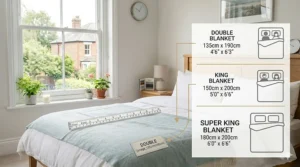
- Single: 90×190cm (3’0″ × 6’3″)
- Small Double: 120×190cm (4’0″ × 6’3″)
- Double: 135×190cm (4’6″ × 6’3″)
- King: 150×200cm (5’0″ × 6’6″)
- Super King: 180×200cm (6’0″ × 6’6″)
For all season blankets, you’ll want dimensions that extend beyond your mattress edges for adequate coverage and tuck-in. As a general rule, add 30-40cm to each dimension of your mattress size. This extra material allows the blanket to drape properly without pulling taut across the bed surface.
Choosing Blanket Dimensions
A common mistake involves purchasing blankets sized exactly to mattress dimensions. This works fine if you’re using the blanket purely as a decorative throw, but for actual sleep use, you need overhang. Consider how you sleep—do you tuck blankets tightly or prefer them loosely draped? This influences the size you should select.
For shared beds, especially if partners have different temperature preferences, consider purchasing two twin-size blankets rather than one large blanket. This “Scandinavian method” allows each person to adjust their own warmth levels without disturbing their partner. It’s particularly effective with all season blankets where one person might use theirs whilst the other prefers just a sheet.
Children’s beds require special consideration. Avoid blankets that extend significantly beyond mattress edges on children’s beds to prevent tripping hazards. For cots and toddler beds, cellular blankets specifically designed for smaller dimensions offer safer options than trimming standard blankets to size.
Sustainability and Ethical Considerations
The textile industry faces increasing scrutiny regarding environmental and social impacts. When selecting all season blankets, considering sustainability isn’t merely trendy—it’s responsible.
Environmental Impact of Materials
Cotton production requires significant water and often involves intensive pesticide use. Organic cotton addresses pesticide concerns but still demands substantial water—approximately 10,000-20,000 litres per kilogram of finished fabric. For eco-conscious buyers, look for GOTS (Global Organic Textile Standard) certification, which guarantees organic cultivation and ethical processing.
Polyester, whilst synthetic, actually requires less water during production and can be derived from recycled plastic bottles. Quality microfibre blankets increasingly use recycled polyester (rPET), reducing landfill waste. The Bedsure range, for instance, includes options made partially from recycled materials whilst maintaining performance characteristics.
Bamboo-derived fabrics occupy interesting middle ground. Bamboo grows rapidly without pesticides and requires minimal water, but the conversion from bamboo plant to fabric involves chemical processing. Look for bamboo fabrics processed using closed-loop systems where chemicals are recycled rather than released into waterways.
Certifications That Matter
Beyond OEKO-TEX and GOTS, several other certifications indicate ethical and environmental responsibility:
- Fair Trade Certified: Ensures fair wages and safe working conditions for textile workers
- BCI (Better Cotton Initiative): Promotes sustainable cotton farming practices
- Cradle to Cradle: Comprehensive sustainability assessment covering materials, energy, water, and social fairness
- EU Ecolabel: European standard for reduced environmental impact throughout product lifecycle
These certifications involve rigorous third-party auditing, providing genuine assurance rather than greenwashing. When shopping on Amazon.co.uk, look for products displaying these credentials in their specifications.
Longevity as Sustainability
Perhaps the most sustainable blanket is one you use for years rather than replacing frequently. Quality construction, proper maintenance, and timeless design all contribute to longevity. A £30 blanket used for ten years has significantly less environmental impact than three £15 blankets replaced every few years.
This is where investing in quality natural-fibre options pays dividends. Cotton blankets, particularly those with reinforced hems and quality stitching, can literally last decades with proper care. I’ve encountered cellular blankets passed down through families, still performing beautifully after 30+ years. That’s sustainability in action.
Price vs Value: Investment Considerations
Price ranges for all season blankets span from budget options under £15 to premium choices exceeding £50. Understanding what drives these differences helps determine where your money should go.
What Makes Blankets More Expensive?
Higher prices generally reflect several factors: superior materials (long-staple cotton vs. standard cotton), construction quality (reinforced seams, dense weaving), certifications (OEKO-TEX, organic standards), and brand reputation. Additionally, blankets manufactured in countries with higher labour standards typically cost more due to fair wage commitments.
However, price doesn’t always correlate directly with quality or suitability. A £40 premium cotton blanket might seem excellent value compared to a £50 luxury option, but if you’re a particularly warm sleeper, even a £15 lightweight option might serve you better. Understanding your specific needs matters more than simply purchasing the most expensive option.
Budget-Friendly Options That Don’t Compromise
The Bedsure Fleece Throw at £13-20 demonstrates that affordability needn’t mean poor quality. It’s received thousands of positive reviews from UK buyers, maintains softness through repeated washing, and performs admirably across seasons. Similarly, the Brentfords Cellular Thermal at £16-24 offers traditional quality at accessible prices.
For those watching budgets, prioritise materials and construction over fancy features. A simple, well-made cotton blanket will outperform a feature-laden but poorly constructed alternative. Check customer reviews specifically from UK buyers—they’ll highlight durability issues that product descriptions omit.
When to Splurge on Premium Options
Certain situations justify higher investment. If you have sensitive skin or allergies, spending extra on certified organic cotton or hypoallergenic materials prevents discomfort worth far more than the price difference. Likewise, if you’re furnishing a guest room that sees frequent use, durability becomes paramount—that £35 PHF blanket will outlast two cheaper replacements.
Premium options also excel in aesthetic situations. If your bedroom design emphasises luxury and your blanket remains visible as décor, the Bedsure Cotton Herringbone justifies its higher price through appearance alone. Think of it as functional art—you’re paying partly for visual appeal beyond basic comfort.
Frequently Asked Questions
❓ What makes a blanket suitable for all seasons in the UK climate?
❓ Can I use all season blankets for babies and children safely?
❓ How often should I wash my all season blanket?
❓ Are cotton blankets better than microfibre for year-round use?
❓ Will an all season blanket work with my heated mattress pad or electric blanket?
Conclusion: Finding Your Perfect All Season Blanket
Selecting the right all season blanket transforms your sleep quality throughout the year, eliminating the seasonal bedding shuffle whilst providing comfort regardless of British weather’s whims. The seven options reviewed here represent the best currently available on Amazon.co.uk, each excelling in specific areas to suit different needs and preferences.
For budget-conscious buyers, the Bedsure Fleece Throw delivers exceptional value at £13-20, offering reliable performance without significant investment. Hot sleepers benefit most from the Utopia Cotton Waffle with its breathable construction and moisture-wicking properties. Style-focused households appreciate the Bedsure Cotton Herringbone which functions equally as practical bedding and attractive décor.
Remember that the “best” blanket depends entirely on your personal circumstances—sleeping temperature, aesthetic preferences, maintenance willingness, and budget all influence the optimal choice. Prioritise breathable materials, appropriate weight ratings, and quality construction over flashy features or extreme price points.
As UK energy costs remain elevated in 2026, smart bedding choices become increasingly economical. A quality all season blanket reduces reliance on heating by maintaining comfortable sleep temperatures naturally. Paired with proper layering strategies, these blankets offer year-round comfort whilst lowering energy consumption—a win for both your wallet and environmental footprint.
The investment needn’t be substantial—even budget options provide years of service with proper care. What matters is selecting a blanket that suits your specific needs rather than chasing the most expensive or currently trendy option. Armed with the information in this guide, you’re now equipped to make an informed decision that will improve your sleep quality throughout 2026 and beyond.
✨ Don’t Miss These Exclusive Deals!
🔍 Take your bedroom comfort to the next level with these carefully selected all season blankets. Click on any highlighted item to check current pricing and availability on Amazon.co.uk. These quality blankets will help you create restful sleep your body will love!
Recommended for You
- 7 Best Bamboo Blankets UK 2026
- 7 Best Organic Cotton Blankets UK 2026 | GOTS Certified
- 7 Best Recycled Material Blankets UK 2026
Disclaimer: This article contains affiliate links. If you purchase products through these links, we may earn a small commission at no additional cost to you. Prices shown are approximate and may vary.
✨ Found this helpful? Share it with your mates! 💬🤗
