
In This Article
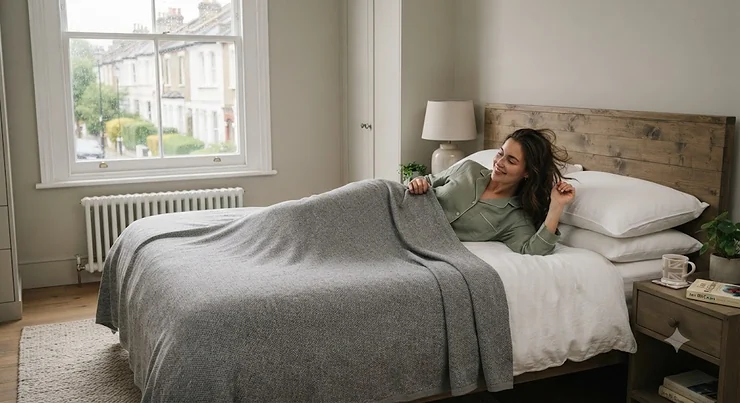
There’s a specific kind of 3am misery that only night sweats sufferers understand: you wake up with the duvet stuck to your back, the pillow damp, and that horrible choice ahead of you — strip the bed at 3am or just lie there in it until morning. If that sounds familiar, you’ve probably already started hunting for a moisture wicking blanket for night sweats, and you’re asking the right question, because bedding fabric genuinely does make a measurable difference to how quickly you dry out and cool down once the sweating starts.

Before we get into products, it’s worth being upfront about something: a blanket cannot fix the underlying reason you’re sweating in the first place, whether that’s menopause, a medication side effect, or simply a bedroom that runs too warm. What it can do is manage the aftermath — pulling moisture away from your skin through capillary action so you’re not lying in a damp patch for hours, and helping your body’s own cooling system do its job more efficiently. That distinction matters, and we’ll come back to it properly in the causes section below, including when it’s worth mentioning to your GP rather than just buying your way around it.
This guide covers seven genuine, currently available UK products across blankets, pillowcases and pyjamas, all built around moisture wicking fabric technology, so you can compare specs and real aggregated review sentiment rather than marketing copy. We’ll also dig into sweat wicking throw options for the sofa, anti-sweat bedding as a wider system rather than a single item, and how pyjamas for night sweats fit into the picture alongside your blanket.
Quick Comparison Table
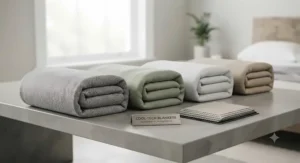
| Product Type | Fabric | Approx. Price Range | Best For |
|---|---|---|---|
| Arc-Chill synthetic throws (e.g. Elegear, Luxear) | Cooling polyester fibre | around £15-£35 | Instant cool-to-touch feel, budget buyers |
| Bamboo-blend cooling throws (e.g. Marchpower, Bedsure) | Bamboo rayon + Arc-chill | around £18-£45 | Natural-fibre preference, softer feel |
| Dual-fabric branded blankets (e.g. Silentnight) | Cotton jersey + cooling fibre | around £20-£30 | Everyday sofa-and-bed versatility |
| Cooling pillowcases | Arc-chill fibre + cotton | around £10-£16 | Completing the sleep system |
| Moisture-wicking pyjamas | Bamboo viscose | around £20-£32 | Whole-body sweat management |
The pattern that jumps out here is that synthetic Arc-Chill fabrics tend to feel colder to the touch immediately on contact, while bamboo blends lean softer and more breathable over the course of the night rather than delivering that initial icy hit. Neither approach is wrong — it depends whether you want the shock of coolness the second you lie down, or a steadier, gentler temperature regulation that holds up across a full eight hours. Worth noting too: a blanket alone only solves part of the equation, since your pillowcase and pyjamas sit against skin just as much as your throw does.
💬 Just one click — help others make better buying decisions too!😊
Top 7 Moisture Wicking Products: Expert Analysis
1. Silentnight Restore Cooling Lightweight Blanket — the trusted high-street name for everyday use
As one of the UK’s most recognisable bedding brands, this throw brings a level of mainstream credibility that smaller cooling-specific labels can’t quite match. It’s built with one side in a cooling fabric and the other in breathable jersey cotton, letting you flip it depending on how warm the room is, and it’s OEKO-TEX Standard 100 certified, meaning every component has been tested against a long list of regulated and unregulated chemicals that could otherwise irritate sensitive skin. Based on the spec comparison with more specialist cooling-tech brands, this one leans gentler and more “everyday blanket” than aggressively icy, which suits people who want a cosy throw that happens to manage heat well rather than a clinical cooling gadget. Aggregated review sentiment specifically highlights the menopause and hot flush use case, with buyers commonly describing it as a genuine improvement over standard fleece throws for reducing that trapped, sticky feeling. The main criticism that surfaces is that the cooling effect is noticeably subtler than the synthetic Arc-Chill options further down this list — a fair trade if you also want something that looks and feels like a normal, attractive blanket on the sofa.
Pros:
- ✅ OEKO-TEX certified for genuine chemical safety reassurance
- ✅ Reversible design suits both cooling and cosy moods
- ✅ Strong brand reputation for everyday reliability
Cons:
- ❌ Milder cooling sensation than dedicated Arc-Chill fabrics
- ❌ Limited colour and size range compared with newer brands
Typically priced around £20-£30, this sits comfortably in the mid-range and works especially well as a first cooling blanket if you’re not sure how strong a cooling sensation you actually want.

2. Elegear Cooling Blanket, Arc-Chill 3.0 (Q-Max 0.5) — the strongest instant cooling sensation on this list
This is the one to reach for if you want to feel the difference the second the fabric touches your skin. Elegear’s Arc-Chill 3.0 fibre carries a Q-Max rating above 0.5 — Q-Max being the standard textile measure of how quickly a fabric pulls heat away from skin on contact, where anything above roughly 0.2 is considered noticeably cool-to-touch, so a 0.5 rating is genuinely towards the top end of what’s commercially available. What most buyers overlook about Q-Max ratings is that they measure the initial contact sensation specifically, not how well a fabric performs over a full night, which is why pairing this with breathable bedding underneath matters more than the number alone suggests. It’s double-sided, with the Arc-Chill fibre on one face and a smoother, silkier mica-nylon blend on the reverse, and it’s machine washable at below 30°C, which is a genuinely practical detail for anyone dealing with frequent night sweats and correspondingly frequent laundry. Reviewers consistently note the “instant cold” sensation on first contact, with the most common complaint being that this sensation fades somewhat after 20-30 minutes of body heat exposure, which is a known and expected characteristic of Arc-Chill technology rather than a fault.
Pros:
- ✅ Genuinely strong, immediate cool-to-touch sensation
- ✅ Double-sided design offers two distinct textures
- ✅ Machine washable and fade-resistant with proper care
Cons:
- ❌ Initial cooling effect fades after prolonged body contact
- ❌ Synthetic feel won’t suit natural-fibre purists
At around £20-£35 depending on size, this is a strong mid-range pick specifically for people whose main complaint is that first, sweaty moment of waking up overheated.
3. Marchpower Bamboo Cooling Blanket (Q-Max>0.4) — best for natural-fibre preference and larger bed sizes
Where the Elegear leans synthetic, this Marchpower option puts bamboo rayon front and centre, blended with Arc-chill cooling fibre for a Q-Max rating above 0.4. Bamboo-derived rayon is naturally more absorbent than polyester, meaning it doesn’t just move moisture along the surface via capillary action the way synthetic wicking fabrics do — it also holds a certain amount of moisture within the fibre itself before releasing it, giving a slightly different, softer drying sensation. On paper this means marginally slower initial cooling than a pure Arc-Chill synthetic, but many reviewers report preferring the feel against skin over a full night, describing it as less “plasticky” than purely synthetic alternatives. It’s available up to a genuinely generous King and Super King sizing (200x220cm), which matters if you share a bed and only one of you runs hot — a common and frankly under-discussed scenario for couples navigating night sweats. Aggregated sentiment is strongly positive on softness and breathability, with the recurring minor gripe being that bamboo blends can pill slightly faster than pure synthetic fabrics after repeated washing.
Pros:
- ✅ Natural bamboo blend feels softer against sensitive skin
- ✅ Available in genuinely large King/Super King sizes
- ✅ Strong reviewer preference for full-night comfort
Cons:
- ❌ Slightly slower initial cooling sensation than pure synthetics
- ❌ Bamboo blends may pill faster with frequent washing
Pricing runs from around £25 for smaller sizes up to roughly £45 for the largest King/Super King options, which is reasonable given the genuinely large surface area on offer.
4. Bedsure Cooling Blanket, Dual-Sided Bamboo Rayon + Arc-Chill — best value dual-fabric option
Bedsure has built a strong reputation in UK bedding more broadly, and this cooling throw brings that same value-focused approach to the moisture-wicking category. It combines bamboo-derived rayon on one face with Arc-chill cooling fibre on the other, essentially offering two different cooling mechanisms in a single throw depending on which side you sleep against. Here’s what the spec sheet won’t tell you, but user reports suggest: the dual-sided design is genuinely useful across seasons rather than being a gimmick, since the bamboo side suits milder warm nights while the Arc-Chill side earns its keep during genuinely hot, sweaty episodes. Reviewers frequently mention using this specifically during pregnancy and perimenopause, two life stages where night sweats commonly overlap with a general increase in body temperature sensitivity. The most common criticism in aggregated feedback is that, being a lighter-weight throw rather than a full duvet replacement, it works best layered over a breathable sheet rather than as your only bedding in a genuinely cold room.
Pros:
- ✅ Two cooling mechanisms in one dual-sided throw
- ✅ Strong value against pricier single-fabric alternatives
- ✅ Popular specifically among pregnant and perimenopausal buyers
Cons:
- ❌ Lightweight construction needs layering in colder rooms
- ❌ Not a full duvet replacement on its own
At around £18-£28, this is one of the strongest value picks on this list, particularly for anyone wanting to test whether moisture wicking fabric technology genuinely helps before committing to a pricier option.
5. Luxear Cooling Blanket, Arc-Chill 3.0 — the flexible multi-room, multi-user pick
Luxear positions this throw less as a dedicated bedroom item and more as an all-purpose cooling blanket that moves between sofa, bed, car and even pet beds, which is a genuinely useful framing if you want one throw that earns its keep in several rooms rather than a single-purpose bedding item. It uses the same broad category of Arc-Chill cooling fibre as the Elegear option, delivering that immediate cool-to-touch sensation on contact, paired with a lightweight, packable construction that’s easy to sling in a bag for naps, travel, or even taking to the office on a stuffy afternoon. What most buyers overlook about multi-use cooling throws like this is that a smaller, lighter blanket genuinely dries faster after washing than a full king-size duvet-style cooling blanket, which matters if you’re washing it frequently to manage recurring night sweats rather than doing an occasional seasonal wash. Reviewer sentiment consistently praises the versatility angle specifically, with buyers commonly mentioning using it across multiple settings rather than confining it to one bed.
Pros:
- ✅ Genuinely versatile across sofa, bed, travel and car use
- ✅ Lightweight and quick-drying after frequent washing
- ✅ Budget-friendly entry point into cooling fabric technology
Cons:
- ❌ Smaller sizing than dedicated bed-specific throws
- ❌ Less substantial feel than heavier bamboo-blend options
Expect to pay somewhere around £15-£22, making this a sensible low-commitment way to trial moisture wicking fabric before investing in a larger, pricier bed-specific throw.
6. Elegear Cooling Pillow Cases (2 Pack) — the overlooked accessory that completes the system
It’s easy to focus entirely on the blanket and forget that your face and neck spend the whole night pressed against a pillowcase, which is arguably the single most sweat-affected contact point after your back. This two-pack pairs Arc-Chill cooling fibre on one side with soft cotton on the other, mirroring the double-sided logic of Elegear’s blanket range, and fitting standard 50x75cm pillow sizes with a hidden zip closure for a clean finish. Based on the spec comparison with the blanket, the cooling sensation and Q-Max rating are broadly consistent across Elegear’s range, meaning you get a genuinely matched system rather than mixing brands with different performance claims. What most buyers overlook about anti-sweat bedding as a whole system is that a cooling blanket paired with a standard, heat-trapping pillowcase can undercut a lot of the benefit, since your face and neck are producing sweat too — pairing accessories consistently is a small change that measurably improves the overall experience. Aggregated reviews are positive on the hidden zip and colour-matching to Elegear’s blanket line, with the main limitation being that two cases is a fairly modest supply if you’re changing bedding frequently due to heavy sweating.
Pros:
- ✅ Matches Q-Max cooling performance to Elegear’s blanket range
- ✅ Hidden zip gives a tidy, professional finish
- ✅ Addresses a commonly overlooked contact point
Cons:
- ❌ Two-pack may be limiting for frequent bedding changes
- ❌ Cooling sensation fades over the night, same as the blanket
Priced around £10-£16 for the pair, this is a genuinely sensible low-cost add-on rather than a standalone purchase, best bought alongside a matching blanket for a properly joined-up cooling sleep system.
7. Sleepy Time Women’s Bamboo Pyjamas — moisture-wicking sleepwear built specifically for night sweats
Blankets and pillowcases only manage moisture that’s already left your skin — pyjamas are the layer actually touching you the whole night, which makes them arguably just as important as the bedding itself. This set is made from bamboo fabric, marketed specifically at menopausal hot flushes and night sweats, with a loose, roomy cut including an elasticated waist and capri-length bottoms designed to avoid clinging when damp. Bamboo fabric’s natural absorbency, discussed earlier in relation to the Marchpower blanket, does double duty here: it wicks moisture away from skin while also being naturally less hospitable to the bacteria that cause odour when perspiration sits on fabric for hours, a genuinely practical benefit for anyone dealing with recurring sweating episodes. On paper this means fewer 3am outfit changes and a garment that dries faster than cotton once you’re back asleep. Reviewers consistently frame this specifically around menopause relief, describing the fit as forgiving and comfortable for a range of body shapes, with the main criticism being that the colour range and sizing options are more limited than mainstream sleepwear brands.
Pros:
- ✅ Purpose-built specifically for menopausal night sweats
- ✅ Bamboo fabric wicks moisture and resists odour build-up
- ✅ Roomy, forgiving cut avoids clinging when damp
Cons:
- ❌ Narrower colour and size range than mainstream brands
- ❌ Bamboo viscose needs gentler washing than synthetic sleepwear
Typically priced around £20-£32, this is a genuinely worthwhile companion purchase alongside any of the blankets above — the two work together rather than one replacing the need for the other.
Top 7 Products Comparison
| Product | Fabric | Q-Max Rating | Approx. Price Range | Best For |
|---|---|---|---|---|
| Silentnight Restore Cooling Lightweight Blanket | Cotton jersey + cooling fibre | Not specified | £20-£30 | Everyday, mainstream-brand reliability |
| Elegear Cooling Blanket Arc-Chill 3.0 | Arc-chill polyester | Q-Max 0.5 | £20-£35 | Strongest instant cooling sensation |
| Marchpower Bamboo Cooling Blanket | Bamboo rayon + Arc-chill | Q-Max>0.4 | £25-£45 | Natural fibre, larger bed sizes |
| Bedsure Dual-Sided Cooling Blanket | Bamboo rayon + Arc-chill | Not specified | £18-£28 | Best value dual-fabric option |
| Luxear Cooling Blanket Arc-Chill 3.0 | Arc-chill polyester | Q-Max range | £15-£22 | Multi-room, multi-use flexibility |
| Elegear Cooling Pillow Cases (2 Pack) | Arc-chill fibre + cotton | Q-Max 0.5 | £10-£16 | Completing the sleep system |
| Sleepy Time Bamboo Pyjamas | Bamboo fabric | Not specified | £20-£32 | Whole-body moisture management |
Set side by side, the Q-Max ratings tell you which throws will feel coldest the instant you climb into bed, while the fabric column tells you how that sensation is likely to hold up: synthetic Arc-Chill fibres front-load their cooling effect, while bamboo blends spread it more evenly across the night. If you’re building a full system rather than buying a single item, the Elegear Cooling Blanket Arc-Chill 3.0 paired with the matching Elegear Cooling Pillow Cases gives you consistent performance across the two biggest contact points, while adding the Sleepy Time Bamboo Pyjamas rounds out the whole-body picture rather than leaving your sleepwear working against your bedding.
Practical Usage Guide: Getting the Most From Anti-Sweat Bedding
A cooling blanket performs noticeably better when it’s part of a proper system rather than a single swap. Start with your mattress and sheets underneath — a moisture wicking blanket layered over heat-trapping synthetic sheets will fight against itself, so percale cotton or a breathable blend sheet underneath makes a genuine difference. Wash cooling fabrics as the label specifies, almost always on a gentle cold cycle below 30°C, since high heat and fabric softener can coat the fibres and blunt their wicking performance over time — fabric softener in particular tends to leave a residue that reduces capillary action, the exact mechanism that makes these fabrics work. Keep your bedroom itself cool where you can; even the best moisture wicking blanket for night sweats is working against a harder job in a room above roughly 18°C, so a cracked window or a fan running low genuinely amplifies what the fabric can do. If you’re prone to particularly heavy sweating episodes, keep a spare cooling pillowcase or two in rotation so you’re never stuck mid-wash-cycle at 3am. Finally, give any new cooling fabric a fair trial period of at least a week — the sensation of a fabric against your specific skin and sleeping temperature takes a few nights to properly assess, and first-night impressions (particularly of that strong initial Q-Max “shock”) aren’t always representative of how it performs once you’re used to it.
Real-World Scenarios: Who Actually Needs What
Consider three fairly common profiles. First, the perimenopausal or menopausal sleeper dealing with sudden, drenching night sweats several times a week — for this profile, a strong Arc-Chill throw like the Elegear Cooling Blanket paired with the Sleepy Time Bamboo Pyjamas addresses both the bedding and the sleepwear side of the problem, since menopausal sweating tends to be sudden and intense rather than a gradual warmth build-up, making that immediate Q-Max cooling sensation particularly valuable. Second, there’s the generally hot sleeper without any specific medical cause — someone who simply runs warm regardless of season, for whom a natural bamboo option like the Marchpower Bamboo Cooling Blanket often suits better, since the goal here is steady, all-night breathability rather than an intense immediate cooling hit. Third, there’s the couple sharing a bed where only one partner experiences night sweats — a genuinely common and often under-addressed situation, where a smaller, personal-sized throw like the Luxear Cooling Blanket used as a top layer on just one side of the bed avoids turning the whole bed into a cooling zone that the non-sweating partner finds too cold. Matching the product to the actual pattern of your sweating — sudden and intense versus steady and mild — matters more than simply buying the highest-rated option on the market.
Night Sweats Causes: What’s Actually Behind the Sweating
Night sweats are episodes of excessive sweating during sleep that are severe enough to soak your nightclothes or bedding, and they’re a symptom of an underlying cause rather than a condition in their own right. According to NHS guidance on night sweats, the most common causes include the menopause, obstructive sleep apnoea, certain medications (including some antidepressants, aspirin and steroid drugs like prednisolone), alcohol or drug misuse, and hypoglycaemia associated with diabetes. Less commonly, night sweats can be linked to infections such as tuberculosis, hormone disorders like an overactive thyroid, or, rarely, certain cancers such as lymphoma — though this would typically be accompanied by other clear symptoms like unexplained weight loss, not sweating alone. For many people, night sweats simply happen without an identifiable specific cause, particularly when linked to a warm bedroom, heavy bedding, or a naturally higher resting body temperature.
The honest, important point here: a moisture wicking blanket manages the symptom, not the cause. If your night sweats are new, frequent, drenching, or accompanied by other symptoms like fever, unexplained weight loss, or persistent tiredness, that’s a reason to see your GP rather than simply upgrading your bedding — bedding can make the nights more bearable while you sort out the underlying issue, but it isn’t a substitute for working out what’s actually causing the sweating in the first place.
Moisture Wicking Fabric Technology Explained
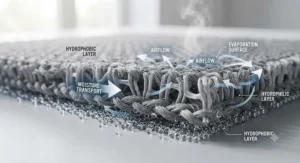
The mechanism behind every product on this list is the same core textile science, regardless of whether the fabric is synthetic Arc-Chill fibre or bamboo rayon. Moisture management in textiles works through capillary action — the fabric’s fibres draw sweat away from your skin and spread it across a larger external surface area, where it’s exposed to drier air and evaporates faster than it would sitting directly on skin. This is fundamentally different from simple absorption, which is what happens with plain cotton: cotton soaks up moisture and holds onto it within the fibre, which is why a cotton sheet or pyjama top can feel increasingly damp and heavy as the night goes on, rather than drying out. Synthetic wicking fibres like the Arc-Chill fabric used in several products above are engineered to be hydrophobic at the fibre level while still creating tiny channels between fibres that pull moisture along the surface through capillary action — essentially repelling water at the individual fibre while transporting it efficiently across the fabric as a whole. Bamboo-derived rayon works slightly differently, being more naturally absorbent than synthetic fibres while still moving moisture to the surface for evaporation, which is part of why it tends to feel softer and less “plasticky” against skin even though the underlying wicking principle is similar.
✨ Don’t Miss These Exclusive Deals!
🔍 Take your sleep setup to the next level with these carefully selected cooling picks. Click on any highlighted product to check current pricing and availability. These small changes make a genuinely noticeable difference to how you sleep!
How to Choose a Moisture Wicking Blanket for Night Sweats
- Identify your sweating pattern first. Sudden, intense episodes suit a high Q-Max synthetic fabric for immediate cooling; steady, mild overheating suits a gentler bamboo blend.
- Check the Q-Max rating where it’s provided. Anything above roughly 0.2 counts as genuinely cool-to-touch; ratings above 0.4-0.5 deliver a noticeably stronger initial sensation.
- Match the size to your sleeping situation. Shared beds where only one partner sweats benefit from a smaller personal throw rather than a full king-size cooling duvet.
- Consider the whole system, not just the blanket. Pairing a cooling throw with a matching pillowcase and moisture-wicking pyjamas addresses more contact points than the blanket alone.
- Check washing requirements before buying. Cooling fabrics generally need a gentle, low-temperature cycle without fabric softener to preserve their wicking performance long-term.
- Look for OEKO-TEX or equivalent certification. This matters more than usual for anti-sweat bedding, since the fabric sits directly against skin for hours at a time, often on already sensitive or irritated skin.
- Set a realistic budget band. Entry-level synthetic throws start around £15-£20, while bamboo blends and larger sizes typically run £25-£45 — decide whether instant cooling or fabric feel matters more to you before spending at the top end.
Common Mistakes When Buying Anti-Sweat Bedding
The most common mistake is buying a single cooling blanket and expecting it to solve a problem that’s actually coming from multiple contact points — pillowcases and pyjamas matter just as much, and a mismatched system undercuts the benefit of even the best blanket. A close second is washing cooling fabrics with fabric softener, which coats the fibres and measurably reduces their wicking capacity over repeated washes, effectively undoing the technology you paid for. Some buyers also assume a higher Q-Max number always means a better product regardless of context, when in fact a very high Q-Max synthetic can feel genuinely too cold for people who are sensitive to sudden temperature changes, particularly during a hot flush when the body’s own temperature regulation is already in flux. Another frequent error is buying the smallest, cheapest throw available to save money, then finding it doesn’t cover the areas that actually sweat most (typically the back and shoulders), which means sizing up slightly is usually worth the extra cost. Finally, plenty of people treat a cooling blanket as a medical solution and delay seeing a GP about frequent, drenching night sweats — worth repeating that bedding manages symptoms, not underlying causes.
Moisture Wicking Blankets vs Standard Bedding
This comparison is worth spelling out properly, because “just use a lighter blanket” is common but not quite the same advice as switching to genuinely moisture-wicking fabric. A standard cotton or fleece blanket manages heat purely through weight and thread density — a lighter blanket traps less warmth, which helps, but it does nothing active about moisture once you’ve started sweating; the fabric simply absorbs it and holds onto it, which is why standard bedding can feel increasingly damp and heavy through a sweating episode rather than improving. A genuinely moisture-wicking blanket, by contrast, actively moves sweat away from your skin toward the fabric’s outer surface where it evaporates faster, which is the mechanism explored in the fabric technology section above. The practical difference shows up specifically in recovery time after a sweating episode: standard bedding tends to stay damp until you physically change it, while wicking fabric noticeably speeds up the drying process, in some cases letting you fall back asleep without needing to get up and change anything at all.
| Comparison Point | Standard Bedding | Moisture Wicking Blanket |
|---|---|---|
| Moisture handling | Absorbs and retains | Actively wicks and evaporates |
| Feel once damp | Heavy, clingy, cold-wet | Continues moving moisture away |
| Typical fabric | Cotton, fleece, polyester fill | Arc-chill fibre, bamboo rayon blends |
| Best For | Cold sleepers, low sweating | Frequent or heavy night sweats |
The clearest takeaway from that table: if your night sweats are occasional and mild, a lighter standard blanket may genuinely be enough, and there’s no need to spend on specialist fabric. If sweating is frequent or drenching, the active wicking mechanism does measurably more work than weight reduction alone, which is where the products covered in this guide earn their higher price tag over a basic throw.
What to Expect: Real-World Performance
Translating fabric specs into an actual night’s sleep: with a high Q-Max synthetic throw like the Elegear Cooling Blanket, expect a genuinely noticeable cool sensation in the first few minutes of contact, gradually warming as your body heat builds, which is entirely normal and doesn’t mean the fabric has “stopped working” — it’s simply reached thermal equilibrium with your skin. With a bamboo blend like the Marchpower Bamboo Cooling Blanket, expect a gentler, steadier feel without that sharp initial drop, but generally good breathability sustained across the whole night. During an actual sweating episode, moisture-wicking fabric won’t prevent you from sweating — nothing short of addressing the underlying cause does that — but it should noticeably reduce how long you feel damp afterwards, and many aggregated reviews describe falling back asleep faster simply because the fabric against their skin dries out within minutes rather than staying wet until morning. Washing frequency matters for maintained performance too: fabrics washed correctly (cold, gentle, no softener) tend to retain their cooling properties for considerably longer than those washed on hot cycles with standard detergent routines.
Pyjamas for Night Sweats: Completing the Sleep System
It’s worth dwelling on sleepwear specifically, since it’s the layer most directly in contact with your skin for the entire night, arguably more relevant than the blanket on top. Standard cotton pyjamas absorb sweat much like standard bedding — comfortable initially, increasingly damp and heavy as a sweating episode continues. Bamboo-based options like the Sleepy Time Women’s Bamboo Pyjamas apply the same wicking principle covered earlier, moving moisture away from skin while bamboo’s natural properties also help resist the bacterial growth that causes odour when sweat sits on fabric for extended periods. A loose, roomy cut matters more than people expect too — tight-fitting sleepwear traps a layer of warm, humid air against skin regardless of the fabric’s wicking properties, which is why several of the pyjama options built specifically for menopausal night sweats favour a relaxed fit with breathing room at the waist and underarms over a fitted silhouette. If you only make one change beyond your blanket, moisture-wicking pyjamas are the single highest-impact addition, simply because of how much skin contact time they cover compared with any other single item.
Long-Term Cost & Maintenance
A single moisture-wicking throw, priced anywhere from roughly £15 for a compact synthetic option to £45 for a large bamboo-blend King size, is a one-off purchase that should last several years with correct care — there’s no recurring cost the way there is with, say, replacement filters or consumables. The real long-term cost driver is washing: cooling fabrics generally need gentler, cooler washes than standard bedding, which can mean slightly higher detergent and water costs if you’re washing more frequently due to heavy sweating, though this is a marginal difference rather than a significant ongoing expense. Where the real economics play out is in the full system rather than any single item — building out a blanket, a pair of cooling pillowcases, and moisture-wicking pyjamas together typically runs somewhere in the £50-£90 range in total, which compares very reasonably against the cumulative cost and inconvenience of frequent mid-night bedding changes and extra laundry loads from standard fabric that simply doesn’t dry out on its own. Lifespan-wise, synthetic Arc-Chill fibres tend to be genuinely durable across hundreds of wash cycles if fabric softener is avoided, while bamboo blends, though softer to the touch, are somewhat more prone to gradual pilling and may need replacing a little sooner with heavy, frequent use.
Features That Actually Matter (And Those That Don’t)
Marketing language around cooling bedding throws around impressive-sounding numbers and claims, so it’s worth separating genuine signal from noise. Q-Max ratings, where actually provided by the manufacturer, are a genuinely useful, standardised measure worth checking — a rating above roughly 0.2 indicates real cool-to-touch performance, and this is backed by established textile testing methodology rather than being a marketing invention. OEKO-TEX certification is another feature that actually matters, particularly for anything sitting against skin overnight for years; research into sleep thermal comfort consistently points to the direct contact layer as the most influential factor in overnight temperature regulation, which is exactly what a University-led study on bed cooling in overheated UK bedrooms confirmed — targeted, localised cooling at the point of body contact measurably improved sleep time and reduced the time it took participants to fall asleep, more effectively than simply cooling the whole room. What matters far less than the packaging suggests: colour options, decorative stitching, and vague claims of “advanced technology” without any specific Q-Max figure or fabric composition behind them. If a listing can’t tell you what the fabric actually is or provide any cooling metric at all, treat the cooling claim with a healthy amount of scepticism.
Safety, Materials & Managing Underlying Causes
Anyone buying bedding that sits against skin for hours every night reasonably wants reassurance about what’s actually in the fabric. OEKO-TEX Standard 100 certification, present on several products in this guide, means every component — including threads and trims, not just the main fabric — has been independently tested against over 1,000 regulated and unregulated chemicals that could be harmful to health, which is a genuinely meaningful safety signal rather than a vague eco-buzzword. It’s worth being clear-eyed, too, about the limits of what bedding can achieve: for menopausal night sweats specifically, British Menopause Society guidance on managing vasomotor symptoms outlines a range of evidence-based approaches beyond bedding alone, including lifestyle adjustments and, where appropriate, hormonal or non-hormonal medical treatments discussed with a GP. Cooling bedding sits comfortably alongside these approaches as a genuinely useful comfort measure, but it isn’t positioned by medical guidance as a standalone treatment, and it’s worth keeping that distinction in mind rather than expecting a blanket alone to resolve severe or persistent symptoms.
FAQ
❓ What actually causes night sweats?
❓ Does a moisture wicking blanket really work for night sweats?
❓ What's the difference between moisture wicking and cooling fabric?
❓ Can pyjamas alone help with night sweats without a special blanket?
❓ How do you wash a moisture wicking blanket without ruining it?
Conclusion
There’s no single moisture wicking blanket for night sweats that suits everyone, because the right choice depends on how your sweating actually shows up — sudden and drenching, or steady and mild. If you want the strongest, most immediate cooling sensation, the Elegear Cooling Blanket Arc-Chill 3.0 delivers a genuinely noticeable Q-Max effect, ideally paired with the matching Elegear Cooling Pillow Cases for a consistent system. If you prefer a softer, more natural feel that holds up gently across a full night, the Marchpower Bamboo Cooling Blanket or the value-focused Bedsure Dual-Sided Cooling Blanket are worth prioritising. For anyone wanting mainstream brand reassurance alongside cooling performance, the Silentnight Restore Cooling Lightweight Blanket is a sensible, familiar choice, while the Luxear Cooling Blanket suits anyone wanting flexibility across sofa, bed and travel. Don’t overlook the Sleepy Time Women’s Bamboo Pyjamas either — sleepwear genuinely does as much work as your blanket, arguably more. Whatever you choose, remember that bedding manages the symptom rather than the cause, so persistent or severe night sweats are always worth a conversation with your GP alongside whatever you change in the airing cupboard.
Recommended for You
- Double-Sided Cooling Blanket: 7 Best Reversible Picks (2026)
- Cooling Blanket for Hot Sleepers: 7 Best UK Picks for 2026
- Lightweight Blanket for Travel: 7 Best Packable Picks 2026
Disclaimer: This article contains affiliate links. As an Amazon Associate, I earn from qualifying purchases. If you purchase products through these links, we may earn a small commission at no additional cost to you.
✨ Found this helpful? Share it with your friends! 💬🤗
