
In This Article
Picture this: you’re curled up on the sofa on a drizzly February evening, wrapped in what you think is just another cosy blanket. But what if that same blanket was quietly harming the planet with every wash? The truth is, conventional blankets often contain synthetic fibres derived from petroleum, chemical dyes that pollute waterways, and manufacturing processes that guzzle ridiculous amounts of water and energy.
Here’s the kicker—the textile industry accounts for approximately 6-8% of global CO₂ emissions, and producing just one kilogram of conventional cotton can require up to 10,000 litres of water. That’s enough to keep you hydrated for nearly 14 years! But don’t worry, I’m not here to guilt-trip you into freezing through winter. Instead, I’ve spent weeks researching, comparing, and analysing eco friendly blankets available in the UK market to help you make informed, planet-positive choices without sacrificing comfort or style.
In this comprehensive guide, you’ll discover seven exceptional sustainable throws that balance environmental responsibility with genuine cosiness. Whether you’re seeking organic cotton certified to rigorous standards, innovative bamboo blends, or recycled materials given a beautiful second life, there’s an environmentally friendly bedding option perfectly suited to your needs and budget. We’ll explore everything from GOTS certification to the latest textile recycling innovations, helping you understand exactly what makes a blanket truly eco-friendly—and which marketing claims are just greenwashing nonsense.
By the end of this article, you’ll know precisely which eco friendly blankets deliver the best value, warmth, and environmental credentials for 2026. Let’s dive into the world of conscious consumer blankets that prove sustainability and luxury aren’t mutually exclusive.
Quick Comparison Table: Top Eco Friendly Blankets at a Glance
| Product | Material | Size Options | Price Range | Best For | Sustainability Feature |
|---|---|---|---|---|---|
| Bedsure Recycled Cotton Throw | 100% Recycled Cotton | 127x152cm, 152x203cm | £25-£35 | Budget buyers | GRS certified recycled content |
| Natural Collection Recycled Blanket | UK Recycled Yarn | 150x200cm | £29-£48 | British-made quality | Shredded textile waste repurposed |
| Elegear Bamboo Throw | Bamboo Viscose Blend | 130x150cm, 150x200cm | £35-£45 | Hot sleepers | Naturally antimicrobial, breathable |
| Tweedmill Pure Wool Throw | 100% Pure New Wool | 150x183cm | £65-£85 | Heritage quality | UK-made, biodegradable natural fibre |
| Cottsbury Organic Cotton Blanket | GOTS Certified Organic Cotton | 150x200cm, 180x220cm | £120-£150 | Premium organic | Zero pesticides, fair trade certified |
| Atlantic Blankets Recycled Cotton | Recycled Cotton Blend | 140x200cm | £78-£95 | Cornwall craftsmanship | Ocean Promise eco-commitment |
| Bearaby Cotton Napper | Organic Cotton Chunky Knit | Various weights | £199-£269 | Weighted blanket fans | Hand-knitted, zero synthetic fill |
💬 *Just one click – help others make better buying decisions too!*😊
Top 7 Eco Friendly Blankets: Expert Analysis
1. Bedsure Recycled Cotton Throw Blanket – Best Budget-Friendly Option
When it comes to planet friendly throws that won’t obliterate your monthly budget, the Bedsure Recycled Cotton Throw stands head and shoulders above the competition. This clever blanket transforms post-consumer textile waste into something genuinely luxurious, proving that sustainability needn’t command premium pricing.
Key Specifications:
- 100% recycled cotton with Global Recycled Standard (GRS) certification
- Available in multiple sizes (127x152cm for sofas, 152x203cm for beds)
- Oeko-Tex Standard 100 certified (free from harmful chemicals)
UK buyers consistently rave about the surprisingly substantial weight and softness, with many commenting that it feels far more expensive than its £25-£35 price tag suggests. The waffle weave texture provides excellent breathability whilst maintaining warmth—perfect for our unpredictable British weather. One Edinburgh reviewer mentioned using it year-round: “lightweight enough for summer evenings, layerable for winter cosiness.”
✅ Pros:
- Exceptional value for certified recycled content
- Machine washable at 30°C (maintains quality)
- Multiple colour options to match any décor
- Free delivery on Amazon.co.uk for Prime members
❌ Cons:
- Texture may feel slightly coarser than virgin cotton initially
- Limited larger sizes compared to premium options
Price Range: £25-£35 UK Availability: Amazon.co.uk with next-day delivery options
2. Natural Collection UK Recycled Blanket – Best British Heritage Choice
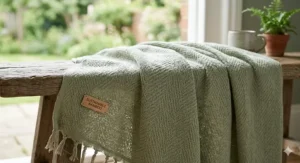
There’s something rather special about supporting British manufacturing whilst simultaneously diverting textile waste from landfills. The Natural Collection Recycled Blanket accomplishes both with admirable style, transforming shredded clothing and redundant yarn into cosy throws with over 50 years of Yorkshire heritage behind them.
Key Specifications:
- Made in the UK from 100% recycled yarn
- Unique random-colour selection (each blanket genuinely one-of-a-kind)
- Biodegradable natural materials
- Cold water wash only to preserve integrity
What makes this blanket particularly fascinating is its “lottery” element—you cannot choose your specific colour combination, as each piece depends on available recycled materials. British buyers have embraced this quirk enthusiastically, with several reviewers collecting multiple blankets to create eclectic, personalised combinations. The tweed-like texture receives consistent praise, described as “substantial without being heavy” and “perfect for draping over furniture.”
✅ Pros:
- Genuinely unique patterns (no two identical)
- British-made with 50+ years heritage
- Supports domestic textile recycling infrastructure
- Natural, biodegradable materials
❌ Cons:
- Cannot select specific colours
- Requires cold water washing only
- Random colour selection may not suit minimalist aesthetics
Price Range: £29-£48 UK Availability: Amazon.co.uk and specialist sustainable homeware retailers
3. Elegear Bamboo Cooling Throw – Best for Hot Sleepers
If you’re one of those unfortunate souls who perpetually overheats under traditional blankets, the Elegear Bamboo Cooling Throw will feel like discovering air conditioning for your sofa. This innovative sustainable throw combines bamboo viscose fibres with advanced cooling technology, creating a blanket that actively wicks moisture and regulates temperature.
Key Specifications:
- Bamboo viscose blend with natural antimicrobial properties
- Q-Max cooling rating of 0.35 (respectable for natural materials)
- Double-sided design (bamboo one side, cooling fibre reverse)
- Hypoallergenic and dust-mite resistant
UK customers particularly appreciate the year-round versatility, with Manchester buyers noting it’s “surprisingly cool at normal room temperature” even during those rare British heatwaves. The natural antibacterial properties mean it stays fresher between washes—practical for busy households. Bamboo cultivation requires significantly less water than conventional cotton (approximately 1/3 the amount), making this an environmentally sound choice beyond its cooling prowess.
✅ Pros:
- Excellent temperature regulation for hot sleepers
- Naturally antimicrobial (reduces washing frequency)
- Sustainable bamboo requires minimal water
- Hypoallergenic properties ideal for sensitive skin
❌ Cons:
- Bamboo viscose processing uses chemicals (though Oeko-Tex certified safe)
- Slightly more expensive than basic cotton options
- May feel too cool for winter-only use
Price Range: £35-£45 UK Availability: Amazon.co.uk with free Prime delivery
4. Tweedmill Pure Wool Throw – Best for Natural Fibre Purists
When you want ethical blankets UK with impeccable heritage credentials, look no further than Tweedmill’s Pure Wool Throw. Manufactured in North Wales on the banks of the River Dee, this blanket represents everything wonderful about British textile manufacturing: quality, durability, and environmental consciousness woven into every thread.
Key Specifications:
- 100% pure new wool from responsibly sourced flocks
- Made in UK by Tweedmill (established textile manufacturer)
- Two-year guarantee (testament to exceptional durability)
- Multiple colourways including classic checks and stripes
Wool remains one of nature’s most remarkable sustainable fibres—naturally flame-resistant, temperature-regulating, and completely biodegradable at end-of-life. This blanket exemplifies the “buy well, buy once” philosophy championed by sustainable living advocates. British buyers consistently mention the substantial feel and longevity, with several reviews from customers who’ve owned their Tweedmill blankets for over a decade. The wool naturally repels moisture and odours, requiring minimal washing compared to synthetic alternatives.
✅ Pros:
- 100% natural, biodegradable material
- UK-made supporting local manufacturing
- Exceptional durability (2-year guarantee)
- Natural temperature regulation properties
- Minimal washing required
❌ Cons:
- Higher initial investment (£65-£85)
- Requires careful wool-specific washing
- Not suitable for vegan households
- Some find wool texture less soft than cotton
Price Range: £65-£85 UK Availability: Multiple UK retailers including independent homeware shops
5. Cottsbury GOTS Organic Cotton Blanket – Best Premium Certified Option
For those seeking the absolute pinnacle of green bedding options with verifiable credentials, the Cottsbury Organic Cotton Blanket delivers luxury with a clear environmental conscience. This GOTS-certified (Global Organic Textile Standard) beauty represents the gold standard in organic textiles, meeting rigorous criteria from field to finished product.
Key Specifications:
- 100% GOTS-certified organic cotton
- Fair Trade certified production
- Zero pesticides, herbicides, or synthetic fertilisers used
- Available in two generous sizes (150x200cm, 180x220cm)
The GOTS certification represents the world’s leading textile processing standard for organic fibres, encompassing environmental AND social criteria throughout the entire supply chain. This means the cotton was grown without toxic chemicals, processed with approved low-impact dyes, and manufactured in facilities meeting strict labour standards. UK buyers describe the softness as “hotel luxury” and note it becomes even more sumptuous with repeated washing. The substantial 500gsm weight provides year-round comfort without excessive bulk.
✅ Pros:
- Highest level organic certification (GOTS)
- Fair Trade ensures ethical worker treatment
- Zero harmful chemicals from farm to finish
- Exceptional softness improves with washing
- Supports sustainable agriculture practices
❌ Cons:
- Premium pricing (£120-£150)
- Limited colour options compared to conventional blankets
- Requires gentle washing to maintain certification integrity
Price Range: £120-£150 UK Availability: Specialist organic bedding retailers and direct from Cottsbury
6. Atlantic Blankets Recycled Cotton Collection – Best for Cornwall Craftsmanship
Cornwall-based Atlantic Blankets has built a reputation for creating timeless, environmentally responsible textiles that balance luxury with sustainability. Their Recycled Cotton Collection exemplifies this commitment, transforming production waste and post-consumer textiles into blankets that rival high-end department store offerings.
Key Specifications:
- Recycled cotton from production waste and post-consumer textiles
- “Ocean Promise” environmental commitment
- Manufactured with ethical labour practices
- Superior drape quality suggesting premium construction
What distinguishes Atlantic Blankets from competitors is their holistic approach to sustainability, extending beyond just material sourcing to encompass their entire business model. Their “Ocean Promise” commits to reducing environmental impact through recyclable packaging, energy-efficient production, and supporting marine conservation initiatives. UK buyers particularly appreciate the attention to finishing details—the weight, drape, and edge stitching all suggest considerably higher quality than the £78-£95 price point.
✅ Pros:
- Premium recycled cotton quality
- Cornwall-based company supporting local economy
- “Ocean Promise” broader environmental commitment
- Luxury feel at mid-range pricing
- Excellent drape and finishing quality
❌ Cons:
- Limited availability compared to major retailers
- Fewer size options than some competitors
- May require specialist washing for longevity
Price Range: £78-£95 UK Availability: Direct from Atlantic Blankets and selected eco-friendly homeware retailers
7. Bearaby Cotton Napper Weighted Blanket – Best for Weighted Comfort
If you’ve been curious about weighted blankets but concerned about their environmental impact (most use synthetic fills and plastic pellets), the Bearaby Cotton Napper solves this dilemma beautifully. This hand-knitted marvel uses organic cotton throughout—no artificial filling materials, no microplastic pollution, just pure weighted comfort from sustainably sourced fibres.
Key Specifications:
- 100% organic cotton (both cover and weight)
- Hand-knitted chunky design (no synthetic fill required)
- Available in multiple weights (6.8kg, 9kg, 11.3kg)
- Machine washable despite weighted construction
- Oeko-Tex Standard 100 certified
The innovative chunky-knit design distributes weight evenly through the structure itself rather than relying on glass beads or plastic pellets. This creates natural breathability—a godsend for weighted blanket enthusiasts who previously struggled with overheating. UK buyers mention the immediate calming effect and improved sleep quality, though several note the substantial investment requires careful weight selection (generally recommended at 10% of body weight). The breathable construction makes it particularly suitable for our climate, working year-round rather than just winter months.
✅ Pros:
- Zero synthetic fill or microplastics
- 100% organic cotton throughout
- Natural breathability prevents overheating
- Hand-knitted craftsmanship
- Proven sleep and anxiety benefits
- Machine washable (remarkable for weighted blankets)
❌ Cons:
- Significant investment (£199-£269)
- Limited colour options
- Requires careful size/weight selection
- Some users expected thicker individual layers
Price Range: £199-£269 UK Availability: Amazon.co.uk and direct from Bearaby
What Makes a Blanket Truly Eco Friendly? Understanding Sustainability Credentials
The term “eco friendly” gets thrown around rather liberally in marketing materials these days, so let’s cut through the greenwashing and establish what genuinely qualifies a blanket as environmentally responsible. True sustainable throws demonstrate measurable environmental benefits across multiple dimensions: material sourcing, manufacturing processes, longevity, and end-of-life disposal.
Material Matters: From Organic Cotton to Recycled Fibres
The foundation of any eco friendly blanket lies in its raw materials. Organic cotton certified to GOTS standards eliminates the pesticides, insecticides, and synthetic fertilisers that plague conventional cotton cultivation. Research from the United Nations Environment Programme demonstrates that textile production significantly impacts water quality and biodiversity—making material choices crucial for environmental protection.
Recycled materials offer a different but equally valuable sustainability pathway. By diverting textile waste from landfills (over 92 million metric tonnes produced globally each year), recycled cotton and polyester blankets reduce demand for virgin materials whilst addressing our mounting waste crisis. The Global Recycled Standard (GRS) certification verifies recycled content and ensures responsible processing throughout the supply chain.
Bamboo presents an intriguing middle ground—whilst technically sustainable due to rapid growth and minimal water requirements, the viscose conversion process requires chemical treatment. Look for Oeko-Tex certification confirming that any chemical residues fall within safe parameters.
Manufacturing Processes: Energy, Water, and Chemical Use
A blanket’s environmental footprint extends far beyond its fibres. Progressive manufacturers implement water recycling systems, renewable energy sources, and closed-loop chemical processes. The textile industry traditionally consumes enormous water quantities—producing just 1kg of cotton requires up to 10,000 litres under conventional methods. Sustainable manufacturers combat this through efficiency improvements and innovative dyeing technologies.
Low-impact dyes and GOTS-approved chemicals eliminate toxic residues that would otherwise contaminate waterways. The Manufacturing Restricted Substance List (MRSL) maintained by GOTS ensures that only approved, low-toxicity inputs enter production, protecting both workers and ecosystems.
Durability and Longevity: The Most Sustainable Blanket Is One You Keep
Here’s an uncomfortable truth often overlooked in sustainability discussions: the most environmentally responsible blanket is the one you don’t replace every season. A £150 organic cotton blanket lasting 15 years carries far less environmental impact than a £30 synthetic throw replaced annually. Quality construction, durable materials, and timeless design all contribute to true sustainability by extending product lifespan.
This principle underpins the traditional “buy well, buy once” philosophy. Wool blankets from manufacturers like Tweedmill routinely last decades with proper care. Their biodegradable nature means even eventual disposal doesn’t burden ecosystems with persistent microplastics.
How to Choose the Perfect Eco Friendly Blanket for Your Needs
Step 1: Identify Your Primary Use Case
Start by honestly assessing how you’ll actually use your sustainable throw. Sofa blankets endure different stresses than bed toppers—think pet claws, spilled tea, and constant repositioning versus gentle overnight use. Hot sleepers benefit from bamboo or lightweight cotton, whilst those perpetually chilly might prefer substantial wool. Your climate matters too; our variable British weather often demands year-round versatility rather than seasonal specialisation.
Step 2: Evaluate Your Sustainability Priorities
Not all environmental concerns weigh equally for every buyer. Some prioritise organic certification above all else, whilst others focus on recycled content or local manufacturing. Vegans obviously exclude wool options, regardless of environmental credentials. Understanding your personal hierarchy helps navigate inevitable trade-offs—for instance, bamboo’s sustainability credentials versus chemical processing requirements, or premium organic cotton prices versus budget-friendly recycled alternatives.
Step 3: Consider Certification and Verification
In an era of rampant greenwashing, third-party certifications provide invaluable reassurance. Look for specific standards rather than vague environmental claims: GOTS for organic textiles, GRS for recycled content, Oeko-Tex for chemical safety, and Fair Trade for ethical labour practices. These certifications involve rigorous auditing and verification, distinguishing genuine sustainability from marketing spin. The Soil Association provides excellent resources for understanding UK-specific textile certifications.
Step 4: Calculate True Cost Over Lifetime
That £200 weighted blanket might induce sticker shock initially, but divide by a conservative 10-year lifespan and you’re investing just £20 annually in better sleep and reduced environmental impact. Compare this against replacing a £40 synthetic blanket every 2-3 years—the premium option actually proves more economical whilst delivering superior quality and sustainability. Include washing costs too; natural antimicrobial fibres like wool and bamboo require less frequent laundering, saving water, energy, and detergent over years of use.
Step 5: Verify UK Availability and Delivery
Brilliant eco friendly blankets do you little good if shipping from overseas negates their environmental benefits through transport emissions. Prioritise UK-based manufacturers or retailers with efficient distribution networks. Amazon.co.uk frequently offers carbon-neutral delivery options, whilst specialist sustainable retailers often use recyclable packaging and consolidate shipments to minimise environmental impact.
Step 6: Read Real Customer Reviews from UK Buyers
Product descriptions paint idealised pictures, but reviews from actual British customers reveal practical realities. Look specifically for UK-based reviewers discussing durability, washing performance, and how blankets perform in our specific climate. Pay attention to critical reviews too—they often highlight genuine limitations that help set realistic expectations and prevent disappointing purchases.
Step 7: Plan for End-of-Life Disposal
Truly circular thinking extends beyond purchase to eventual disposal. Natural fibres like organic cotton and wool biodegrade completely, returning nutrients to soil rather than persisting as microplastic pollution for centuries. Recycled content blankets can often be recycled again, though verify local textile recycling infrastructure accepts them. Some manufacturers operate take-back programmes, reclaiming old products for recycling or upcycling—an increasingly important consideration as the Ellen MacArthur Foundation promotes circular economy principles throughout the fashion and textile sectors.
Comparing Eco Friendly Materials: Organic Cotton vs Bamboo vs Recycled Fibres
| Material | Sustainability Strengths | Environmental Considerations | Best For | Typical Price Range |
|---|---|---|---|---|
| Organic Cotton | Zero pesticides, biodegradable, GOTS certified | High water requirements (though less than conventional) | Luxury bedding, sensitive skin | £80-£150 |
| Bamboo Viscose | Fast-growing, minimal water/pesticides, antimicrobial | Chemical processing required for viscose conversion | Hot sleepers, antimicrobial properties | £35-£85 |
| Recycled Cotton | Diverts waste, reduces virgin material demand | May have shorter fibres (affects longevity) | Budget-conscious sustainability | £25-£65 |
| Recycled Polyester | Reduces plastic waste, durable | Still sheds microplastics, not biodegradable | High-durability applications | £30-£70 |
| Wool | Natural, biodegradable, long-lasting | Animal product (not vegan), requires specialist care | Heritage quality, natural regulation | £65-£120 |
The Science Behind Sustainable Textile Production
Modern eco friendly blankets benefit from remarkable technological advances transforming textile manufacturing. Chemical recycling processes now depolymerise mixed textile waste—polyester, cotton, nylon blends previously considered unrecyclable—into constituent monomers suitable for repolymerisation into virgin-quality fibres. This breakthrough enables true circular material cycles where fibres cycle repeatedly through production, use, and recovery with minimal property degradation.
Research published in academic journals demonstrates that chemical recycling of polyester achieves approximately 1.88kg CO₂ equivalent savings per kilogram compared to conventional virgin production. Polyester regeneration via hydrolytic depolymerisation eliminates 92% of water consumption whilst maintaining material quality standards. These innovations, combined with AI-powered sorting systems achieving 95%+ accuracy in fibre composition identification, are revolutionising textile waste management.
Natural dye technologies present another fascinating development. Traditional textile dyeing consumes enormous water quantities whilst releasing toxic chemical residues. Innovative approaches using plant-based dyes, bacterial fermentation, and waterless dyeing methods dramatically reduce environmental impact. Whilst not yet widespread in mainstream production, these technologies increasingly appear in premium eco friendly blankets from progressive manufacturers.
Understanding Certifications: Your Guide to Legitimate Eco Labels
GOTS (Global Organic Textile Standard)
The gold standard for organic textiles, GOTS certification requires products contain minimum 70% certified organic fibres (95% for “organic” label grade). The standard encompasses the entire supply chain—from harvesting through manufacturing, processing, and trading—ensuring organic status alongside environmental and social criteria. Third-party verification prevents greenwashing whilst giving consumers credible assurance.
Global Recycled Standard (GRS)
GRS certification verifies recycled content throughout the supply chain, from source to final product. Products must contain minimum 50% certified recycled material to qualify, with independent verification at each processing stage. The certification also addresses social, environmental, and chemical requirements, ensuring recycled content doesn’t compromise worker safety or environmental protection.
Oeko-Tex Standard 100
This independent certification system tests textile products for harmful substances. Every component—fibres, dyes, accessories, even packaging—undergoes testing against over 1,000 regulated and unregulated chemicals. Products meeting stringent safety criteria receive certification, reassuring consumers that textiles contact skin safely even for vulnerable populations like infants.
Fair Trade Certification
Fair Trade certification extends beyond environmental concerns to social justice, ensuring workers receive fair wages, safe conditions, and dignified treatment. In textile manufacturing—historically plagued by exploitative labour practices—Fair Trade certification provides crucial verification that your conscious consumer blankets weren’t produced through worker exploitation.
Caring for Your Eco Friendly Blanket: Maximising Longevity and Sustainability
Washing Best Practices for Different Materials
Proper care dramatically extends blanket lifespan whilst minimising environmental impact. Organic cotton and bamboo generally tolerate 30°C machine washing with eco-friendly detergents—avoid fabric softeners which coat fibres and reduce performance. Wool requires gentler treatment: hand washing in cool water with specialist wool detergent or professional dry cleaning for premium pieces. Recycled cotton benefits from similar care as organic, though some colour variation may occur over time due to mixed fibre sources.
Energy-Efficient Drying Methods
Line drying whenever possible conserves energy whilst extending blanket life—tumble dryer heat stresses fibres and accelerates degradation. British weather often complicates air drying, but indoor drying racks near radiators or heated airers offer compromise solutions. When machine drying proves necessary, use low heat settings and remove promptly to minimise wrinkles requiring energy-intensive ironing.
Storage to Prevent Damage
Off-season storage protects blankets from dust, moths, and moisture damage. Natural fibre blankets (wool, cotton) benefit from breathable cotton storage bags rather than plastic containers which trap moisture and encourage mildew. Cedar blocks or lavender sachets deter moths naturally without toxic mothballs. Avoid prolonged compression which creates permanent creasing—rolling rather than folding helps maintain shape for chunky knit styles.
Spot Cleaning to Reduce Washing Frequency
Many spills and marks respond beautifully to immediate spot cleaning, eliminating full washing cycles. Blot (never rub) fresh spills with clean, damp cloths. For stubborn marks, diluted eco-friendly dish soap often suffices. This approach particularly benefits bamboo and wool blankets whose natural antimicrobial properties reduce washing frequency requirements anyway.
Common Myths About Sustainable Blankets Debunked
Myth: Eco Friendly Blankets Are Always Expensive
Whilst premium organic options command higher prices, budget-friendly sustainable alternatives absolutely exist. Recycled cotton blankets start around £25-£30, delivering genuine environmental benefits at accessible price points. The key lies in understanding value over cost—a £150 blanket lasting 15 years represents better investment than repeatedly replacing £40 synthetics every few years.
Myth: Natural Always Means Better
Not necessarily. Conventional cotton production actually carries enormous environmental costs: excessive water use, pesticide contamination, soil degradation. Without organic certification, “natural” cotton may prove less sustainable than quality recycled polyester. Similarly, bamboo requires chemical processing for viscose conversion—natural origin doesn’t automatically confer environmental superiority. Scrutinise specific production methods rather than relying solely on natural vs synthetic distinctions.
Myth: Recycled Materials Feel Inferior
Modern textile recycling produces fibres matching or exceeding virgin material quality. Chemical depolymerisation processes break polymers into constituent monomers, enabling virgin-quality repolymerisation. Mechanical recycling can slightly shorten cotton fibres, but skilled blending with longer-staple virgin cotton maintains excellent hand feel and durability. Many customers honestly cannot distinguish recycled from virgin materials in blind comparisons.
Myth: Sustainable Blankets Require Special Care
Whilst some natural fibres benefit from gentle treatment (wool particularly), most eco friendly blankets prove refreshingly practical. Organic cotton, bamboo, and recycled cotton typically withstand standard 30°C machine washing—no fussier than conventional alternatives. In fact, natural antimicrobial properties often reduce washing frequency, making sustainable options easier to maintain long-term.
The Future of Sustainable Bedding: Emerging Innovations
The textile industry stands at a fascinating inflection point, with breakthrough innovations promising to revolutionise sustainable bedding over coming years. Bio-fabricated materials derived from mushroom mycelium, bacterial cellulose, or even lab-grown fibres edge closer to commercial viability. These materials could offer performance characteristics impossible with traditional fibres whilst eliminating agricultural land use entirely.
Waterless dyeing technologies using supercritical CO₂ or air-dyeing methods could eliminate the 1.3 trillion gallons of water the industry consumes annually for dyeing and finishing. Several manufacturers already pilot these approaches, with full commercial deployment anticipated within 2-3 years for mainstream products.
Perhaps most exciting: advances in textile-to-textile recycling infrastructure mean your current eco friendly blanket could become feedstock for future products, creating true circular material flows. The UK government’s growing focus on extended producer responsibility may soon require manufacturers to design for recyclability and operate take-back programmes, accelerating this transition beyond voluntary early adopters.
Where to Buy Eco Friendly Blankets in the UK: Trusted Retailers
Online Specialists
- Amazon.co.uk – Largest selection, competitive pricing, quick delivery
- Ethical Superstore – Curated sustainable homeware collection
- Immaculate Vegan – Vegan-certified blankets and throws
- Shop Like You Give a Damn – Fair trade and ethical options
Physical Retailers
- John Lewis & Partners – Expanding sustainable homeware range
- Marks & Spencer – Plan A certified sustainable products
- Independent eco homeware boutiques – Support local, often stock unique brands
Direct from Manufacturers
- Atlantic Blankets – Cornwall-based, Ocean Promise commitment
- Cottsbury – Premium GOTS organic cotton specialists
- Tweedmill – Welsh heritage wool blankets
- Bearaby – Innovative weighted blanket designs
FAQ: Your Eco Friendly Blanket Questions Answered
❓ What certifications should I look for in eco friendly blankets?
❓ Are bamboo blankets truly sustainable despite chemical processing?
❓ How long should a quality eco friendly blanket last?
❓ Can I recycle my old eco friendly blanket when it wears out?
❓ Do eco friendly blankets actually keep you as warm as conventional ones?
Conclusion: Making Your Sustainable Blanket Choice
Choosing eco friendly blankets represents far more than a simple purchase decision—it’s a statement about the world you want to inhabit and leave for future generations. The seven options explored in this guide prove conclusively that environmental responsibility and genuine comfort aren’t mutually exclusive. Whether you opt for budget-friendly recycled cotton at £25, mid-range bamboo cooling throws around £40, heritage British wool at £75, or premium GOTS organic cotton reaching £150, you’re investing in products that respect both planetary boundaries and human dignity.
The most sustainable blanket ultimately proves whichever one you cherish and maintain for years, potentially decades. That Tweedmill wool throw passed down through generations carries infinitely less environmental impact than annually discarded fast-fashion alternatives. Quality, durability, and timeless design trump trendy purchases every time in the sustainability equation.
As textile recycling technologies advance and circular economy principles gain traction, the eco friendly blankets you purchase today could become raw materials for tomorrow’s products—a beautiful closing of material loops that traditional linear consumption models never contemplated. Your choices matter, your voice as a conscious consumer blankets buyer carries weight, and together we can nudge the entire industry toward more regenerative, equitable practices.
Start with one genuinely sustainable throw. Experience the difference quality makes. Then watch as your home gradually transforms into a sanctuary of comfort and conscience intertwined.
✨ Don’t Miss These Exclusive Deals!
🔍 Take your sustainable living to the next level with these carefully selected products. Click on any highlighted item to check current pricing and availability on Amazon.co.uk. These eco friendly blankets will help you create authentic comfort your family will love whilst supporting our planet’s future!
Recommended for You
- 7 Best Long Lasting Blankets UK – Durable Quality Throws 2026
- 7 Best Blankets That Don’t Bobble or Pill UK 2026
- 7 Best Anti Pilling Fleece Blankets UK 2026: Bobble-Free Comfort
Disclaimer: This article contains affiliate links. If you purchase products through these links, we may earn a small commission at no additional cost to you. Prices shown are approximate and may vary based on size, colour, and retailer.
✨ Found this helpful? Share it with your mates! 💬🤗
