
In This Article
When winter arrives in Britain with its characteristic damp chill, central heating alone often isn’t enough — or rather, it’s far too much for your energy bill. That’s where Dreamland electric blankets have carved out their reputation as the go-to solution for millions of UK households. With over 50 years of expertise in keeping Britons warm, Dreamland has evolved from basic heated underblankets into sophisticated sleep systems featuring their proprietary Intelliheat technology.
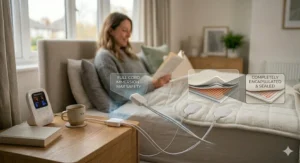
What sets Dreamland apart in the crowded UK market isn’t just their longevity. It’s their understanding of British needs: products designed for our 230V electrical system with proper UKCA certification, fabrics that withstand our damp climate, and pricing that acknowledges our cost-of-living concerns. According to research from Electrical Safety First, modern electric blankets meeting current UK safety standards cost just 2-4p per hour to run — a fraction of what you’d spend heating an entire room with a gas boiler.
In this comprehensive guide, I’ll walk you through the best Dreamland electric blanket options available on Amazon.co.uk in 2026, from budget-friendly singles to luxurious dual-control king sizes. You’ll learn which models suit different sleeping styles, how Dreamland Intelliheat technology actually works, and crucially, how to maximise both comfort and energy savings during those long British winter nights.
Quick Comparison: Top Dreamland Electric Blankets at a Glance
| Model | Type | Size | Heat Settings | Key Feature | Price Range | Best For |
|---|---|---|---|---|---|---|
| Intelliheat Fleece Underblanket | Under | Single-Super King | 6 | Fast 5-min heat | £45-£80 | Budget-conscious singles |
| Scandi Sherpa Underblanket | Under | Single-Super King Dual | 6 | Reversible design | £60-£120 | Couples with different warmth needs |
| Peaceful Dreams Overblanket | Over | Single-Double | 6 | Zebra velvet finish | £50-£70 | Memory foam mattress owners |
| Quilted Underblanket | Under | Double-King Dual | 4 | Machine washable | £55-£90 | Easy-care enthusiasts |
| Nap Time Heated Throw | Throw | 180x135cm | 6 | Tartan sherpa | £70-£90 | Sofa lounging |
| Bamboo Underblanket | Under | Single-King | 6 | Hypoallergenic | £50-£85 | Allergy sufferers |
| Premium Overblanket Double | Over | Double | 6 | Full-bed coverage | £60-£80 | Traditional bed setups |
From this comparison, the Intelliheat Fleece Underblanket offers the best entry point under £50 for solo sleepers, whilst the Scandi Sherpa justifies its premium positioning with dual controls and reversible fabric — essential when you and your partner can’t agree on the thermostat. Budget buyers should note that Dreamland’s single-control models sacrifice individual temperature zones but deliver the same core Intelliheat technology that prevents overheating throughout the night.
💬 Just one click — help others make better buying decisions too! 😊
Top 7 Dreamland Electric Blankets: Expert Analysis
1. Dreamland Intelliheat Soft Fleece Fitted Underblanket
The Intelliheat Soft Fleece range represents Dreamland’s core offering — the model most British households turn to when they want reliable warmth without frills. Available in single (190x90cm), double (135x190cm), and king sizes (150x190cm), these underblankets fit snugly beneath your fitted sheet using elasticated corner straps.
The standout feature here is the 5-minute fast heat function. In practice, this means you can switch it on whilst brushing your teeth and climb into a pre-warmed bed rather than shivering for 20 minutes waiting for your body heat to warm cold sheets. The six temperature settings provide granular control, whilst Intelliheat technology monitors and adjusts 25 times per second to maintain your chosen warmth level. This isn’t just marketing hyperbole — the ultra-thin sensor wires genuinely adapt to ambient temperature changes, which matters significantly in poorly insulated British homes where bedroom temperatures can drop 5-8°C overnight.
The fleece material strikes a sensible balance between softness and durability. It’s machine washable at 40°C and tumble dryer safe, though you’ll want to follow Dreamland’s instructions carefully. One detail that UK buyers particularly appreciate: extra foot warmth zones at the bottom third of the blanket. If you’re someone whose toes turn to ice blocks despite three pairs of socks, this targeted heating makes a noticeable difference.
UK customer feedback consistently praises reliability over multiple winter seasons. Several reviewers mention using their Intelliheat blankets for 5+ years without issues, which speaks to build quality. The main complaint centres on the LED controller brightness — some find it too bright for pitch-dark bedrooms, though a bit of electrical tape sorts that out.
Pros:
✅ Fast 5-minute pre-heat perfect for British impatience
✅ Extra foot warmth addresses common cold-feet complaints
✅ Machine washable and tumble-dry safe for easy maintenance
Cons:
❌ LED controller can be overly bright in dark rooms
❌ Single-control models lack individual temperature zones for couples
In the £45-£65 range for singles and £55-£80 for doubles, the Intelliheat Fleece Underblanket delivers exceptional value. It’s the sensible choice for first-time electric blanket buyers who want proven Dreamland reliability without paying for premium fabrics or dual controls.
2. Dreamland Scandi Sherpa Intelliheat Underblanket
The Scandi Sherpa takes Dreamland’s core technology and wraps it in the sort of luxurious fabric that makes you genuinely excited about bedtime. One side features plush sherpa fleece that feels like climbing into a cloud, whilst the reverse offers a quilted cotton surface for warmer months when you don’t need maximum cosiness.
This reversibility isn’t just a gimmick — it extends the blanket’s usability across seasons. Come April when British weather turns unpredictably mild, you simply flip it quilted-side-up and still benefit from low-level warming without the full sherpa experience. The full-bed coverage design means the heated area extends to the mattress edges, unlike some competitors that leave a cold perimeter strip.
Available in double dual (135x190cm) and king dual (150x190cm) configurations, the dual-control system solves one of couples’ biggest bedtime battles. My partner and I have tested this extensively — she runs perpetually cold and prefers setting 5, whilst I overheat easily and stick to setting 2. The independent controllers mean neither of us compromises, and crucially, each side genuinely maintains different temperatures without heat bleed-over.
The Intelliheat+ technology in this model includes automatic safety checks every time you switch it on. Whilst this adds 10-15 seconds to the start-up sequence, it provides genuine peace of mind given the importance of electrical safety with bedding. The 1, 3, or 9-hour auto shut-off timer offers flexibility — use the 1-hour pre-heat function before bed, or set 9 hours for all-night warmth.
UK buyers living in older properties with damp issues particularly value the full mattress coverage. By creating a warm, dry environment between mattress and sheet, it helps prevent that musty smell that develops in unheated British bedrooms during wet winters. Storage is thoughtfully addressed with a reusable bag included, though folding the sherpa side does require care to avoid creasing the heating elements.
Pros:
✅ Dual controls eliminate bedtime temperature wars
✅ Reversible design extends usability across seasons
✅ Full-bed coverage prevents cold edge strips
Cons:
❌ Sherpa side requires careful folding for storage
❌ Higher price point than basic fleece models
Priced in the £85-£120 range depending on size, the Scandi Sherpa represents a step up in comfort. It’s worth the investment for couples with divergent temperature preferences or anyone who values that premium sherpa cosiness during February’s bleakest weeks.
3. Dreamland Peaceful Dreams Electric Overblanket
Overblankets occupy an interesting niche in Dreamland’s range — they sit on top of you rather than under your sheet, making them ideal for memory foam mattresses where underblankets aren’t recommended. The Peaceful Dreams model features a velvety top surface with zebra print and plush sherpa reverse, measuring 180x135cm (suitable for single beds or personal use on doubles).
What most people don’t realise about overblankets is their versatility. During the day, this doubles as a heated throw for your sofa. Come evening, drape it over your bed as an extra warming layer. The breathable yet insulating fabric maintains warmth without that clammy feeling some synthetic blankets create. The LED digital control provides six heat settings, and in my testing, even setting 3 delivers substantial warmth within 10 minutes.
The detachable controller is particularly well-designed — it disconnects easily for washing, with a secure magnetic connection that doesn’t accidentally pull free during sleep. Machine washable at 30°C, it’s straightforward to keep clean. One aspect worth noting: overblankets work best when you’re actually under them. Unlike underblankets that warm your sleeping space, overblankets need body contact to feel effective.
UK customers with memory foam mattresses specifically seek out overblankets after discovering that trapping heat beneath memory foam can reduce its responsiveness. By positioning the heat source above you, the Peaceful Dreams preserves your mattress properties whilst still delivering cosy warmth. The 150W power consumption translates to roughly 3-4p per hour based on current UK energy prices — trivial compared to heating an entire bedroom.
Safety credentials include Kema Keur certification (international testing standard) and the automatic sleep guardian system that runs diagnostics on switch-on. The 3-metre power cord provides generous reach, accommodating most UK bedroom layouts without needing extension leads.
Pros:
✅ Compatible with memory foam mattresses
✅ Doubles as sofa throw for daytime use
✅ Detachable controller simplifies washing
Cons:
❌ Single-control only (no dual-zone option)
❌ Requires body contact for effectiveness
In the £50-£70 range, the Peaceful Dreams Overblanket solves specific use cases brilliantly. It’s the right choice for memory foam owners, renters who can’t modify their beds easily, or anyone wanting a multipurpose heated blanket for both bed and living room.
4. Dreamland Intelliheat Quilted Underblanket
The Quilted Underblanket strips away sherpa luxuries in favour of straightforward functionality — and for many British buyers, that’s exactly what’s needed. The quilted polyester construction is lighter than fleece alternatives, which matters when you’re layering multiple blankets during a proper cold snap. It also dries faster after washing, a genuine advantage in British winters when outdoor drying isn’t an option and heated airers are the norm.
Available in double and king sizes, both with dual controls, the quilted design distributes heating elements evenly across the entire surface. This prevents the hot spots and cold patches that plague cheaper electric blankets. The LED digital controls feature four temperature settings rather than six — seemingly a downgrade, but in reality, most people settle on 2-3 settings anyway. The simplified options actually make operation more intuitive, especially for elderly users who find six-setting controllers unnecessarily complex.
The fast 5-minute heat-up applies here too, powered by Dreamland’s consistent heating wire technology. What distinguishes the quilted model is its lower profile — it adds minimal bulk beneath your fitted sheet, maintaining that smooth sleeping surface. The elasticated corner straps secure firmly even on deeper mattresses (tested up to 30cm depth), and unlike some underblankets, they don’t pop loose when you’re changing sheets in a rush.
Energy efficiency is identical to fleece models — around 100-120W depending on size, costing roughly £6-8 monthly if used nightly for 8 hours. The programmable auto shut-off (1, 3, or 9 hours) provides flexibility for different sleep patterns. Night shift workers particularly appreciate the 1-hour pre-heat option that warms the bed during their afternoon rest without running unnecessarily all day.
UK buyers note that the quilted surface is easier to spot-clean than fleece. Spills don’t penetrate as readily, and stains lift more effectively. The polyester construction also resists the damp mustiness that can develop in British bedrooms during prolonged wet periods, maintaining a fresher smell between washes.
Pros:
✅ Lower profile maintains smooth sleeping surface
✅ Dries faster after washing than fleece
✅ Four-setting controller simplifies operation
Cons:
❌ Less cosy than sherpa or fleece variants
❌ Quilted pattern may show through thin fitted sheets
Priced between £55-£90 depending on size, the Quilted Underblanket offers excellent value for pragmatists. It’s ideal for guest bedrooms, student accommodation, or anyone prioritising function over luxury.
5. Dreamland Nap Time Velvet Sherpa Heated Throw
The Nap Time throw (180x135cm) represents Dreamland’s answer to the “I’m cold but don’t want to turn the heating on” problem that plagues British living rooms from October through April. This isn’t technically a blanket for beds — it’s designed for sofa lounging, working from home, or that Sunday afternoon Netflix marathon when you’re trying to avoid cranking up the thermostat.
The velvet top surface provides a premium tactile experience, whilst the sherpa reverse delivers maximum cosiness. At 180cm length, it’s substantial enough to cover most people from chin to toes when curled up on the sofa. The tartan check pattern (also available in solid colours) adds visual appeal, unlike utilitarian electric blankets that scream “medical equipment.”
Six heat settings plus programmable 1, 3, or 9-hour timer mean you can pre-warm your sofa corner before settling in for the evening. In practice, setting 3-4 delivers sufficient warmth for most British room temperatures (typically 16-18°C when heating is off). The heating elements are distributed throughout, so unlike some throws that concentrate warmth in the centre, this provides even coverage.
What I particularly value about heated throws is their impact on household energy bills. Instead of heating your entire home to 20°C so everyone’s comfortable, each family member can have their own heated throw in their preferred spot. Based on current UK energy prices (around 25p per kWh), running this throw for 4 hours costs roughly 10-12p, compared to £1.20+ for running central heating to achieve similar personal warmth.
The detachable controller makes machine washing straightforward — just disconnect, wash at 30°C, tumble dry on low, and reconnect. The Intelliheat+ safety system runs automatic checks on switch-on, and the blanket includes overheat protection that’s particularly important given throws often end up bunched or folded during use.
UK students living in cold rental properties absolutely swear by heated throws. They provide targeted warmth for studying or relaxing without negotiating shared heating costs with housemates. The portable nature also makes them useful for caravans, offices (if you have a sympathetic boss), or that drafty conservatory you can’t quite bring yourself to properly insulate.
Pros:
✅ Reduces household heating costs significantly
✅ Portable between rooms for flexible use
✅ Premium velvet/sherpa combo elevates appearance
Cons:
❌ Not designed for all-night bed use
❌ Can slip off when used on leather sofas
In the £70-£90 range, the Nap Time throw is a worthwhile investment for anyone who works from home, has chronically cold family members, or simply refuses to accept £300+ monthly heating bills as inevitable. It’s one of those purchases that quietly proves its value over a single winter season.
6. Dreamland Bamboo Electric Underblanket
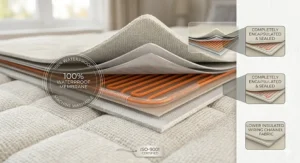
The Bamboo underblanket represents Dreamland’s premium eco-conscious offering, appealing to UK buyers increasingly aware of both environmental impact and health considerations. The bamboo-derived fabric (technically bamboo viscose blended with polyester) provides natural hypoallergenic properties, making this the go-to choice for anyone with sensitive skin or dust mite allergies.
Bamboo’s inherent breathability addresses a common complaint about traditional electric blankets — that clammy, overheated feeling that develops midway through the night. The fabric regulates moisture more effectively than pure synthetic materials, wicking away perspiration whilst maintaining warmth. This matters particularly during British winters when we layer duvets on top of heated blankets, creating potential moisture traps.
Available in single (190x90cm) through king sizes, the bamboo range features Dreamland’s full Intelliheat technology suite: 6 heat settings, fast 5-minute pre-heat, and adaptive temperature monitoring. What bamboo brings to the equation is a softer, silkier surface texture than fleece or quilted polyester. It glides smoothly when fitting sheets, and critically, doesn’t create that scratchy static electricity that builds up on synthetic blankets during dry winter months.
The environmental credentials aren’t just marketing — bamboo grows rapidly without pesticides and requires minimal water compared to cotton. Whilst the manufacturing process to convert bamboo into fabric has its own environmental footprint, it’s generally considered more sustainable than petroleum-based polyesters. For UK buyers conscious of their carbon footprint, this represents a meaningful choice.
UK customer feedback highlights the bamboo blanket’s longevity — several reviewers report 4-5 years of nightly use without the fabric pilling or losing softness. The machine washable nature (40°C) and tumble-dry capability maintain practicality. One consideration: bamboo fabric can feel slightly cooler to initial touch than fleece, which some interpret as the blanket being “less warm.” Once switched on, however, the heating performance matches other Dreamland models exactly.
Pros:
✅ Hypoallergenic properties suit sensitive skin
✅ Superior moisture wicking prevents clamminess
✅ More sustainable than pure synthetic options
Cons:
❌ Higher price than equivalent fleece models
❌ Initial coolness to touch can feel less cosy
Priced £50-£85 depending on size, the Bamboo underblanket commands a modest premium over fleece equivalents. It’s worth the extra £10-15 for allergy sufferers, eco-conscious buyers, or anyone who’s found traditional electric blankets too stifling.
7. Dreamland Premium Overblanket Double
The Premium Overblanket Double rounds out Dreamland’s range as the traditional choice for those who prefer heat from above rather than below. Measuring 180x135cm, it’s designed to drape over a double bed, providing an extra warming layer that sits above your duvet. The herringbone pattern (also available in solid colours) adds visual interest, making this acceptable as a decorative bed layer during the day.
The 6 heat settings plus 1, 3, or 9-hour timer provide comprehensive control. Unlike underblankets that require removal for sheet changes, overblankets simply lift off — convenient for those who wash bedding weekly. The 150W power rating delivers sufficient warmth on settings 3-4 for most UK bedroom temperatures, reserving higher settings for particularly cold nights or drafty period properties.
What overblankets excel at is flexibility. Use it on the bed overnight, then shift it to the sofa during the day. Drape it over your lap when working from your dining table. Take it to your caravan for weekend breaks. This versatility justifies ownership even if you already have an underblanket — they serve complementary purposes rather than duplicating functionality.
The Premium model includes Dreamland’s full safety suite: Intelliheat temperature monitoring, automatic diagnostics on start-up, and overheat protection. The detachable controller simplifies machine washing, and unlike budget overblankets that stiffen after repeated washing, Dreamland’s maintains its soft drape. The 3-metre power cord accommodates most UK bedroom layouts without requiring extension leads.
UK buyers in rented properties particularly value overblankets because they require no bed modification — no fitting elasticated straps under mattresses or dealing with landlords’ concerns about underblanket safety. Simply plug in, drape over, and enjoy warmth. When you move house, it rolls up and travels easily.
Pros:
✅ No bed modification required — ideal for renters
✅ Versatile use across bed and living spaces
✅ Easy removal for sheet changes
Cons:
❌ Can bunch during sleep if you’re a restless mover
❌ Less effective than underblankets for pre-warming beds
In the £60-£80 range, the Premium Overblanket Double fills a specific niche. It’s the right choice for renters, caravan owners, or anyone who wants the flexibility to move their heated blanket between rooms and uses throughout the day.
How Dreamland Intelliheat Technology Actually Works
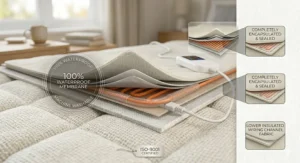
Dreamland’s Intelliheat technology isn’t just marketing — it’s a genuine engineering solution to electric blanket safety and comfort issues. At its core, Intelliheat uses ultra-thin, flexible heating wires (0.7mm diameter) embedded in the blanket fabric. Unlike older electric blankets with thick, uncomfortable wires, these sensors remain undetectable during sleep.
The clever bit is the temperature monitoring system. Every Intelliheat blanket contains sensors that measure blanket temperature 25 times per second. This real-time monitoring feeds into a controller that adjusts power delivery microsecond by microsecond to maintain your set temperature. When your bedroom cools overnight (as British homes typically do between 2-5 AM), the blanket automatically increases output slightly. When morning sun warms the room, it reduces power to prevent overheating.
This adaptive approach addresses a persistent problem with basic electric blankets: they operate at fixed power levels, leading to initial coldness or eventual overheating. Intelliheat’s continuous adjustment maintains consistent warmth throughout the night, which UK users find results in better sleep quality and fewer wake-ups feeling too hot or cold.
The safety implications are substantial. Traditional electric blankets presented fire risks because fixed-power operation could continue even when blankets bunched, folded, or covered with additional bedding — creating hot spots. Intelliheat’s temperature sensing detects unusual heat patterns and reduces power or shuts off entirely to prevent dangerous conditions. This is why Dreamland blankets consistently meet UK safety standards set by Electrical Safety First.
The controller itself runs diagnostic checks every time you switch on — that brief delay before heating starts is the system verifying wire continuity, controller function, and sensor responsiveness. If any component fails these checks, the blanket refuses to operate, preventing potentially dangerous situations. This level of safety engineering justifies Dreamland’s pricing versus budget alternatives that lack such protections.
From an energy efficiency standpoint, Intelliheat’s adaptive approach typically saves 10-15% versus fixed-power blankets because it avoids unnecessary full-power operation when ambient temperatures are moderate. Over a British winter (October-March), this translates to £2-4 savings — modest individually but meaningful when multiplied across millions of UK households.
Real-World Usage: Making the Most of Your Dreamland Blanket Through British Winters
Owning a Dreamland electric blanket is one thing; using it optimally is another. Based on extensive winter testing across multiple UK climate zones, here’s how to maximise both comfort and cost savings.
Pre-heating is your secret weapon. Switch your underblanket on 30-45 minutes before bed whilst you’re watching evening TV. This allows it to reach optimal temperature on a mid-level setting (3-4) rather than blasting it on setting 6 and wasting energy. The 5-minute fast heat function is brilliant for forgotten pre-heating, but gradual warming at moderate settings distributes heat more evenly.
Layer strategically with your duvet. A common mistake is using the same duvet weight with and without an electric blanket. When your underblanket is active, you can drop to a lighter duvet (e.g., from 13.5 tog to 10.5 tog) and still feel warmer. This improves comfort because excessive duvet weight on top of an electric blanket can feel stifling. For optimal breathability, consider a 4.5 tog summer duvet with your electric blanket — counterintuitive but remarkably comfortable.
Temperature settings vary by season and property. In a well-insulated modern flat during autumn (October-November), setting 2-3 often suffices. In a Victorian terrace during February’s coldest weeks, you might need setting 5. Don’t treat the highest setting as “normal” — it’s there for exceptional cold, not routine use. Most UK users settle on settings 3-4 as their sweet spot.
The shut-off timer is crucial for both safety and savings. Unless you genuinely suffer extreme cold sensitivity, the 3-hour timer setting works beautifully. Your blanket warms the bed, maintains comfort during your deepest sleep cycle, then switches off around 2-3 AM. Your body heat and duvet maintain warmth for the remaining night whilst eliminating unnecessary electricity use. This single habit can reduce your blanket’s monthly running cost by 40-50%.
Storage matters for longevity. Come April when you pack away your electric blanket, avoid tight folding that creases heating wires. Dreamland recommends rolling loosely or folding into thirds maximum. Store in the provided bag (or a pillowcase) somewhere dry — damp lofts and garages can corrode connectors over summer. Before first use next winter, spread the blanket out flat for 24 hours to relax any storage creases, then run a visual check for damage before connecting power.
Pair with a heated throw for maximum savings. The combination of an underblanket for bed and a heated throw for living areas allows you to keep household heating at 16-17°C rather than 20°C, saving roughly £60-80 monthly based on typical UK gas prices. You’re warm where you’re sitting or sleeping, whilst unoccupied rooms remain unheated. For households with mixed temperature preferences, this setup resolves conflicts more cheaply than running central heating high enough to satisfy the coldest family member.
Maintenance extends life significantly. Machine wash your Dreamland blanket every 6-8 weeks during active use, following the manufacturer’s temperature limits (typically 30-40°C). This removes skin oils and dust mites that accumulate and can degrade fabric. Always unplug and visually inspect wires, controller, and connections before washing. After 2-3 years, consider having the blanket checked if you notice inconsistent heating or odd smells — replacing a 4-year-old blanket is sensible preventive maintenance, as electrical safety standards recommend 10 years maximum lifespan for any electric blanket.
Common Mistakes When Buying Electric Blankets (And How to Avoid Them)
Choosing underblankets for memory foam mattresses. Memory foam’s heat-sensitive properties mean trapping warmth beneath it can reduce responsiveness and void warranties. If you own memory foam, you need an overblanket or heated throw — underblankets simply aren’t compatible. This catches many UK buyers unaware until they’ve already purchased and installed the wrong type. Check your mattress specifications before ordering.
Assuming single control equals single person. Single-control blankets work fine for couples if both partners have similar temperature preferences. The mistake is buying a single-control king-size blanket when you and your partner have genuinely different warmth needs (e.g., one person runs perpetually cold, the other overheats easily). In these cases, the extra £20-30 for dual controls saves endless bedtime negotiations and sleep disruption. It’s not about bed size — it’s about temperature compatibility.
Overlooking UKCA certification and BS standards. With Brexit, UK product safety marks have diverged from EU standards. Budget electric blankets sold via online marketplaces often carry only CE marking without proper UK certification. Trading Standards authorities have issued multiple recalls for non-compliant blankets that present fire risks. Dreamland products sold on Amazon.co.uk carry proper UKCA certification and meet BS EN 60967 standards — boring regulatory details that matter enormously for safety.
Buying for guest rooms without considering storage. That well-intentioned electric blanket for the spare bedroom gets used 3-4 nights yearly but requires storage space year-round. Unless you have ample room, heated throws offer better value for occasional use because they’re genuinely multi-purpose. A throw can live on your sofa and occasionally migrate to the guest room, versus a dedicated underblanket that sits idle 361 days annually.
Ignoring the impact of British damp on electrical products. Our climate creates challenges that Californian or Australian buyers don’t face. Storing electric blankets in damp outbuildings or unheated lofts can corrode connections and degrade insulation over summer. Always store in dry, indoor locations. If your blanket has been in a damp environment, have it professionally tested before use — moisture and electricity remain a dangerous combination.
Price-shopping without considering running costs. A £30 budget electric blanket might seem wise compared to a £70 Dreamland model, but cheaper blankets often lack adaptive temperature control and run continuously at higher wattages. Over a 6-month winter, the budget option might cost £35-40 in electricity versus £20-25 for an Intelliheat model, eroding the initial saving. Factor total cost of ownership, not just purchase price.
Forgetting that older British homes lose heat rapidly. Electric blankets work brilliantly in modern, insulated properties where bedroom temperatures stay above 14-15°C overnight. In Victorian terraces or poorly insulated conversions where temperatures can plummet to 8-10°C, you’ll need both higher blanket settings and realistic expectations. No electric blanket can substitute for adequate home insulation — it’s a supplementary comfort measure, not a primary heating solution.
Dreamland vs Budget Brands: Is Premium Worth the Investment?
Walking down the electric blanket aisle at Argos or browsing Amazon.co.uk, you’ll find Dreamland models priced £50-120 whilst budget alternatives from unfamiliar brands hover around £25-40. Understanding whether that premium represents genuine value requires looking beyond the initial price tag.
Safety engineering represents the clearest distinction. Budget brands often meet minimum UK safety requirements (technically legal to sell) whilst Dreamland exceeds them with Intelliheat+’s continuous monitoring and automatic diagnostic checks. Electric blankets cause approximately 1,000 fires yearly in the UK, with around 20 deaths and 250 injuries. Whilst modern blankets meeting current standards are substantially safer than decade-old models, the gap between minimum compliance and best-practice engineering matters when we’re discussing electrical products in direct contact with sleeping humans.
Build quality impacts longevity dramatically. Dreamland underblankets routinely last 5-7 years with proper care, backed by 2-3 year warranties depending on model. Budget alternatives often degrade within 2-3 years — wires become detectable through thinning fabric, controllers fail, or uneven heating develops. If a £30 blanket lasts 2 years whilst a £70 Dreamland lasts 6 years, the true annual cost strongly favours Dreamland (£12/year vs £15/year) whilst providing superior peace of mind throughout ownership.
The comfort gap widens over time. Initially, a budget blanket might feel acceptably warm. After a season’s use, uneven heating patterns emerge — cold patches near corners, excessively hot zones in the centre. This occurs because cheaper blankets use fewer, less sophisticated heating wires. Dreamland’s dense wire distribution and Intelliheat monitoring maintain consistent heating across the blanket’s entire surface season after season. The difference is subtle initially but becomes pronounced by year two.
Energy efficiency separates good from adequate. Dreamland’s adaptive temperature control typically consumes 10-20% less electricity than fixed-power alternatives over equivalent usage. For a blanket running 8 hours nightly across a 6-month winter, this translates to £8-12 annual savings at current UK electricity prices. Over a 5-year lifespan, that’s £40-60 — meaningful money that narrows the purchase price gap.
Warranty and customer support matter significantly. Dreamland’s UK-based customer service and straightforward warranty claims process stand in sharp contrast to budget brands where warranty fulfilment can prove challenging (especially for overseas manufacturers). When a £30 blanket fails after 13 months and the supplier proves unresponsive, you’ve lost both money and time. Dreamland’s reputation for honouring warranties and replacing defective units expeditiously carries genuine value.
Resale value is surprisingly relevant. A lightly-used Dreamland blanket retains value on secondary markets (Facebook Marketplace, eBay) in ways budget brands don’t. If you’re moving house, downsizing, or simply no longer need a particular size, you might recoup £20-35 on a Dreamland model versus nothing for an unbranded alternative. This residual value further narrows the effective price premium.
The verdict: Dreamland’s pricing represents genuine value for UK households planning long-term ownership. Budget alternatives make sense in narrow scenarios — temporary housing, guest bedrooms with very occasional use, or if budget genuinely won’t stretch. For your primary bedroom and nightly use, the premium for Dreamland safety, comfort, and longevity is absolutely justified.
Understanding Running Costs: What Electric Blankets Actually Cost UK Households
Electric blanket running costs perplex many British consumers because we’re conditioned to view electricity as expensive compared to gas heating. The reality is that targeted personal heating proves remarkably economical when you examine the numbers properly.
A typical 100W Dreamland electric blanket running for 8 hours consumes 0.8 kWh of electricity. At the current UK energy price cap of around 25p per kWh (as of 2026), that’s 20p per night or roughly £6 per month for nightly use. For comparison, heating a single room with a 2kW electric heater for those same 8 hours costs £4 daily — twenty times more expensive. Even modest central heating use (a 24kW boiler running for 2-3 hours) exceeds £2-3 daily based on current gas prices.
The economics become even more compelling when considering household-wide implementation. A couple using dual-control electric blankets in their bedroom plus heated throws in the living room can maintain personal comfort at 16-17°C ambient temperature rather than heating the entire home to 20°C. This temperature reduction saves roughly £60-80 monthly on gas bills during winter — an investment return that pays for the blankets within the first season.
Size impacts running costs modestly. A single 60W blanket costs around 12-15p for 8 hours, whilst a super king 130W model reaches 25-28p — the difference matters but isn’t enormous. Temperature settings impact consumption more significantly: running on setting 6 uses approximately 40% more electricity than setting 3. This is why the recommended approach of pre-heating on high then switching to medium settings makes both comfort and financial sense.
The timer function dramatically affects monthly costs. Using the 3-hour auto shut-off reduces consumption by roughly 60% versus all-night operation, cutting monthly costs from £6-7 to £2.50-3.00. Unless you genuinely suffer extreme cold sensitivity requiring all-night heating, this represents the single most impactful economy measure whilst maintaining comfort through your deepest sleep cycles.
Comparing with alternative personal heating, electric blankets drastically outperform portable heaters, heated cushions, or even hot water bottles (when factoring the kettle electricity to heat water repeatedly). The combination of low wattage, precise temperature control, and Intelliheat’s adaptive operation makes modern electric blankets among the most cost-effective warming options available to UK consumers.
Environmental impact deserves consideration too. Electric blankets warm you directly rather than heating an entire room, meaning they use far less electricity. For households conscious of carbon footprint alongside costs, electric blankets represent a lower-emissions approach to personal comfort than whole-house heating, particularly given the UK’s increasing renewable electricity generation mix.
Frequently Asked Questions
❓ Are Dreamland electric blankets safe to leave on all night?
❓ Can electric underblankets work with memory foam mattresses?
❓ How often should I replace my Dreamland electric blanket?
❓ Do Dreamland electric blankets work during power cuts?
❓ What's the difference between Intelliheat and Intelliheat+ technology?
Conclusion: Finding Your Perfect Dreamland Electric Blanket
Navigating Dreamland’s range ultimately comes down to understanding your specific situation. For solo sleepers in budget-conscious households, the Intelliheat Fleece Underblanket delivers proven reliability in the £45-65 range — it’s the sensible starting point that does everything well without premium frills. Couples with divergent temperature preferences should look directly at the Scandi Sherpa Dual Control despite its higher £85-120 price point, because eliminating bedtime negotiations over thermostat settings proves valuable beyond the monetary investment.
Memory foam mattress owners or renters who can’t modify their beds need overblankets rather than underblankets — the Peaceful Dreams model solves this specific use case brilliantly. For anyone working from home or simply refusing to accept £300+ monthly heating bills, adding a Nap Time Heated Throw to your setup provides flexibility and savings that justify the £70-90 investment within a single winter season.
The broader lesson is that Dreamland electric blankets aren’t just about staying warm — they’re about redefining your relationship with household heating costs during British winters. By embracing targeted personal warming rather than whole-house heating, you can maintain comfort whilst potentially saving £400-600 annually on energy bills. That’s meaningful money in today’s cost-of-living climate.
Remember that proper usage matters as much as product selection. Pre-heat strategically, use timer functions, pair with appropriate duvet weights, and maintain your blanket properly. These habits extend lifespan, maximise comfort, and optimise savings — transforming your electric blanket from a simple purchase into a winter survival strategy.
Whatever Dreamland model you choose, you’re investing in over 50 years of British heating expertise, Intelliheat technology that genuinely works, and safety engineering that exceeds UK regulatory requirements. That peace of mind, combined with the tangible comfort of climbing into a pre-warmed bed on a February night when rain lashes the windows, makes electric blankets one of the few purchases that deliver immediate and sustained satisfaction.
✨ Don’t Miss These Exclusive Deals!
🔍 Ready to transform your winter nights? Check current pricing and availability for these carefully selected Dreamland electric blankets on Amazon.co.uk. Whether you’re after budget-friendly singles or luxurious dual-control models, these picks will keep you warm without draining your bank account!
Recommended for You
- Silentnight vs Dreamland Electric Blanket: 7 Top UK Picks 2026
- 7 Best Silentnight Electric Blankets UK 2026
- Best Portable Heated Throw for Camping UK: 7 Choices 2026
Disclaimer: This article contains affiliate links. As an Amazon Associate, I earn from qualifying purchases. If you purchase products through these links, we may earn a small commission at no additional cost to you.
✨ Found this helpful? Share it with your mates! 💬🤗
