

In This Article
If you’ve spent any time browsing American parenting forums or baby registries, you’ll have run into the term “receiving blanket” and wondered whether it’s something British parents are somehow missing out on. The honest answer to receiving blanket vs swaddle blanket is more about terminology than genuinely different products — but there are real, practical differences worth understanding before you fill your newborn’s drawer with the wrong thing. This guide breaks down exactly what each term means, why British parents rarely use the phrase “receiving blanket” at all, and which real, currently available products on Amazon UK actually earn their keep in those exhausting first few months.
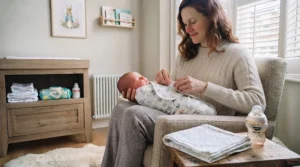
We’ve pulled together honest comparisons across seven genuine muslin squares and swaddle products, aggregated UK review sentiment, and guidance from recognised safer sleep organisations, so you’re not left guessing which pack of fabric squares is worth your money. Parenting publications regularly put muslin cloths through hands-on testing for softness, absorbency and durability, and that same rigour is exactly what’s missing from most American-style “receiving blanket” listings that simply repeat manufacturer copy. Whether you’re after the best receiving blanket equivalent, a proper muslin receiving blanket for burping and mopping up, or a purpose-built swaddle for sleep, you’ll find sourced, straightforward advice here rather than a rewritten Amazon listing.
Quick Comparison Table
| Item Type | Typical Size | Typical Price Range | Best For |
|---|---|---|---|
| Muslin Squares (UK “Receiving Blanket”) | 70-120cm square | £10-£35 | Burping, mopping up, light swaddling, sun cover |
| Traditional Swaddle Blanket | 110-120cm square | £20-£35 | Wrapping for sleep, more stretch/give |
| Pre-Made Swaddle Bag/Sack | Sized by weight | £18-£40 | Parents wanting a no-fold, secure swaddle |
Looking at the table, muslin squares dominate the versatile end of the market, doing double duty as what Americans would call a receiving blanket and what British parents simply call a “muslin.” Purpose-built swaddle bags cost more but remove the guesswork of folding technique entirely, which matters enormously at 3am with a screaming newborn. The right choice often isn’t either/or — most UK parents end up with a stack of muslins for daytime chaos and a couple of proper swaddle bags for sleep specifically.
💬 Just one click — help others make better buying decisions too!😊
Top 7 Receiving Blankets and Swaddle Blankets: Expert Analysis
Rather than reviewing baby blankets in isolation, we’ve picked seven genuine, currently available products spanning traditional muslin squares to purpose-built swaddle sacks, so you can compare like-for-like rather than guessing from American marketing copy that doesn’t quite translate to UK shelves.
1. aden + anais Essentials Muslin Swaddle Blanket 4-Pack — best all-round multi-use baby blanket
The aden + anais Essentials Muslin Swaddle Blanket 4-Pack measures 112 x 112cm and is made from 100% cotton muslin, positioning itself explicitly as both a swaddle and what American packaging calls a “receiving blanket” — proof that the two terms genuinely overlap in practice. The open weave allows a baby’s temperature to regulate naturally, which matters enormously given how easily newborns overheat.
Based on the spec comparison with cheaper unbranded muslins, what genuinely justifies the aden + anais price premium is fabric longevity — reviewers consistently report these get softer with repeated washing rather than thinning out or developing holes, which isn’t true of every budget alternative. Aggregated UK reviewer sentiment praises the versatility specifically, with parents describing using the same pack as a pram cover, nursing cover, burp cloth and swaddle interchangeably depending on the moment’s need. This is precisely the multi-use baby blanket category at its best.
Pros:
- ✅ Genuinely multi-purpose across swaddling, burping, sun cover and nursing
- ✅ Fabric softens with washing rather than degrading
- ✅ Large 112 x 112cm size suits newborns through to toddlers
Cons:
- ❌ Pricier than unbranded muslin square multipacks
- ❌ Single-layer muslin offers less warmth than a fleece blanket alone
The aden + anais Essentials Muslin Swaddle Blanket 4-Pack typically retails in the £25-£35 range for four blankets, working out as reasonable value given the sheer range of uses.
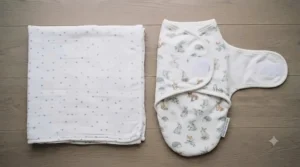
2. Panda Baby Bamboo Muslin Squares — best award-winning premium muslin receiving blanket
The Panda Baby Bamboo Muslin Squares won Gold for Best Product For A Newborn at the Mother & Baby Awards 2026, crafted from 100% bamboo fibre that’s noticeably softer against sensitive newborn skin than standard cotton muslin. They work as a burp cloth, light blanket, swaddle or comforter, covering the full spread of what a genuine muslin receiving blanket needs to do.
What most buyers overlook about bamboo muslin specifically is that it’s naturally more breathable and thermoregulating than cotton, which reduces the overheating risk that’s a genuine safety concern with any lightweight covering used near a sleeping baby. Reviewers specifically call out the softness and breathability as standout qualities, and the generous sizing means they remain useful well beyond the newborn stage rather than being outgrown within weeks.
Pros:
- ✅ Award-winning softness specifically suited to sensitive newborn skin
- ✅ Naturally breathable, reducing overheating risk
- ✅ Generous sizing extends usefulness beyond the newborn stage
Cons:
- ❌ Premium pricing compared with standard cotton muslin
- ❌ Bamboo fabric requires slightly more careful washing than cotton
The Panda Baby Bamboo Muslin Squares typically cost £15-£25, sitting in the mid-to-premium range for parents prioritising skin-friendliness.
3. Bloomsbury Mill 100% Organic Cotton Muslin Squares — best budget burp cloth alternative
The Bloomsbury Mill 100% Organic Cotton Muslin Squares come presented tied together with a satin bow, offering genuinely large sizing that reviewers specifically praise for breastfeeding coverage as well as the more mundane burp cloth alternative duties every newborn generates daily.
Here’s what the spec sheet won’t tell you, but user reports suggest: at this price point, the main risk with budget muslins is shrinkage or thinning after repeated washing, and reviewers specifically note these retain both their size and colour through multiple wash cycles, which isn’t guaranteed with every budget competitor. One verified reviewer explicitly compared the value favourably against muslins bought from a well-known UK high street chain, suggesting genuine competitive pricing without a corresponding quality drop. The trade-off is a thinner fabric than some premium alternatives, meaning slightly less absorbency for serious spit-up duty.
Pros:
- ✅ Genuinely competitive pricing for organic cotton
- ✅ Retains size and colour well through repeated washing
- ✅ Large sizing suits breastfeeding coverage as well as burping
Cons:
- ❌ Thinner fabric than premium alternatives, slightly less absorbent
- ❌ Fewer print/colour options than branded competitors
The Bloomsbury Mill 100% Organic Cotton Muslin Squares typically cost £10-£18, making them one of the most accessible genuine muslin options on this list.
4. Tommee Tippee Original Grobag Swaddle Bag — best pre-made swaddle for UK parents
The Tommee Tippee Original Grobag Swaddle Bag takes the fold-it-yourself guesswork out of swaddling entirely, using a bottom-to-top zip that allows nappy changes without fully unwrapping a sleeping baby. Tommee Tippee’s hip-healthy design specifically avoids the tight leg compression that can risk hip development issues if a traditional swaddle is wrapped incorrectly.
Based on the spec comparison with traditional fold-and-wrap muslins, the genuine advantage here is consistency — a poorly folded muslin swaddle can come loose mid-sleep, creating exactly the loose-bedding-in-the-cot risk that safer sleep guidance warns against, whereas a properly fitted Grobag swaddle bag stays secure by design. Reviewers describe it as small enough to fit an average-sized newborn snugly, with the option to swaddle arms in or out depending on the baby’s preference, which many parents find genuinely useful during the awkward transition period.
Pros:
- ✅ Bottom-to-top zip allows nappy changes without full unwrapping
- ✅ Hip-healthy design reduces developmental hip risk
- ✅ Arms-in or arms-out flexibility as baby’s preference changes
Cons:
- ❌ More expensive than a simple muslin square
- ❌ Sizing runs snug, so check weight guidance carefully
The Tommee Tippee Original Grobag Swaddle Bag typically costs £18-£25, representing solid mid-range value for parents wanting a no-fold solution.
5. HALO Sleepsack Swaddle — best premium swaddle for consistent use
The HALO Sleepsack Swaddle uses a wrap-and-adjust design available across a genuine range of fabric weights, letting parents match the swaddle to the season rather than owning multiple different products. Independent testers rate it highly specifically for reliability across repeated daily use, holding up well through the relentless wash cycle a newborn generates.
What genuinely justifies the premium price here is consistency under heavy use — testers report the cotton and fleece versions in particular remained durable through dozens of wash cycles, with only the muslin variant showing more wear in the form of snagged threads over time. This is a meaningful distinction for parents who’ll realistically be washing swaddles daily during the newborn stage, since a product that degrades quickly under that pressure ends up costing more in replacements than the upfront saving suggested.
Pros:
- ✅ Available across multiple fabric weights for different seasons
- ✅ Cotton and fleece versions hold up well to daily washing
- ✅ Simple wrap design without complex fastening systems
Cons:
- ❌ Muslin fabric variant more prone to snagged threads over time
- ❌ Premium pricing relative to basic muslin squares
The HALO Sleepsack Swaddle typically retails in the £25-£35 range depending on fabric weight chosen.
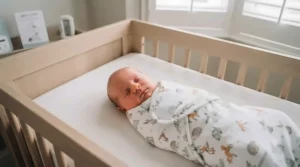
6. Vicloon Organic Cotton Baby Swaddle Wrap, 2 Pack — best budget pre-made swaddle
For parents wanting the convenience of a pre-shaped swaddle without premium pricing, the Vicloon Organic Cotton Baby Swaddle Wrap, 2 Pack delivers organic cotton fabric with a straightforward wrap design suited to babies in the 0-3 month, 7-14lb range.
The honest analytical take here is that budget pre-made swaddles like this genuinely close the gap with premium alternatives for short-term newborn use, since babies typically outgrow the 0-3 month sizing within weeks regardless of how well-made the product is. What most buyers overlook is that spending significantly more on a swaddle bag your baby will use for a handful of weeks rarely delivers a proportionally better outcome than a well-reviewed budget alternative, provided the basic fit and organic cotton credentials are genuine.
Pros:
- ✅ Organic cotton fabric at a genuinely budget price point
- ✅ Two-pack means a spare is always available for wash rotation
- ✅ Straightforward wrap design without complex fastenings
Cons:
- ❌ Narrow 0-3 month weight range limits usable window
- ❌ Less rigorously tested for hip development than premium brands
The Vicloon Organic Cotton Baby Swaddle Wrap, 2 Pack typically costs £12-£18, making it a sensible budget entry point for the newborn weeks specifically.
7. Happiest Baby Sleepea 5-Second Swaddle — best for babies needing extra reassurance
The Happiest Baby Sleepea 5-Second Swaddle is doctor-designed with organic cotton construction, specifically engineered to promote healthy hip development while genuinely living up to its “5-second” swaddling claim through a simple wrap-and-secure mechanism rather than fiddly folding.
Here’s what genuinely matters about this design: independent testers specifically praise how the shape prevents smaller newborns slipping down inside the swaddle, which is a real and underdiscussed risk with looser-fitting alternatives, particularly for babies born on the smaller end of average birth weight. The hip-friendly design allows genuine leg movement and bend at the hip, aligning with the guidance that swaddling should never restrict natural hip positioning, and the range of sizes available means it can genuinely grow with a baby through the early months rather than being outgrown within a fortnight.
Pros:
- ✅ Genuinely quick to apply without complex folding
- ✅ Prevents smaller newborns slipping down inside the swaddle
- ✅ Hip-friendly design allows natural leg movement
Cons:
- ❌ Premium pricing among pre-made swaddle options
- ❌ Sizing runs precise, so accurate weight measurement matters
The Happiest Baby Sleepea 5-Second Swaddle typically costs £30-£40, positioning it as a premium pick for parents prioritising ease of use and hip-safe design.
Practical Usage Guide: Getting the Most From Your Baby Blanket Collection
Getting genuine value from a muslin or swaddle collection starts with quantity planning. Most experienced parents recommend having six to eight muslin squares in rotation, since between spit-up, nappy leaks and general newborn chaos, you’ll realistically go through several a day in the early weeks. Wash new muslins and swaddles before first use, since even certified organic cotton can carry manufacturing residue that’s worth removing before it touches a newborn’s skin, and washing typically softens the fabric further as a welcome side effect.
A common first-month mistake is over-swaddling in warm rooms, layering a swaddle bag over already-warm sleepwear without checking the baby’s actual temperature. Always check the chest or back of the neck rather than judging by hands or feet, which naturally run cooler. For pre-made swaddle bags specifically, always check the manufacturer’s weight guidance rather than relying on age alone, since babies vary enormously in size and an ill-fitting swaddle either fails to stay secure or restricts movement more than intended.
Real-World Scenario: Which Blanket Type Suits Your Newborn Routine
Consider three families. First, parents who want maximum daytime flexibility for feeding, burping, pram outings and tummy time — a stack of aden + anais Essentials Muslin Swaddle Blanket 4-Pack or Panda Baby Bamboo Muslin Squares makes the most sense, since the genuine multi-use versatility outweighs any specific swaddling feature for daytime chaos management.
Second, exhausted parents who’ve struggled with traditional fold-and-wrap technique and want a foolproof solution for sleep specifically — the Tommee Tippee Original Grobag Swaddle Bag or Happiest Baby Sleepea 5-Second Swaddle remove the guesswork entirely, which matters enormously at 3am when precision folding technique is the last thing anyone can manage.
Third, budget-conscious parents preparing for a newborn who don’t yet know which approach will suit their baby — starting with the Bloomsbury Mill 100% Organic Cotton Muslin Squares for general use alongside the Vicloon Organic Cotton Baby Swaddle Wrap, 2 Pack for sleep gives genuine coverage of both use cases without overcommitting financially before knowing what actually works for your specific baby.
Problem → Solution: Common Newborn Blanket Issues Solved
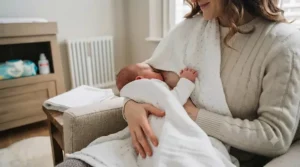
Problem: Traditional muslin swaddling keeps coming loose overnight. Solution — switch to a pre-made swaddle bag with a secure zip or velcro fastening, which removes the fold-technique variable entirely and stays put more reliably.
Problem: Worried about overheating during swaddling. Solution — The Lullaby Trust’s swaddling guidance recommends always using lightweight muslin rather than a thick blanket for swaddling, dressing the baby lightly underneath, and checking their chest temperature regularly rather than relying on visual cues alone.
Problem: Running out of clean muslins mid-week. Solution — increase your rotation to eight or more, since newborns genuinely go through several per day between feeding, burping and general mess.
Problem: Baby has started rolling but you’re still swaddling. Solution — stop swaddling with arms wrapped inside immediately once rolling begins, since this is a genuine safety concern rather than a preference issue.
Problem: Confused by American product listings using unfamiliar terms. Solution — recognise that “receiving blanket” in US listings almost always refers to what UK parents simply call a muslin square, so cross-reference dimensions rather than the product name alone when comparing options.
What Is a Receiving Blanket vs Swaddle Blanket?
receiving blanket vs swaddle blanket comes down to purpose and size rather than fundamentally different products. A receiving blanket is a smaller, versatile square used for wrapping, burping, and general newborn mess management, traditionally around 75-90cm square, while a swaddle blanket is typically larger, around 110-120cm square, specifically intended for wrapping a baby securely for sleep. In UK terminology, both are usually just called muslin squares or swaddles interchangeably.
US vs UK Baby Terminology: Why “Receiving Blanket” Confuses British Parents
The us vs baby terminology gap around receiving blankets is genuinely one of the more confusing quirks new UK parents run into while researching online, since American hospitals traditionally send newborns home wrapped in a striped receiving blanket, and the term has stuck as a catch-all in US retail listings ever since. British parents simply don’t use the phrase in everyday conversation or most UK retail listings — the equivalent product is almost always marketed as a “muslin square” or “muslin cloth” instead.
This matters practically when shopping, because searching “receiving blanket” on Amazon UK returns a mix of genuinely UK-stocked muslin squares alongside US-import listings that may carry different sizing conventions, inches rather than centimetres, or shipping delays. Cross-referencing the actual dimensions listed rather than trusting the product name alone is the safest way to confirm you’re buying the equivalent of what American parents mean by the term.
How to Choose Between a Receiving Blanket and Swaddle Blanket
- Decide your primary use case first. If you want maximum daytime versatility, prioritise muslin squares; if you want a dedicated sleep solution, prioritise a purpose-built swaddle.
- Check the actual dimensions, not just the product name. UK “muslin squares” and US “receiving blankets” overlap significantly, but sizes vary between roughly 70cm and 120cm.
- Choose fabric weight based on room temperature. Lightweight muslin suits most UK homes; heavier cotton or fleece swaddles suit colder nurseries.
- Consider your own confidence with folding technique. If traditional wrapping feels daunting, a pre-made zip or velcro swaddle bag removes that variable entirely.
- Buy enough for realistic laundry rotation. Six to eight muslins is a sensible starting point given how frequently newborns need them changed.
- Prioritise organic or certified cotton for sensitive skin. Look for OEKO-TEX or organic certification, particularly for anything used close to the face.
- Always check weight guidance on pre-made swaddles. Age-based sizing is less reliable than weight-based sizing given how much newborns vary.
Muslin Receiving Blanket: The UK’s Answer to the American Classic
A muslin receiving blanket is effectively how British retailers have rebranded the American concept without ever really using the American name for it. Muslin fabric itself — a lightweight, breathable, plain-weave cotton — has been used for generations to wrap newborns precisely because its open weave prevents overheating while still offering gentle coverage, making it functionally identical to what American parents call a receiving blanket regardless of the label on the packaging.
What most buyers overlook is that muslin quality varies considerably between brands despite superficially similar descriptions, and the genuine differentiators are thread density, fabric softness after washing, and colourfastness over repeated laundry cycles, rather than anything to do with the “receiving blanket” versus “muslin square” naming debate.
Multi-Use Baby Blanket: Getting More From One Piece of Fabric
The multi-use baby blanket concept is arguably the strongest practical argument for muslin squares over dedicated single-purpose swaddles, since a single well-made muslin genuinely functions as a burp cloth, light pram cover, nursing cover, tummy time mat, and emergency changing surface, all from one £5-£10 piece of fabric. This versatility is precisely why experienced parents consistently recommend buying more muslins than seems reasonable before the baby even arrives, since the demand for a clean one appears in more situations than most first-time parents anticipate.
Based on the spec comparison between dedicated single-purpose products and versatile muslins, the value calculation clearly favours muslins for daytime use, while purpose-built swaddle bags retain a genuine advantage specifically for overnight sleep, where security and consistency matter more than flexibility.
Burp Cloth Alternative: Can a Receiving Blanket Really Replace One?
Using a muslin as a burp cloth alternative to dedicated, often smaller and more heavily padded burp cloths is genuinely one of the most common real-world uses reported by UK parents, and for good reason — a folded muslin square offers more surface area and absorbency than most narrow dedicated burp cloths, while doubling as protection for parents’ clothing during feeding sessions.
The honest analytical take here is that dedicated burp cloths, often shaped with a curved neckline to sit over a shoulder, do offer marginally better positioning for some parents, but the difference is genuinely minor enough that most experienced parents simply skip buying dedicated burp cloths altogether once they’ve stocked up on a reasonable muslin collection.
Receiving Blanket vs Swaddle Blanket vs Sleep Bag
Beyond the core receiving blanket vs swaddle blanket comparison, sleep bags (also called sleeping bags or grobags in the UK) represent a genuinely distinct third category worth understanding. While a receiving blanket or swaddle blanket wraps around a baby’s whole body including arms, a sleep bag is a wearable, sleeveless bag that zips or poppers closed, leaving arms free and specifically designed for use once a baby has outgrown swaddling around the two-to-four month mark when rolling typically begins.
The practical transition path most UK parents follow is starting with muslin squares and a swaddle bag in the newborn weeks, then moving to a standard sleep bag once rolling begins and swaddling with arms enclosed becomes unsafe, since a sleep bag maintains the safe, no-loose-bedding benefit of a swaddle without restricting the arm movement a rolling baby needs to reposition themselves safely.
Long-Term Value & How Many You Actually Need
A genuine cost analysis for newborn blankets needs to look at total laundry rotation rather than per-item price alone. Six premium aden + anais muslins at roughly £30 for a four-pack works out to around £45 for a full rotation, while budget alternatives can bring the same rotation size down to £20-£25. The real question is durability under near-daily washing for several months — premium muslins that genuinely soften and strengthen with washing arguably deliver better value over a typical six-month intensive use period than budget alternatives that thin out or develop holes.
Pre-made swaddle bags represent a different calculation entirely, since babies typically only use them for a matter of weeks before either outgrowing the size or beginning to roll. For this category specifically, budget options like the Vicloon Organic Cotton Baby Swaddle Wrap genuinely make more financial sense than premium alternatives, given the inherently short usable window regardless of build quality.
Common Mistakes When Buying Baby Blankets
The most frequent mistake is under-buying muslin squares based on newborn registry checklists that suggest quantities far lower than what most parents actually need in practice, leading to emergency top-up purchases within the first fortnight. A close second is confusing US “receiving blanket” product listings with genuine UK-stocked equivalents, sometimes resulting in unexpectedly long shipping times or unfamiliar inch-based sizing. Parents also commonly continue swaddling with arms enclosed past the point a baby shows rolling signs, which safer sleep guidance is explicit about avoiding. Finally, many overlook checking actual fabric weight and certification, buying purely on brand name or cute prints rather than confirming genuine breathability credentials for something used so close to a newborn’s face.
Safety and Regulations for Swaddling in the UK
Swaddling safety in the UK is governed primarily by clear, well-established guidance rather than formal legislation specific to the practice itself. Safer sleep guidance is explicit that babies should always be placed on their back when swaddled, that only lightweight material such as thin muslin or a thin cot sheet should be used, and that parents should never place additional bedding over a swaddled baby due to overheating risk.
Hip health is another genuine safety consideration that’s often underdiscussed. According to NCT guidance on swaddling, swaddling too tightly around the hips can risk developmental dysplasia of the hip, so babies need genuine wiggle room around the hips and legs regardless of how snug the upper body wrap is. The NHS’s guidance on reducing SIDS risk reinforces that the safest sleep position is always on the back, whether swaddled or not, and that overheating remains one of the most significant modifiable risk factors parents can control.
Frequently Asked Questions
❓ Is a receiving blanket the same as a muslin square?
❓ What size should a swaddle blanket be?
❓ How many muslin squares do I actually need?
❓ When should I stop swaddling my baby?
❓ Can I use a receiving blanket as a burp cloth?
Conclusion
There’s no meaningful winner in receiving blanket vs swaddle blanket, because for most UK parents, they’re simply two names circling the same versatile category of muslin squares alongside a smaller number of purpose-built swaddle bags for sleep specifically. Stock up generously on genuine multi-use muslins like the aden + anais Essentials Muslin Swaddle Blanket 4-Pack or Panda Baby Bamboo Muslin Squares for the daytime chaos every newborn generates, and add a purpose-built swaddle bag like the Tommee Tippee Original Grobag Swaddle Bag or Happiest Baby Sleepea 5-Second Swaddle for reliable, safe overnight sleep.
What matters most isn’t which American or British term you use, but genuine fabric quality, correct sizing, and following recognised safer sleep guidance around swaddling technique and hip positioning. Get those fundamentals right, and the terminology debate becomes entirely academic.
✨ Don’t Miss These Exclusive Deals!
🔍 Take your newborn essentials shopping to the next level with these carefully selected muslins and swaddles. Click on any highlighted item to check current pricing and availability on Amazon.co.uk. These picks will help you handle every spit-up, burp and bedtime with confidence!
Recommended for You
- Cot Bed Blanket vs Cot Blanket 2026: 7 Safe Picks Compared
- Cot Blanket Tog Rating Guide 2026: Safer Sleep Made Simple
- Best Cot Blanket 2026: 7 Safe, Cosy Picks & Buying Guide
Disclaimer: This article contains affiliate links. As an Amazon Associate, I earn from qualifying purchases. If you purchase products through these links, we may earn a small commission at no additional cost to you.
✨ Found this helpful? Share it with your friends! 💬🤗
