
In This Article
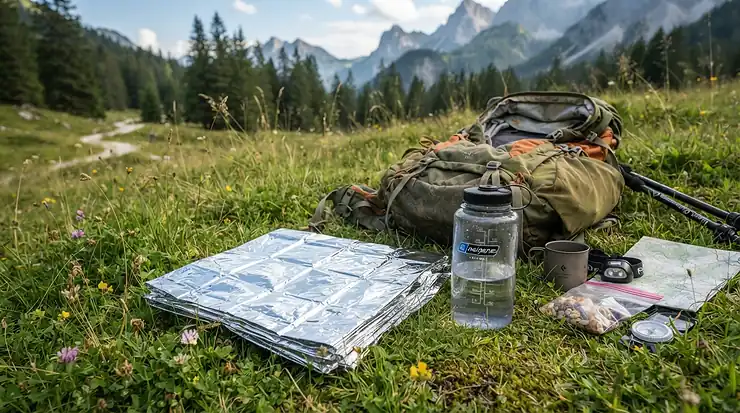
An emergency blanket (also called a space blanket, mylar blanket or foil survival blanket) is a wafer-thin sheet of metallised plastic that reflects your radiated body heat back towards you. It weighs 50-100g, folds to pocket size and costs less than a sandwich. That’s the whole pitch.
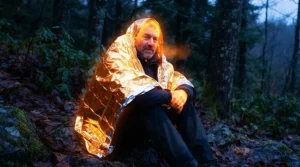
The material has a better pedigree than most gadgets. NASA’s Marshall Space Flight Center developed it in 1964, and Wikipedia’s space blanket entry notes the metallised film can reflect up to 97% of radiated heat. Retail packaging usually settles for “up to 90%”, which is still plenty. The physics isn’t the problem. Quality, size and where you keep the thing are where UK buyers go wrong.
This emergency blanket review is research-led, not lab-tested. I haven’t field-tested any of these products, and I won’t pretend otherwise. Instead, I’ve compared published specifications, independent UK tester findings and aggregated Amazon UK reviewer feedback across seven genuinely different options. They range from a basic foil survival blanket to a padded boot-sized brute. Along the way you’ll get practical guidance on setting up an emergency blanket for car kit duty, understanding hypothermia risk, building a first aid kit around your blanket and handling a roadside emergency.
Timing matters, too. The clocks go back on Sunday 25 October, and the dark, wet evenings that follow are exactly when a stranded driver wants a blanket within arm’s reach, not buried under the spare wheel.
Emergency Blanket Review: Quick Comparison Table
Pressed for time? Here are five of the seven picks side by side. The multipack and the budget bag are covered in the full breakdown below.
| Product | Format | Reusable? | Price range | Best For |
|---|---|---|---|---|
| Lifesystems Emergency Silver Foil Thermal Blanket | Single foil sheet | Light use only | Under £5 | Cheap back-ups for every seat |
| Lifesystems Heatshield Emergency Thermal Blanket | Tougher single sheet | Yes, per the maker | £6-£12 | One reliable glovebox blanket |
| SOL Emergency Blanket | Thick, large single sheet | Limited; won’t refold to pack size | £7-£12 | Taller drivers, two-person wrap |
| Lifesystems Heatshield Emergency Thermal Bag | Bivvy-style bag | Yes | £10-£14 | Hikes and long cold waits |
| Highlander Thermo Survival Blanket | Padded blanket | Yes | £16-£20 | Boot kits, camping, kayaks |
Looking at the comparison above, the Lifesystems Heatshield Emergency Thermal Blanket is the sensible default for most drivers: reusable, tougher than a basic sheet and cheap enough to buy in pairs. Anyone who wants wind and rain protection without fiddly wrapping should consider the Lifesystems Heatshield Emergency Thermal Bag, accepting the extra cost. Budget buyers should note that the Lifesystems Emergency Silver Foil Thermal Blanket saves money by being thinner, so it earns its place as a back-up rather than the centrepiece of your kit.
💬 Just one click — help others make better buying decisions too!😊
Top 7 Picks in Our Emergency Blanket Review: Expert Analysis
Ratings below are approximate Amazon UK figures at the time of research and will drift. Prices are ranges only, so check current price before buying. Where I couldn’t verify review data, I say so.
1. Lifesystems Emergency Silver Foil Thermal Blanket — cheapest sensible back-up
This is the entry ticket: a flat, flexible foil survival blanket that vanishes into a coat pocket. The listing describes strong metallised polyester that is weatherproof, brightly visible and radar reflective, with the usual up-to-90% heat-reflection claim. Thin polyester film is why it packs down to almost nothing. It’s also why it rustles like a crisp packet and tears if you wrestle it.
Based on the spec comparison and what UK testers report about single-sheet designs, its best job is as the cheap duplicate: one per seat, one in each coat, one in the school bag. The weakness of every single sheet is air gaps. You’ll get far more warmth lying down and tucking the edges under you than standing and clutching it like a cape.
Amazon UK reviewers (roughly 300 ratings, averaging around 4.6-4.7 out of 5) consistently praise the compact size, the value and the warmth. A few say it genuinely helped them in a real emergency.
Pros:
- ✅ Tiny and pocketable
- ✅ Cheapest way to cover every seat
- ✅ Large, consistently positive review pool
Cons:
- ❌ Thin foil tears and rustles loudly
- ❌ Single-sheet design leaves air gaps
Priced under £5, it’s superb value as a back-up, though I wouldn’t build a whole kit around something this delicate. Check current price.
2. Bramble 10 Emergency Foil Blankets — ten sheets, one purchase
Ten blankets in a single order solves a problem single packs ignore: what happens when the whole car is stuck? Each sheet measures 210 x 160cm, which is generous. That 160cm width matters because tucking and overlapping edges is how you beat the draughts that make foil feel disappointing. Construction is the standard mylar blanket formula, so expect thin, crinkly, mostly single-use film rather than anything clever.
Where a multipack earns its keep is logistics, not luxury. Put one in the glovebox, one in each door pocket, one in the boot kit, one in the school bag and one in the first aid kit, and you still have spares for a stranded motorist or a neighbour. Because generic multipacks are often near-identical between brands, treat brand loyalty lightly. Judge on size, seller reliability and recent reviews.
I couldn’t verify a deep, stable pool of Amazon UK customer reviews for this specific listing, so I won’t quote a rating. UK comparison sites score it highly for value, but that’s editorial scoring, not customer feedback. Read the live reviews for tearing and sizing complaints before committing.
Pros:
- ✅ Ten sheets cover family and kit pockets
- ✅ Generous 210 x 160cm size
- ✅ Lowest cost per blanket
Cons:
- ❌ Thin, effectively single-use film
- ❌ Customer review evidence harder to verify
Prices vary by seller and pack size, so check current price and judge it per blanket rather than per pack. That’s where it wins.
3. Lifesystems Heatshield Emergency Thermal Blanket — tougher, reusable all-rounder
Where cheap foil gives up after one wrestling match, this metalised low-density polyethylene sheet is built to be opened, used and folded away again. It unfolds to 210 x 150cm, weighs roughly 84g and packs to about 120 x 90 x 10mm, so it still slots into a door pocket. The orange outer is designed to be radar reflective, and survival tips are printed on the sheet, which is oddly reassuring when your brain is flapping.
What most buyers overlook is that polyethylene of this type is generally quieter and more tear-resistant than the thin polyester in bargain packs. That matters when you may be sitting under it for hours. Here’s what to weigh: it costs a few pounds more than basic foil, but it’s the best single blanket for a typical UK driver. UK retailer listings also flag it as DofE-recommended kit.
Amazon UK reviewers rate it around 4.6 out of 5 across several dozen ratings. Positive reviews mention hillwalking safety kits and peace of mind. The odd low score comes from buyers who expected a proper blanket and received, well, foil. One reviewer on the maker’s own site found it too bulky for a small hiking first aid kit.
Pros:
- ✅ Reusable, tear-resistant polyethylene
- ✅ Orange, radar-reflective outer for visibility
- ✅ Survival tips printed on the sheet
Cons:
- ❌ Bulkier than a basic foil sheet
- ❌ Still a single sheet with wind gaps
At around £6-£12 depending on size and seller, it’s the value pick of the lot. Check current price.
4. SOL Emergency Blanket — thicker, quieter, sized for tall frames
If the crackle of cheap foil would drive you mad, start here. Advnture’s tester found this vacuum-metalised polyethylene sheet thicker than some rivals and noticeably less noisy. It measures 142 x 213cm and weighs about 70g. That 213cm length covers anyone over six feet, and 70g is a rounding error in your coat pocket.
The honest caveat is the one that applies to every single sheet: even wrapped tightly, gaps flap in the wind. The tester’s advice was to lie down and wrap along your full length. The sheet also returns 50-100% larger than its factory pack, so bring a zip-seal bag. It doubles as a ground sheet or windbreak, which gives it more versatility than its price suggests.
The SOL Emergency Blanket appears on Amazon UK largely through third-party and import sellers, so stock and pricing swing more than for UK-stocked brands. I couldn’t verify a robust Amazon UK review count, so the evidence here is tester-based. That evidence praises the durability and quietness, with the wrapping caveat above.
Pros:
- ✅ Thicker and quieter than basic foil
- ✅ Large 142 x 213cm sheet
- ✅ Weighs only around 70g
Cons:
- ❌ Won’t refold to original pack size
- ❌ Stock often via third-party sellers
Expect roughly £7-£12 depending on seller. Check current price and delivery times.
5. Highlander Emergency Survival Bag — a cheap bag that heats up fast
A bag beats a sheet at one thing: there are no gaps to fiddle with. You climb in, pull it to your shoulders and your own body heat does the rest. This Scottish-brand design measures 180 x 90cm and is windproof and waterproof, with hill-safety and signalling tips printed on the outside. Advnture’s tester put it at 220g, though some retailers quote slightly more.
The trade-off is weight and noise. At around three times the weight of a foil sheet, it’s a door-pocket item, not a coat-pocket item. A sealed plastic skin also makes a decent sauna, so condensation builds up. Open the top periodically or you’ll end up damp, and damp is cold. Based on the spec comparison, it suits someone who would rather climb into a shelter than wrap one around themselves.
Advnture’s tester found the bag warmed up within minutes but rustled loudly and gathered moisture. Amazon UK ratings for this specific listing were too thin to quote at the time of research, so treat the tester findings as the main evidence.
Pros:
- ✅ Windproof and waterproof, no wrap gaps
- ✅ Safety guide printed on the outside
- ✅ Very low price
Cons:
- ❌ Noisy rustling plastic
- ❌ Condensation and heavier than foil
Around £5-£8, comfortably under £10, this is the bargain bag. Check current price.
6. Lifesystems Heatshield Emergency Thermal Bag — taped seams and a stuff sack
If the Highlander is the budget bag, this is the polished one. It’s metalised polyethylene, 107g and 90 x 210cm: long enough for six-footers, light enough to forget. The seams are taped, the orange outer is radar reflective, and a drawstring stuff sack solves the eternal repacking battle. That’s a bigger deal than it sounds when you’re refolding anything on a windy hillside.
Analytically, the extra few pounds buy comfort. It’s quieter than basic foil and, as a bag, keeps working whether you’re lying down or sitting up. Condensation still builds inside, so vent it. Advnture’s tester named it their best survival bag overall, noting near-immediate warmth and decent durability. The tester’s tip was to repack at home rather than on the hill.
Amazon UK ratings sit around 4.6 out of 5 from roughly 66 ratings, a small but consistent sample. The wider Lifesystems thermal range regularly appears among Amazon UK’s emergency blanket best sellers, which suggests healthy demand.
Pros:
- ✅ Taped seams and a stuff sack
- ✅ Long enough for tall adults
- ✅ Reusable and quieter than basic foil
Cons:
- ❌ Condensation gathers inside
- ❌ Costs more than blankets
At around £10-£14, it’s the premium bag, and a fair one. Check current price.
7. Highlander Thermo Survival Blanket — padded, roomy and ground-insulating
Every other pick here is thin film; this one has a foam layer. It’s foil-coated EVA foam that unrolls to 195 x 140cm and weighs roughly 165-230g depending on whose scales you trust. Rolled, it’s about 38 x 15cm: large for a pocket, fine for a boot.
Here’s why padding matters. Foil fights radiated heat; foam fights conduction, the cold creeping up through a car floor, a seat or frosty grass. Put this under you or around your legs and the equation changes. The cost is bulk and mediocre weatherproofing. Advnture’s tester found it floaty in wind and only water-resistant at best, awarded three stars and suggested kayaking trips where space is spare.
Amazon UK shows about 4.4 out of 5 across roughly 265 ratings. One UK camper reported staying warm at around -1°C using it under duvets as a ground layer. More critical reviewers found it awkward to fold and easy to puncture.
Pros:
- ✅ Padding insulates from cold surfaces
- ✅ Big 195 x 140cm sheet
- ✅ Elastic carry strap included
Cons:
- ❌ Bulky and awkward to refold
- ❌ Only water-resistant at best
Roughly £16-£20, the priciest here but the only one that truly insulates. Check current price.
Specs and Ratings at a Glance
| Product | Material | Price range | Amazon UK rating (approx.) | Best For |
|---|---|---|---|---|
| Lifesystems Emergency Silver Foil Thermal Blanket | Metallised polyester | Under £5 | 4.6-4.7 (300+ ratings) | Back-ups |
| Bramble 10 Emergency Foil Blankets | Foil film, 210 x 160cm | Check current price | Not verified | Families, spare stock |
| Lifesystems Heatshield Emergency Thermal Blanket | Metalised LDPE | £6-£12 | ~4.6 (dozens of ratings) | Cabin kit |
| SOL Emergency Blanket | Vacuum-metalised polyethylene | £7-£12 | Not verified | Tall drivers |
| Highlander Emergency Survival Bag | Plastic bag, 180 x 90cm | Around £5-£8 | Too few to quote | Budget shelter |
| Lifesystems Heatshield Emergency Thermal Bag | Metalised LDPE, taped seams | £10-£14 | ~4.6 (around 66) | Long waits |
| Highlander Thermo Survival Blanket | Foil-coated EVA foam | £16-£20 | ~4.4 (around 265) | Boot kits |
The table shows a clear pattern: the best-reviewed items are also the simplest. The Lifesystems Emergency Silver Foil Thermal Blanket and the Lifesystems Heatshield Emergency Thermal Bag have the strongest verifiable review evidence. The Highlander Thermo Survival Blanket trades a slightly lower rating for the only real insulation here. If a review pool is small or missing, as with the Bramble 10 Emergency Foil Blankets and the SOL Emergency Blanket, lean on the live reviews at purchase time.
How to Choose an Emergency Blanket: 6 Steps
The best emergency blanket for most UK drivers is a reusable, orange-faced sheet at least 200cm long, stored in the cabin rather than the boot. These six steps help you refine that answer.
- Decide where it will live. Anything in the boot is out of reach if you must leave the vehicle. Cabin pockets and coat pockets win.
- Pick the format. Sheets are lightest and cheapest; bags such as the Highlander Emergency Survival Bag remove wrapping gaps; padded blankets such as the Highlander Thermo Survival Blanket insulate against cold surfaces.
- Check the length. Aim for 200cm or more so adults can cover head to toe. The SOL Emergency Blanket and Lifesystems Heatshield Emergency Thermal Bag both manage 210cm-plus.
- Prefer tougher material if you’ll reuse it. Polyethylene beats thin foil for repeated opening and folding.
- Look for visibility. An orange outer and radar-reflective finish help rescuers spot you at night or in poor weather.
- Buy more than one. One per seat, plus a spare, costs less than a takeaway.
Mylar Blanket vs Foil Survival Blanket vs Survival Bag
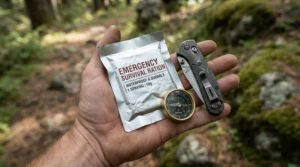
Shop labels cause confusion here. “Mylar” was originally a brand name for a polyester film, and a mylar blanket is simply a space blanket by another name. A “foil survival blanket” is the same idea described by its appearance. The real differences lie in material thickness and format: sheet, bag or padded blanket. Wikipedia also notes that in hot conditions, wrapping a person in foil is counterproductive because the airtight film traps body heat. These are cold-weather tools.
| Option | Warmth for weight | Packed size | Cost | Best For |
|---|---|---|---|---|
| Basic mylar blanket, e.g. Bramble 10 Emergency Foil Blankets | High | Lowest | Spares and families | |
| Reusable sheet, e.g. Lifesystems Heatshield Emergency Thermal Blanket | High | Low | Cabin kits | |
| Survival bag, e.g. Highlander Emergency Survival Bag | High, plus wind protection | Small to medium | Low to mid | Long waits |
| Padded foil, e.g. Highlander Thermo Survival Blanket | Medium, adds ground insulation | Large | Mid | Boot kits |
| Wool blanket or duvet | Medium; heavier and bulkier | Large | Varies | Home comforts |
Weight-for-weight, reflective sheets and bags win easily, which is why mountain-rescue-style kits favour them. A wool blanket or duvet is far more pleasant, but it won’t live in a coat pocket. The sensible approach is layering: foil for emergencies, comfort items for the boot. The Lifesystems Emergency Silver Foil Thermal Blanket and the SOL Emergency Blanket both sit at the lightweight end of that spectrum.
Hypothermia Risk: What an Emergency Blanket Can (and Can’t) Do
NHS guidance defines hypothermia as body temperature dropping below 35°C (normal is around 37°C) and calls it a medical emergency needing hospital treatment. Symptoms include shivering, pale cold skin, slurred speech, slow breathing, tiredness or confusion. The hypothermia risk isn’t confined to mountaintops. The NHS notes that not wearing enough in cold weather or getting cold in wet clothes can trigger it. A breakdown in a drizzly lay-by in January qualifies.
So what does a blanket actually do? It reduces heat loss; it doesn’t generate heat. That’s why it works best before you’re deeply chilled, not as a rescue measure afterwards. UK health services also flag babies and older people as particularly vulnerable, which is a good reason to put a blanket in every seat, not just the driver’s.
If someone shows signs of hypothermia, the NHS advice is to call 999 or go to A&E, and not to drive yourself there. While waiting, move them somewhere sheltered, remove wet clothing, wrap them in a blanket, sleeping bag or dry towel (head covered), and stay with them. Avoid hot baths, rubbing their limbs, or alcohol. A reflective sheet is a useful wrapper in that scenario, but it’s an addition to proper first aid and professional help, never a substitute.
Insulation matters as much as reflection. Pair your foil with real clothing, and consider the Highlander Thermo Survival Blanket if your biggest threat is a cold seat or floor.
Emergency Blanket for Car Kit: What to Pack and Where to Keep It
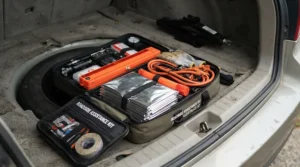
The RAC’s winter breakdown kit checklist (updated February 2026) lists a blanket alongside warm clothing, a torch, a first aid kit, a phone charger or power bank, food and drink, hi-vis clothing and a shovel. It also points out that many drivers skip a coat while driving but should still carry one. A breakdown can mean a long wait with no heating.
An emergency blanket for car kit duty works best in layers:
- Cabin, within reach of your seat: one reusable sheet per seat, such as the Lifesystems Heatshield Emergency Thermal Blanket.
- Coat or handbag: a Lifesystems Emergency Silver Foil Thermal Blanket as a spare you’ll never forget.
- Boot kit: a Highlander Thermo Survival Blanket and warm clothes for longer waits.
- Rear seats: consider the Bramble 10 Emergency Foil Blankets multipack if you regularly carry passengers.
Put your emergency blanket for car kit setup on a twice-yearly reminder. The clock changes are handy: check the packaging, refold anything that’s come loose, and swap in a fresh sheet if foil has torn. And never rely on a candle or open flame for warmth in a closed car, as the carbon monoxide risk outweighs any benefit.
Roadside Emergency: A Step-by-Step Plan for Staying Warm and Safe
A roadside emergency is where kit and knowledge meet. The Highway Code’s breakdown rules (rules 275-279) set out what to do. Here’s how that translates into a practical sequence.
- Reach a place of relative safety. On motorways, that means leaving at the next exit or pulling into a service area if you can. Otherwise, use the left lane, an emergency area or the hard shoulder.
- Make yourself visible. Hazard lights on, sidelights if it’s dark, hi-vis or reflective clothing if you have it.
- Exit on the side furthest from traffic, if it’s safe, and get behind the safety barrier. Take your blanket with you. The Highway Code says not to return to the vehicle on a motorway, even if it’s cold, dark or raining.
- Call for help using the emergency telephone or your breakdown provider. If you can’t leave the car safely, stay in it with your seat belt on and call 999.
- Wrap up. Orange side outwards so you’re visible, shiny side towards you, tucked tightly. Check your pack: most brands print which side faces which way.
- On other roads, place a warning triangle at least 45 metres behind your vehicle on the same side, but never on a motorway.
This is why a blanket in the boot fails in a motorway roadside emergency. It’s also why the cabin and coat-pocket layers matter. A Lifesystems Heatshield Emergency Thermal Blanket or Lifesystems Emergency Silver Foil Thermal Blanket can go with you in seconds.
First Aid Kit: How to Build One Around Your Emergency Blanket
A first aid kit and an emergency blanket are natural partners: one treats injuries, the other protects against shock-adjacent cold. The RAC notes that a national BSI standard exists for vehicle first aid provision. A small kit typically includes sterile wipes, washproof plasters in assorted sizes, dressings, scissors, nitrile gloves and a resuscitation face shield.
Here’s a practical build-and-maintain plan:
- Step 1: Choose a hard-sided container. Soft pouches get squashed under boot clutter.
- Step 2: Add a blanket in a zip bag. Foil never refolds to factory size, so give it a bigger home. A reviewer on the Lifesystems Heatshield Emergency Thermal Blanket noted it was too bulky for a small hiking kit, so plan the space.
- Step 3: Add a torch, a power bank and a pen. You’ll want to note what happened or write a phone number down.
- Step 4: Schedule checks. Twice a year, check plasters, wipes and foil integrity.
- Step 5: Avoid first-30-day mistakes. Don’t unwrap the foil “to see what it looks like” without a plan to repack. Don’t bury the first aid kit under heavy luggage. And never leave it somewhere that needs a toolkit to reach.
For a trip with children or elderly passengers, add a second Lifesystems Heatshield Emergency Thermal Blanket to the first aid kit bag. For hiking, the Lifesystems Heatshield Emergency Thermal Bag pairs well with a compact trauma-focused kit.
Real-World Scenarios: Matching an Emergency Blanket to Your Life
Here are three hypothetical buyers, each with a budget, an environment and a usage pattern.
Scenario 1: The 35-mile A-road commuter (budget around £15-£30; daily use). Dark mornings, long unlit stretches, and a recovery wait that could stretch for an hour or more. Two Lifesystems Heatshield Emergency Thermal Blanket sheets live in the door pockets, with a Lifesystems Emergency Silver Foil Thermal Blanket in the work coat. If the car stops somewhere unsafe, the coat blanket goes with you.
Scenario 2: The family of four on winter weekend trips (budget around £30-£50; 6-8 trips a winter). Rural lanes, patchy phone signal, kids who get cold fast. The Bramble 10 Emergency Foil Blankets multipack puts a sheet in every seat with spares to hand out. A Highlander Thermo Survival Blanket goes in the boot to insulate children from a cold car floor. The multipack’s price varies, so check current price before assuming the total.
Scenario 3: The weekend hillwalker (budget around £10-£20; roughly 20 days a year). Wet, windy hills where the weather turns quickly. A Lifesystems Heatshield Emergency Thermal Bag is the primary shelter, with a Lifesystems Emergency Silver Foil Thermal Blanket spare for a friend. The bag’s condensation is manageable if you open the top periodically.
If you’re unsure where you fit, ask one question: could I leave my vehicle quickly? If yes, prioritise pocketable sheets. If you’d be staying put, bags and padded blankets earn their space.
✨ Ready to Fill That Glovebox?
🔍 Take your winter driving kit to the next level with these carefully selected picks. Click on any highlighted product name to check current pricing and availability, then build a kit your whole family can rely on this winter!
Emergency Blanket Review: Features That Actually Matter (And Those That Don’t)
Marketing copy loves big numbers and bold adjectives. Here’s how to filter the hype in any emergency blanket review.
Features that matter
- Length and width. A sheet under 200cm long leaves feet or head uncovered. The SOL Emergency Blanket at 213cm and the Lifesystems Heatshield Emergency Thermal Bag at 210cm pass this test.
- Material toughness. Polyethylene typically beats thin polyester for repeated use. If you expect to open and refold your blanket more than once, this is non-negotiable.
- Visibility. Orange outers and radar-reflective finishes are the difference between being spotted and being missed.
- Format. Bags fix wrapping gaps; padded designs fix cold surfaces.
- Repack-ability. A stuff sack, like the one with the Lifesystems Heatshield Emergency Thermal Bag, makes the product usable more than once.
Features that don’t
- Heat-reflection claims. The difference between “90%” and “97%” is academic. Reflection only helps if you actually trap the warm air.
- Gold vs silver sides. Brands disagree on which faces inwards. Follow your pack’s instructions.
- “Hundreds of uses” claims. A foil sheet makes a decent signal, groundsheet or windbreak, but that doesn’t mean you’ll use it for all of them.
- Packaging. It won’t survive your first use, so don’t pay for it.
Common Mistakes When Buying and Using an Emergency Blanket
Experienced campers and drivers still trip over these.
- Keeping it in the boot. If you must leave the car, the boot is out of reach. Keep one in the cabin and one on you.
- Buying one for the whole car. Every passenger needs cover. A multipack like the Bramble 10 Emergency Foil Blankets or a pair of Lifesystems Heatshield Emergency Thermal Blanket sheets avoids awkward sharing.
- Wrapping over wet clothes. The NHS advice is to remove wet clothing and replace or cover it. Foil over a soaking jumper only seals in the damp.
- Sealing yourself in airtight. Foil and bags aren’t breathable. Vent periodically to cut condensation, as Advnture’s testers noted for the Highlander Emergency Survival Bag and the Lifesystems Heatshield Emergency Thermal Bag.
- Treating it as the whole kit. The RAC’s checklist makes clear that blankets sit alongside torches, chargers, warm clothes and food. A foil sheet is the cheapest item on that list, not the only one.
A sixth, bonus error: using foil near open flames. Reflective doesn’t mean fireproof.
Long-Term Cost & Maintenance
Cost-per-use is where emergency blankets look ridiculous in the best way. A basic four-seat set of foil sheets, such as the Lifesystems Emergency Silver Foil Thermal Blanket, comes in under £20. Upgrading to four Lifesystems Heatshield Emergency Thermal Blanket sheets lands in the roughly £24-£48 range. Even adding a Highlander Thermo Survival Blanket for the boot keeps total spend modest. Spread over several winters, the annual cost is closer to a fancy coffee than a safety investment.
Maintenance is minimal. Check blankets twice a year (clock-change weekends work well), looking for tears, stiff creases or flattened packaging. Thin foil is generally a single-use or occasional-use item, according to UK testers, so replace anything that’s seen action. Tougher polyethylene sheets and bags can be reused, but expect them to refold larger than they arrived. Store everything dry and away from sharp tools.
There’s one downside to flag honestly: disposal. Advnture notes that emergency blankets, bags and shelters are hard to recycle because they combine several materials, and most outdoor reuse schemes won’t take them. That’s an argument for buying tougher reusable items like the Lifesystems Heatshield Emergency Thermal Bag over disposable multipacks if you want to cut waste. Small holes in bags can often be repaired with tape rather than replaced.
FAQ
❓ Is an emergency blanket worth buying for a UK car?
❓ Which side of an emergency blanket goes towards your body?
❓ Can you reuse an emergency blanket?
❓ Are mylar blankets waterproof?
❓ How many emergency blankets should I keep in my car?
Conclusion
After weighing the spec sheets, UK tester findings and Amazon UK reviewer sentiment, this emergency blanket review lands on a simple answer: buy more than one, buy tougher than the bargain bin and keep at least one where you can grab it.
For most drivers, the Lifesystems Heatshield Emergency Thermal Blanket is the best all-round choice, backed by a Lifesystems Emergency Silver Foil Thermal Blanket in your coat pocket. Hillwalkers and long-wait scenarios suit the Lifesystems Heatshield Emergency Thermal Bag. Families who want every seat covered should look at the Bramble 10 Emergency Foil Blankets, and the Highlander Thermo Survival Blanket is the boot-kit luxury that insulates against cold floors. The SOL Emergency Blanket suits taller drivers who hate foil noise, and the Highlander Emergency Survival Bag is the cheapest way into bag-style shelter.
Remember what a blanket can’t do. It slows heat loss but isn’t treatment for hypothermia, and it works best alongside warm clothing, a first aid kit, a torch and a charged phone. If a roadside emergency strikes, follow the Highway Code, call for help and keep your blanket on you.
Recommended for You
- Packable Camping Blanket For Backpacking: 7 Best Picks (2026)
- Insulated Camping Blanket: 7 Best UK Picks For Autumn Nights (2026)
- Picnic Blanket Gift Set: 7 Best Picks for UK Couples (2026)
Disclaimer: This article contains affiliate links. As an Amazon Associate, I earn from qualifying purchases. If you purchase products through these links, we may earn a small commission at no additional cost to you.
✨ Found this helpful? Share it with your friends! 💬🤗
