

In This Article
Every gram in a rucksack has to earn its place. A packable camping blanket for backpacking is one of those items that either rescues a chilly evening or rides at the bottom of your pack as guilty ballast. The difference comes down to choosing the right one for the way you actually camp.
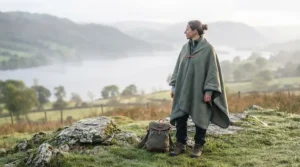
Here’s the physics worth knowing first. As the sleeping bag entry on Wikipedia notes, the underside of a bag gives little insulation because your body weight crushes the fill. That’s why a blanket, quilt or bag is only half your warmth system. Your mat does the underside work. The blanket earns its keep on top, and in the shoulder seasons a proper camping blanket can add roughly a season of comfort to a lightweight bag.
The market splits into a few types. There are pocket-sized, uninsulated sheets, synthetic puffy blankets and down quilts. Some are built for camp evenings, some for sleeping under, and a few try to do both. If you’re weighing an ultralight camping blanket against a compressible outdoor blanket, or wondering whether a camping blanket with stuff sack is worth the extra grams, you’re in the right place.
I’ve researched seven real products across budget, mid-range and premium tiers, using manufacturer specifications and independent test verdicts. Along the way we’ll cover Duke of Edinburgh expeditions, wild camping law in Scotland and Dartmoor, and how to keep your packing weight honest.
Quick Comparison: 7 Packable Blankets at a Glance
| Product | Weight | Packed Size | Price Range* | Best For |
|---|---|---|---|---|
| Matador Pocket Blanket | ~102g | Pocket-sized | Budget | Ground cover, emergency layer |
| Alpkit Cloud Cover | ~450–520g (by version) | ~30 × 21cm (stated) | £100–£160 range | Lightest warm option for summer nights |
| VOITED Recycled Ripstop Travel Blanket | 760g | 20 × 14 × 14cm compressed | £80–£100 range | Hooded wrap for changeable weather |
| VOITED Recycled Ripstop Outdoor Camping Blanket | 1,100g | 36 × 16 × 16cm | £85–£120 range | Comfort, pillow, camp evenings |
| Rumpl Backcountry Puffy Blanket | ~0.8kg (1-person) | ~15 × 36cm | £110–£150 range | Warm, weather-resistant top layer |
| Therm-a-Rest Vela -6C Double Quilt | 1.19kg (double) | Compresses small | Premium | Couples, winter camping |
| Wise Owl Outfitters Puffy Blanket | Check listing | Check listing | Budget | First puffy blanket |
*Prices may vary. Check current price on amazon.co.uk before buying.
Looking at the table, the Matador Pocket Blanket wins on weight but isn’t insulating, so it solves a different problem from the rest. For warmth per gram, the Alpkit Cloud Cover is the standout. If weather resistance matters more, the Rumpl Backcountry Puffy Blanket justifies its extra weight. Couples should look at the Therm-a-Rest Vela -6C Double Quilt, because its 1.19kg is shared between two people.
💬 Just one click — help others make better buying decisions too!😊
Top 7 Packable Camping Blankets for Backpacking: Expert Analysis
1. Matador Pocket Blanket — lightest by a mile at roughly 102g
The Matador Pocket Blanket is about weight and volume, not warmth. It folds into its own integrated pouch, and the corner stakes let you peg it out on breezy ground.
The number that matters is the 102g weight. That’s less than a chocolate bar and about a fifth of the next-lightest blanket on this list. Because it’s uninsulated, it adds almost no thermal value on its own. Where it shines is as a clean, dry seat, a ground sheet for your stove and food, or a wind-block draped over your knees.
Independent testers gave it relatively low scores for camp comfort, yet still called it a winner for hiking and travel. That fits my read of the spec. The Matador Pocket Blanket is a companion piece, not a sleep layer. I couldn’t verify a large sample of customer reviews, so treat sentiment here as tester consensus rather than crowd data.
Pros:
- ✅ Ridiculously light at around 102g
- ✅ Integrated pouch keeps everything tidy
- ✅ Corner stakes help in wind
Cons:
- ❌ Provides essentially no insulation
- ❌ Not comfortable for lounging on rough ground
Budget-friendly, and good value if you want a ground cover rather than warmth (check current price).
2. Alpkit Cloud Cover — best warmth-for-weight ultralight camping blanket
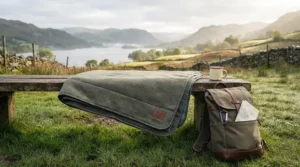
The Alpkit Cloud Cover is a down quilt that behaves like a blanket. It has no zip, hood or foot section, and the omissions are where the weight saving comes from.
Alpkit lists 200g of 750 fill power hydrophobic goose down (RDS certified) in a 20D polyester shell. Quilt weight is stated at 450g, with a 30g stuff bag. Older versions and other sources quote nearer 520g, so check the current listing. Corner attachments and poppers let you fold it into a rough bag shape, or join it to another quilt.
Outdoors Magic’s test verdict praised it as best value and said it adds roughly one season to another bag, but isn’t warm enough for cold conditions. Other reviewers echo the versatility while noting the bag configuration is narrow for broader frames. Stitch-through baffles mean some cold spots, which is normal at this weight class. Down that gets soaked loses loft, even with hydrophobic treatment.
Pros:
- ✅ Very high warmth-to-weight for the price
- ✅ Hydrophobic down copes with damp air
- ✅ Converts between blanket, quilt and rough bag
Cons:
- ❌ Not warm enough alone for cold nights
- ❌ Narrow in bag configuration
Around the £100–£160 range depending on version and retailer, and strong value for ultralight sleepers (check current price).
3. VOITED Recycled Ripstop Travel Blanket — hooded wrap for changeable weather
The VOITED Recycled Ripstop Travel Blanket is the most versatile on the list. The blanket snaps into a hands-free cape, and a removable hood turns it into a wearable shelter.
At 760g and 127 × 178cm, it compresses to 20 × 14 × 14cm in its sack, so it’s a compressible outdoor blanket that fits into a bottle-sized gap. The 3D synthetic fibre fill sits in a recycled ripstop shell with a water-repellent finish, and Voited quotes a modest warmth rating of 13°C. There’s an inner pocket for a phone or keys.
That 13°C figure tells you where this belongs: evenings, mornings and camp lounging, not primary sleeping insulation. The hood is a genuine advantage on wild camping evenings when you’re cooking outside the tent. I couldn’t verify a large independent review sample for the Travel Blanket specifically, so my analysis leans on the spec sheet and the sibling Classic’s test verdicts below.
Pros:
- ✅ Snap-together cape and removable hood
- ✅ Compresses smaller than most full-size options
- ✅ Recycled, machine-washable materials
Cons:
- ❌ 760g is heavy for a pure ultralight build
- ❌ Modest warmth rating for cold nights
Around the £80–£100 range, and good value for versatility rather than weight (check current price).
4. VOITED Recycled Ripstop Outdoor Camping Blanket — comfort-first 4-in-1 with pillow
The VOITED Recycled Ripstop Outdoor Camping Blanket is the comfort pick. It’s a full-size blanket that folds into a pillow, which is a rare and handy trick when you’re carrying no other pillow.
It weighs 1,100g, measures 137 × 203cm, and packs to 36 × 16 × 16cm. That’s a bigger footprint than the Travel Blanket, but you get proper coverage for taller campers. The recycled ripstop outer is water-resistant against spills and showers, not heavy rain.
Advnture’s review called it a top-quality multitasker, one of the pricier blankets in their guide but effectively three products in one. Their main caution was that as a sleeping bag it’s summer-weight only, and that it needs careful sun-drying to regain loft. Honestly, at 1.1kg this is a car-camping or short-hike blanket. If packing weight is your obsession, it’s not the one.
Pros:
- ✅ Full-size coverage for taller campers
- ✅ Doubles as a built-in pillow
- ✅ Water-resistant recycled ripstop shell
Cons:
- ❌ 1.1kg is heavy for ultralight builds
- ❌ Needs careful drying to restore loft
Around the £85–£120 range, and reasonable value if you replace a pillow with it (check current price).
5. Rumpl Backcountry Puffy Blanket — warmest weather-resistant top layer
The Rumpl Backcountry Puffy Blanket is purpose-built for hiking in and packing out. Treeline’s test named it the warmest in its guide.
The 1-person size is 52 × 75in (132 × 190cm) and weighs about 0.8kg (1.76lb), packing to roughly 15 × 36cm in a roll-top stuff sack. Rumpl pairs a 30D ripstop shell with a tougher 50D liner and recycled NanoLoft-type synthetic fill. Synthetic fill is the key benefit: it keeps insulating when damp, which is a real advantage in British weather.
It’s a genuine camping blanket with stuff sack for hiking, not a compromise. Reviews on REI averaged 4.6/5 across 23 reviews when I looked. Reviewers described it as a warm, packable option and a workable sleeping-bag alternative for spring camping, though one review was lukewarm. That’s a small sample, so treat it as indicative. Check UK availability on amazon.co.uk, as sizes can sell out.
Pros:
- ✅ Synthetic fill keeps insulating when damp
- ✅ Tough 50D liner resists abrasion
- ✅ Roll-top stuff sack included
Cons:
- ❌ 0.8kg is a real packing weight cost
- ❌ Priced above many rivals
Around the £110–£150 range, and fair value for durability and warmth (check current price).
6. Therm-a-Rest Vela -6C Double Quilt — premium winter warmth for two
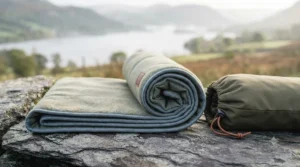
The Therm-a-Rest Vela -6C Double Quilt is the outlier here: a proper insulated double quilt for cold conditions. Live for the Outdoors named it best for winter camping.
At 1.19kg for a double, the per-person weight is under 600g if you split it. That makes it competitive against solo options once two people share the load. The tester praised it for compressing impressively for its insulating power, leaving space in your pack.
Realistically, this belongs to colder trips or couples who’d otherwise carry two separate bags. For solo summer walkers it’s over-specified, and the price reflects that. It overlaps with quilts more than blankets, so treat it as the bridge between a packable camping blanket for backpacking and a proper sleep system.
Pros:
- ✅ Genuine cold-weather warmth to -6C rating
- ✅ Shared weight is efficient for couples
- ✅ Compresses small for its insulation
Cons:
- ❌ Overkill for solo summer trips
- ❌ Premium price tag
Premium bracket, and strong value only if you need the cold-weather performance (check current price).
7. Wise Owl Outfitters Puffy Blanket — budget entry to puffy blankets
The Wise Owl Outfitters Puffy Blanket is the budget way to test whether you like puffy blankets. Treeline lists it as 78 × 54in with synthetic insulation and a 20D ripstop nylon shell with a water-resistant finish.
That size gives good coverage for one person, and synthetic fill means damp tolerance. I couldn’t verify the exact weight or packed size from reliable sources, so check the current listing before you commit. Compare it directly against the Rumpl Backcountry Puffy Blanket on packing weight, because budget blankets often trade a few hundred grams for the lower price.
Treeline’s testers included it in their guide, but I couldn’t verify a large review sample. Good candidate for scouts, festival-goers and DofE hopefuls who want to try the concept cheaply.
Pros:
- ✅ Budget entry to synthetic puffy blankets
- ✅ Generous 78 × 54in coverage
- ✅ Water-resistant ripstop shell
Cons:
- ❌ Weight and pack size unverified
- ❌ Likely bulkier than premium rivals
Budget bracket, and good value if the weight suits your pack (check current price).
What Is a Packable Camping Blanket for Backpacking?
A packable camping blanket for backpacking is a lightweight, compressible insulating layer that folds or stuffs down small enough to carry on multi-day hikes. It provides warmth around camp or on top of a sleeping system, and typically weighs from around 100g to 1.2kg depending on insulation and size.
The category blurs three things. An ultralight camping blanket prioritises weight, usually down-filled with minimal features. A compressible outdoor blanket prioritises pack size, often with synthetic fill that survives being squashed daily. A camping blanket with stuff sack bundles storage, keeping the bulk tidy and the insulation dry.
Whatever you choose, remember it won’t replace a mat. Your body weight compresses insulation underneath, so the blanket goes over you while the mat does the underside work. Think of it as a very good duvet, not a mattress.
How to Choose a Packable Camping Blanket for Backpacking
- Decide the job first. Camp evenings and ground cover call for something light. Sleeping under it needs real insulation. A blanket that tries to do both usually compromises.
- Set a packing weight budget. Under 500g suggests a down quilt-style blanket. Up to 800g opens up synthetic puffy options. Above 1kg, you’re in car-camping territory.
- Choose fill for your weather. Down has the best warmth-to-weight but hates soaking. Synthetic keeps insulating when damp, which suits the UK.
- Check compressed size. A blanket that packs to a bottle-sized cylinder lets you strap it outside or slot it into gaps.
- Look for a proper stuff sack. An integrated pocket or roll-top bag saves faff and keeps insulation dry.
- Check size against your height. Coverage matters. A narrow quilt leaves shoulders cold.
- Match to your trip type. Duke of Edinburgh expeditions, wild camping and weekend hikes each have different priorities, covered below.
Ultralight Camping Blanket: Is Lighter Always Better?
Not always. The lightest option, the Matador Pocket Blanket at roughly 102g, is uninsulated. Weight saved by leaving out warmth isn’t really a saving, it’s a subtraction.
The sweet spot for an ultralight camping blanket is where warmth-per-gram peaks. The Alpkit Cloud Cover sits there: 200g of down in roughly 450–520g total, adding about a season to another bag according to one tester. Compare that with the Rumpl Backcountry Puffy Blanket at about 0.8kg. You’re carrying around 300g more for weather resistance and durability.
My rule of thumb: pay weight for damp tolerance if your trips are wet, and pay money for down if they’re dry. Otherwise you’re either soaked and cold or overspent and overloaded.
Compressible Outdoor Blanket: Pack Size, Loft and Fill Explained
| Product | Insulation | Shell | Best For |
|---|---|---|---|
| Matador Pocket Blanket | None | Light packable fabric | Ground cover |
| Alpkit Cloud Cover | 750 fill power hydrophobic goose down | 20D polyester | Dry, cool nights |
| VOITED Travel Blanket | 3D synthetic fibre | 50D recycled ripstop | Wraps, camp evenings |
| VOITED Classic Blanket | 3D synthetic fibre | 50D recycled ripstop | Comfort, pillow |
| Rumpl Backcountry Puffy Blanket | Recycled synthetic | 30D shell, 50D liner | Damp, tough conditions |
| Therm-a-Rest Vela -6C | Insulated (see maker’s spec) | Check maker’s spec | Cold nights, couples |
| Wise Owl Puffy Blanket | Synthetic | 20D ripstop nylon | Budget starter |
That table shows why a compressible outdoor blanket isn’t just about size. Down compresses tighter but suffers when wet, while synthetic packs bulkier but shrugs off drizzle. Where the fill compresses matters too, because repeatedly cramming a blanket into a tiny sack wears the loft over time. Loosen it at camp, and never store it compressed at home.
Camping Blanket With Stuff Sack: Why the Bag Matters
A camping blanket with stuff sack isn’t a throwaway detail. It’s the difference between a tidy pack and a shapeless lump.
The Alpkit Cloud Cover packs into an internal zipped pocket, so there’s no separate sack to lose. The Rumpl Backcountry Puffy Blanket ships with a roll-top sack, which doubles as light dry storage. The VOITED Travel Blanket has a compression sack that shrinks it to 20 × 14 × 14cm, though compression sacks are less forgiving of fill over years of use.
My take: the best stuff sack is the one you’ll actually use every morning. Roll-tops beat drawstrings for fast packing, and integrated pockets beat everything for not losing bits. Whichever you choose, line your rucksack too, because no stuff sack is fully waterproof.
Packing Weight: Building a Sub-Kilo Sleep Layer
Packing weight is where good intentions go to die. The DofE’s own expedition kit list, updated January 2026, stresses recommended kit, and one participant guide suggests rucksacks of roughly 14–18kg depending on body size. Every blanket gram competes with food, water and waterproofs.
Here’s how I’d budget it. Take a mat (foam is lighter than inflatable, per one school’s kit guidance), then a sleeping bag suited to the season. A blanket sits on top of that as an optional extra. The Alpkit Cloud Cover at around 450–520g is my pick if every gram counts. The Rumpl Backcountry Puffy Blanket at about 0.8kg is the pick if weather worries you more.
Share what you can. Group kit like stoves and tents should be split, so personal items like blankets stay honest. A blanket that replaces a fleece, a pillow and a camp seat earns its weight. One that duplicates them doesn’t.
Packable Blanket vs Sleeping Bag vs Quilt vs Liner
| Item | Main Role | Weight Tendency | Best For |
|---|---|---|---|
| Packable camping blanket | Top layer, camp comfort | Light to moderate | Alpkit Cloud Cover, Rumpl Backcountry Puffy Blanket |
| Down quilt | Sleep insulation | Very light | Dedicated ultralight sleepers |
| Sleeping bag | Full sleep system | Moderate to heavy | Cold or unpredictable weather |
| Sleeping bag liner | Adds warmth, keeps bag clean | Very light | Boosting an existing bag |
A blanket is more flexible but less thermally efficient than a purpose-built bag or quilt. It leaves gaps, and drafts sneak in. A sleeping bag liner adds a little warmth and keeps your bag clean, but doesn’t double as a camp wrap. If you already own a decent bag, a blanket adds versatility. If you don’t, buy the bag first.
Duke of Edinburgh Expeditions: Where a Packable Blanket Fits
For Duke of Edinburgh expeditions, the kit list is clear on one thing: you need a proper sleeping bag. The July 2026 kit list quoted by one school says a “3-season” bag should be warm enough to sleep in down to 0°C, and other guidance advises keeping it dry in a liner or dry bag.
A blanket is therefore an add-on, not a replacement. It helps at camp, adds warmth in cold spells, and can replace a fleece or camp seat. The Alpkit Cloud Cover is a smart supplement since it lifts a 3-season bag toward colder conditions at modest weight.
Check with your leader or assessor before packing anything unusual. Rules vary between centres, and Bronze, Silver and Gold have different demands. Some guidance advises against carrying extras “just in case”, so keep your packing weight honest and keep Duke of Edinburgh expeditions safe, not sloppy.
Wild Camping With a Packable Blanket: Rules and Real-World Tactics
Wild camping law differs across the UK, and it affects what you carry. Scotland grants a statutory right to camp responsibly on most unenclosed land under the Land Reform (Scotland) Act 2003, as explained in VisitScotland’s wild camping guidance. The Access Code recommends one to three nights per spot, and Loch Lomond & The Trossachs has seasonal permit zones.
Dartmoor is the one statutory exception in England: the Supreme Court confirmed in May 2025 that the public right of access to the Commons includes camping. Elsewhere in England and Wales, camping without permission is trespass, though responsible high-fell camping is widely tolerated. Organised groups may face different expectations, so check.
For gear, wild camping rewards low-impact kit. A quiet, earth-toned blanket, a small pack and a leave-no-trace mindset go together. The VOITED Travel Blanket‘s hood is handy for cooking outdoors, and the Alpkit Cloud Cover disappears into a small stuff sack for stealthy morning packing.
✨ Don’t Miss These Exclusive Deals!
🔍 Take your camp comfort to the next level with these carefully selected blankets. Click on any highlighted product name to check current pricing and availability. These picks will help you create cosy evenings on the trail that you’ll actually look forward to!
Practical Usage Guide: Setup, First-Use Tips and Care
Before your first trip. Unpack the blanket, shake it out and let it loft fully. Practise packing it once at home so you’re not fumbling in the rain.
At camp. Lay your mat first, then the blanket on top. Tuck edges under your shoulders and feet to close drafts. Wear a hat, since heat escapes quickly from your head.
In the morning. Shake off condensation and let it air before packing. Don’t stuff it wet if you can help it.
Maintenance. Follow the maker’s washing instructions. Voited and Rumpl describe their blankets as machine washable, and Voited advises careful sun-drying to restore loft. Store loose, never compressed, to preserve the fill.
Common mistakes in the first 30 days. Compressing wet down, skipping the liner, packing a blanket that duplicates your fleece, and forgetting that a blanket can’t replace a mat.
Real-World Scenarios: Three Backpackers, Three Blankets
The weekend summer walker. A solo hiker doing two nights in the Peak District in July, budget under £150, wants minimal weight. The Alpkit Cloud Cover adds a season to a light bag and stays under 500g. Pair it with a foam mat and you’re done.
The DofE participant. A 16-year-old preparing for Silver, carrying a 3-season bag as required. A Wise Owl Outfitters Puffy Blanket works as a low-cost camp layer, and the Rumpl Backcountry Puffy Blanket suits anyone whose parents will invest a bit more. Neither replaces the bag, and both count towards packing weight, so discuss it with your leader first.
The couple on a shoulder-season trip. Two people, cool nights, Scottish wild camping in September. The Therm-a-Rest Vela -6C Double Quilt at 1.19kg shared is efficient, and one blanket beats two.
Common Mistakes When Buying a Packable Camping Blanket
Buying on weight alone is the classic mistake. The lightest blanket may be uninsulated. Another is assuming down is always better: for damp UK trips, synthetic often wins.
Then there’s ignoring size. A narrow blanket leaves shoulders cold, and a huge one becomes heavy. Some buyers forget the stuff sack entirely, then struggle with a loose puffy lump. And many forget to account for what the blanket replaces. If it doesn’t replace a fleece, a pillow or a seat, you’re carrying extra weight.
Finally, watch for marketing. “Ultralight” and “compressible” are not regulated terms. Always check actual grams and packed dimensions on the listing, and cross-reference independent tests where you can.
Long-Term Cost and Maintenance
Cheap blankets cost less upfront but may lose loft sooner. Cost-per-use favours a well-built blanket used across many trips.
Down needs care. Hydrophobic treatment helps, but soaked down still clumps, and loft depends on gentle washing and drying. Synthetic tolerates rougher treatment and machine washing, which suits heavy use.
Check warranties too. Alpkit lists a 3-year warranty on the Alpkit Cloud Cover, and Rumpl lists a limited warranty on the Rumpl Backcountry Puffy Blanket at some retailers. Over five years of regular trips, a mid-priced synthetic like the VOITED Travel Blanket can beat a cheap blanket that needs replacing.

Frequently Asked Questions
❓ What is the lightest packable camping blanket for backpacking?
❓ Can a camping blanket replace a sleeping bag for UK backpacking?
❓ Are camping blankets allowed on Duke of Edinburgh expeditions?
❓ Is wild camping legal in England?
❓ How do you wash a compressible outdoor blanket?
Conclusion
Choosing a packable camping blanket for backpacking comes down to honest priorities. If packing weight rules everything, the Alpkit Cloud Cover delivers the best warmth-per-gram for dry trips. If damp British weather worries you, the Rumpl Backcountry Puffy Blanket brings synthetic fill and a tougher build.
For versatility, the VOITED Travel Blanket turns into a hooded wrap, while the VOITED Classic Blanket adds a pillow at the cost of weight. Couples heading into cold conditions should consider the Therm-a-Rest Vela -6C Double Quilt. The Wise Owl Outfitters Puffy Blanket is a low-risk way to try the concept, and the Matador Pocket Blanket is a ground cover, not a warmth layer.
Remember that a blanket supplements a proper sleep system. For Duke of Edinburgh expeditions and wild camping alike, follow the rules, check with your leader, and keep your kit light and low-impact.
✨ Ready to lighten your load?
🔍 Click any highlighted product name to check current pricing and availability. Pick the blanket that fits your trips, pack it smartly, and enjoy warmer evenings on the trail!
Recommended for You
- Insulated Camping Blanket: 7 Best UK Picks For Autumn Nights (2026)
- Picnic Blanket Gift Set: 7 Best Picks for UK Couples (2026)
- Picnic Blanket For Beach Outings: 7 Best Picks For UK Sands (2026)
Disclaimer: This article contains affiliate links. As an Amazon Associate, I earn from qualifying purchases. If you purchase products through these links, we may earn a small commission at no additional cost to you.
✨ Found this helpful? Share it with your friends! 💬🤗
