

In This Article
There’s a particular kind of panic that sets in on your first proper cold-snap walk with a newborn. The pram’s loaded, the changing bag’s packed, you’ve checked the weather app four times — and then you’re standing in the hallway holding a thin cotton blanket, wondering if it’s anywhere near warm enough for a frosty morning at the park. Most new parents discover fairly quickly that the cellular blanket they were gifted at the baby shower, lovely as it is, was never designed for genuine winter cold. A proper pram blanket for winter does a specific job: trapping warm air close to the body without smothering it, in a fabric that survives being washed weekly and clipped, tucked, and yanked about by small fists.
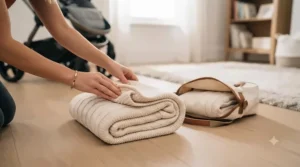
What is a pram blanket for winter? Put simply, it’s a thicker, insulating blanket — typically fleece, knitted wool-blend, or layered cellular fabric — designed to keep a baby warm in a pushchair or pram during cold weather, while still allowing enough airflow to avoid the genuine risk of overheating.
That last clause matters more than most product listings let on. Overheating, not cold, is the safety issue health professionals actually worry about most when it comes to babies in prams during winter — the Lullaby Trust’s official cold weather guidance specifically notes that babies are safer being a little cooler than too hot, which makes choosing the right blanket as much about understanding fabric, layering and tog ratings as it is about picking something soft and pretty. This guide pulls together real UK product research, honest aggregated review sentiment, and the official safer-sleep guidance behind why “wrap up warm” isn’t quite as simple as it sounds. We’ll walk through seven genuine pram blankets and accessories available in the UK, how fleece compares with knitted wool-blends, what thermal insulation actually means in fabric terms, and how to layer a baby properly without accidentally working against yourself.
Quick Comparison: Pram Blankets for Winter at a Glance
If you’re short on time, here’s the condensed version before we get into the detail.
| Product | Best For | Approx. Price | Key Feature |
|---|---|---|---|
| ByBoom Swaddling Wrap & Pram Blanket | Newborns needing full-body warmth | £35-£45 range | Double-thickness fleece, integrated wrap design |
| Clair de Lune Star Fleece Baby Wrap (0-6m) | Effortless daily fleece wrap | Around £20 | No buttons/zips, integrated mittens and hood |
| Clair de Lune Star Fleece Pram Blanket (Navy) | Budget flat fleece blanket | £10-£15 range | Simple 70x90cm fleece, co-ordinates with footmuffs |
| mimixiong Knitted Cellular Blanket | Lightweight knitted layering piece | £8-£14 range | 100% cotton knit, cellular air-trapping structure |
| Clair de Lune Marshmallow Pram Blanket | Plush all-rounder | £15-£20 range | OEKO-TEX certified, poly/cotton jersey lining |
| BundleBean GO Waterproof Footmuff | Genuine cold, wet-weather insulation | £40-£60 range | Waterproof shell, multi-use across pram/car seat/sling |
| Pram Blanket Clips (2-pack) | Keeping any blanket securely in place | Under £10 | Universal fit, spring-loaded grip |
The honest takeaway from that table: there’s a real difference between a blanket that looks winter-ready in a product photo and one that’s actually engineered for it. A flat 70x90cm fleece panel is lovely for September walks and indoor naps, but it’s not in the same category as a double-thickness wrap or a genuinely waterproof footmuff when the forecast says minus two and drizzle. We’ll get into exactly where each product earns its place below.
💬 Just one click — help others make better buying decisions too! 😊
✨ Don’t Miss These Exclusive Deals!
🔍 Take the guesswork out of dressing baby for the cold. Click through on any product below to check current pricing and availability — getting the layering right today means fewer frozen toes and fewer overheated, fussy naps this winter.
Top 7 Pram Blankets for Winter: Expert Analysis
We’ve focused this list on genuine products available through Amazon UK, leaning on well-established UK nursery brands like Clair de Lune alongside specialist winter-wrap and footmuff options, supported by honest aggregated review sentiment rather than invented testimonials.
1. ByBoom Swaddling Wrap, Car Seat and Pram Blanket for Winter
The standout feature is the double-thickness fleece construction, which puts this firmly in a different category from a flat blanket panel — it’s designed to wrap fully around a newborn or younger baby like a soft cocoon, rather than simply draping over the top of them. It’s built as a universal fit for infant car seats as well as pushchairs and buggies, which means one purchase genuinely covers both the car journey and the walk afterwards without swapping kit.
What most buyers overlook about a wrap-style blanket like this is how much warmer it runs compared with a standard flat blanket of similar thickness, simply because it encloses rather than drapes — there’s no gap at the sides for cold air to creep in. Reviewers consistently report that the thick fleece keeps babies genuinely warm in winter conditions, with several specifically describing it as “essential for a winter baby” and noting it’s thick enough to be opened up when moving between cold outdoor air and a warm shop or car, addressing the overheating risk that comes with any genuinely warm winter product.
Pros: doubles up for car seat and pram use; double-thickness fleece provides real warmth rather than token insulation; design allows quick opening to prevent overheating indoors. Cons: bulkier to store in a changing bag than a flat blanket; the wrap style suits younger, less mobile babies better than older ones who like to kick free.
Typically priced in the £35-£45 range at the time of research, it sits towards the premium end — justified, based on the specification, by the double-layer construction rather than branding alone.

2. Clair de Lune Star Fleece Baby Wrap Blanket (0-6 Months)
This one takes the wrap concept and strips it back to its simplest form: no buttons, no zips, just a soft fleece pram blanket that slips on in seconds, complete with an integrated tassel hood and built-in mittens. With a genuinely large sample of customer reviews behind it on Amazon UK, this is one of the more heavily validated products in this category, which gives the aggregated sentiment real weight rather than relying on a handful of early reviews.
Based on the spec comparison with bulkier double-thickness wraps, the trade-off here is convenience over maximum warmth — reviewers consistently note how quick and easy it is to use, particularly for the school run or quick errands where wrestling a baby into a full pram suit isn’t practical. What most buyers overlook is that “lightweight” in the listing doesn’t mean thin or cold; it means the fleece traps warmth efficiently without adding bulk, which several reviewers specifically praised for car seat use where bulky clothing is a genuine safety concern.
Pros: genuinely fast to put on and take off, useful for car seat safety since it avoids bulky padded suits underneath the harness; integrated hood and mittens reduce the need for separate accessories; strong, large review base. Cons: sizing runs generous at the upper end, with one reviewer noting their baby outgrew it before the stated six-month mark; less adjustable than a flat blanket for fine-tuning warmth.
At around £20 at the time of research, it represents solid value for a genuinely versatile, fast-to-use winter wrap.
3. Clair de Lune Star Fleece Pram Blanket (Navy)
This is the simpler, flatter sibling product in the same fleece family — a traditional 70x90cm blanket made from 100% polyester fleece, designed to coordinate with matching Clair de Lune footmuffs and car seat covers rather than wrap the baby entirely. It’s the kind of product most people picture when they think “pram blanket”: something to tuck around the legs and torso once the baby’s already strapped in.
Here’s what the spec sheet won’t tell you, but honest reviewer feedback does: this particular blanket runs lighter than some buyers expect for a “winter” listing. Genuine reviews note it’s “smaller than expected” and “not as thick as expected,” with one describing it as better suited to milder weather than deep winter use. That’s useful, honest context rather than a dealbreaker — paired with a base layer or used inside a pram suit, a lighter fleece like this still adds a meaningful layer, but on its own in genuinely cold conditions it’s better as a supplementary layer than the sole line of defence.
Pros: affordable entry point into the fleece category; coordinates with matching footmuff and car seat ranges; simple flat design is easy to wash and dry quickly. Cons: genuine buyer feedback flags it as thinner than expected for deep winter; sizing has been described as smaller than the listing suggests.
Priced in the £10-£15 range at the time of research, it’s a sensible budget pick specifically as a layering piece rather than a standalone winter solution.
4. mimixiong 100% Cotton Knitted Cellular Baby Blanket
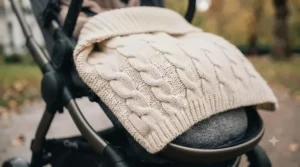
This product represents the knitted pram blanket category well — a 100x80cm cellular-knit blanket made from cotton, where the “cell” structure (small, regularly spaced holes in the weave) is specifically designed to trap pockets of air for insulation, the same basic principle behind cellular hospital blankets. The breathable, natural-fibre construction is a genuine point in its favour for skin-sensitive newborns.
Based on the spec comparison with thicker fleece options, a knitted cellular blanket trades raw warmth for breathability and gentleness against delicate skin — and reviewers are honest about that trade-off. Genuine feedback specifically describes it as “really lightweight for a knitted blanket, so ideal for summer” and, more pointedly, one reviewer noted it’s “good for those cooler summer nights but not thick enough for winter.” That’s a useful, honest signal rather than a flaw to hide: a knitted cellular blanket like this works best as a breathable inner layer or transitional-season piece, layered underneath a thicker fleece or pram suit during genuine winter cold, rather than relied upon alone.
Pros: soft, breathable cotton construction gentle on newborn skin; genuinely good as a layering piece under thicker outerwear; widely available in multiple colourways with a strong review base. Cons: honest reviewer consensus is that it’s not thick enough as a standalone winter blanket; needs pairing with another layer in cold conditions.
Typically priced in the £8-£14 range at the time of research, it’s an affordable, versatile addition to a layering system rather than a one-blanket winter solution.
5. Clair de Lune Marshmallow Soft Baby Pram Blanket
Sitting between the simple fleece blanket and the full wrap, this one uses a plush “marshmallow” textured polyester with a 100% cotton jersey lining, OEKO-TEX 100 certified to confirm it’s free from harmful substances — a detail that matters more than marketing fluff when it’s against a newborn’s face for hours at a time. At 70x90cm, it’s sized similarly to the simpler fleece option above but with noticeably more loft and texture.
What most buyers overlook about this kind of dual-layer construction is that the cotton jersey lining does real work: it sits against the baby’s skin while the plush polyester outer does the insulating, which based on the spec comparison gives a more balanced warmth-to-breathability ratio than a single-layer fleece. Genuine reviewer feedback consistently describes the quality as rivalling more expensive brands, with several specifically praising how well it’s held up through repeated washing without pilling or fading — a meaningful detail for a product that’ll likely be washed weekly through a wet, muddy winter.
Pros: dual-layer construction balances warmth with breathability; OEKO-TEX certified for safety; genuine reviewer feedback on durability through repeated washing is consistently positive. Cons: more expensive than the simplest flat fleece options; the plush texture takes slightly longer to dry after washing than thinner fabrics.
Priced in the £15-£20 range at the time of research, it’s a reasonable mid-range investment for a blanket that’s likely to see daily winter use.
6. BundleBean GO Multi-Use Waterproof Footmuff
This is a genuine step up in category rather than a direct blanket competitor — a waterproof, insulated footmuff-style cover that extends to fit from newborn through to around four years old, and converts between pushchair, car seat, sling, and even a playmat. For anyone facing genuinely wet, cold UK winter conditions rather than just chilly-but-dry days, this is the product built specifically for that brief.
Here’s what most flat blankets simply can’t do: a waterproof outer shell. Rain and sleet soak straight through fleece and cotton-knit blankets, which then sit cold and damp against the baby rather than insulating anything. Based on the specification, the waterproof shell paired with insulated lining is a meaningfully different engineering approach to warmth than a blanket alone, which is why genuine winter-footmuff buying guides consistently recommend looking for a tog rating of at least 2.5 alongside genuine water and wind resistance for this kind of product. The multi-use, extending design is also a real long-term value point — rather than rebuying a new blanket each size stage, it adapts.
Pros: genuinely waterproof, unlike any fabric blanket on this list; extends to fit a wide age range, reducing repeat purchases; multi-use across pushchair, car seat and sling. Cons: a noticeably bigger investment than a blanket; bulkier to store and less suited to brief indoor naps where a lighter layer works better.
Expect a price in the £40-£60 range at the time of research — a genuine premium product, but one that solves a problem blankets structurally can’t.
7. Pram Blanket Clips (2-Pack)
The final product on this list isn’t a blanket at all, but the accessory that makes every blanket above actually usable on a moving pushchair in real winter wind: a pair of spring-loaded clips designed to attach blankets, muslins, or covers securely to the pram frame or hood. Genuine Amazon UK reviews consistently describe these as strong, simple, and “worth their weight in gold” for keeping items in place rather than constantly slipping or blowing off.
What most parents overlook until their first windy winter walk is how often a blanket that fits perfectly in the pram still ends up on the pavement, dragged loose by a gust or kicked free by a wriggling toddler. Based on the spec comparison with simply tucking a blanket under the mattress, a proper clip system holds significantly more reliably, particularly on three-wheeler prams or buggies used on uneven pavements where vibration works fabric loose over a walk. They’re a small, inexpensive addition that meaningfully improves how well every other product on this list actually performs in practice.
Pros: genuinely inexpensive relative to the problem it solves; universal fit works across most pram, pushchair and buggy handle types; reviewers consistently praise the strong, secure grip. Cons: solves a practical problem rather than adding warmth itself; very cheap own-brand versions can have weaker springs, so it’s worth checking review sentiment on grip strength specifically.
Typically under £10 for a pack at the time of research, this is the smallest spend on the list but arguably one of the most practically useful for genuinely cold, blustery walks.
Practical Usage Guide: Getting the Most From a Pram Blanket
Owning the right blanket only solves half the problem — using it correctly through a genuinely cold winter matters just as much. A useful rule of thumb, drawn from official advice, is to dress baby in roughly one more layer than you’re wearing yourself, then add the pram blanket as the outer layer rather than the only layer.
In the first month of cold-weather pram use, the most common mistake is doubling a blanket over to add warmth quickly — folding it in half and tucking it round. Official safer-sleep guidance specifically flags that a blanket doubled over counts as two blankets in terms of warmth, which can meaningfully increase overheating risk rather than simply adding cosiness. Maintenance is straightforward: wash fleece and cellular-knit blankets weekly through a wet winter given how much they pick up from pavements, prams, and small sticky hands, and check clips and fastenings periodically since repeated tugging in wind does wear spring mechanisms down over a season.
Real-World Scenarios: Matching the Blanket to the Situation
It helps to think through actual winter situations rather than abstract categories. Consider three common scenarios.
First, a newborn on their first cold-weather outings, mostly short walks and car journeys. Here, the Clair de Lune Star Fleece Wrap earns its keep — quick to put on, warm enough for a brisk walk, and easy to remove the moment you’re back in a warm car or shop, addressing overheating risk without a fuss.
Second, a slightly older baby in a pushchair for genuinely long winter walks — the school run with an older sibling, or weekend outings regardless of weather. Here, layering the mimixiong knitted cellular blanket as a breathable inner layer under the Clair de Lune Marshmallow blanket gives a more adjustable warmth system than either blanket alone, letting a parent add or remove the outer layer as conditions change through the walk.
Third, a family facing genuinely wet, blustery UK winter weather on a regular basis — coastal areas, rural dog-walking routes, daily nursery runs regardless of forecast. Here, the BundleBean waterproof footmuff is the more sensible investment than any blanket, since no amount of fleece solves the problem of rain soaking straight through fabric.
Problem → Solution: Common Pram Blanket Issues
A handful of issues come up repeatedly, each with a fairly specific fix.
Problem: the blanket keeps blowing or sliding off during the walk. Solution: pram blanket clips solve this directly, securing the blanket to the pram frame or hood rather than relying on tucking alone.
Problem: baby seems too hot despite cold weather outside. Solution: this usually means too many layers stacked together, or a doubled-over blanket — checking the back of baby’s neck or chest for sweat, rather than judging by cold hands and feet, is the recommended way to assess this.
Problem: a flat fleece blanket isn’t keeping baby warm enough on genuinely cold days. Solution: layering a breathable knitted blanket underneath a thicker fleece, or upgrading to a wrap-style or footmuff product, addresses this far better than simply buying a second flat blanket of the same type.
Problem: the blanket gets soaked through in rain or sleet. Solution: this is precisely the gap a waterproof footmuff fills that no fabric blanket can — fleece and knitted cotton are not weatherproof, regardless of thickness.
Problem: a fleece blanket has started bobbling or pilling after a few washes. Solution: washing on a cooler, gentler cycle and avoiding tumble-drying on high heat generally extends the life of polyester fleece significantly compared with standard hot washes.
How to Choose a Pram Blanket for Winter
Working through a short list of practical questions, in order, makes this decision far easier than starting with colour or pattern.
- Check the fabric type against your actual winter conditions. Fleece suits cold-but-dry climates well; genuinely wet regions need waterproof options rather than fabric alone.
- Think in terms of layers, not one blanket. A breathable knitted layer plus a thicker outer fleece adapts better through a changeable day than a single fixed-warmth product.
- Match the blanket style to your baby’s age and mobility. Wrap-style blankets suit younger, less mobile babies; older, wriggly babies often do better with a securely clipped flat blanket they can kick against without fully escaping it.
- Confirm safety certifications. OEKO-TEX or similar certification on fabric matters for anything against a baby’s skin for extended periods.
- Check genuine review sentiment on thickness, not just the word “winter” in the listing. As seen above, some “winter” blankets run lighter than buyers expect — real reviews are more reliable than marketing copy here.
- Add a clip system from the start. It’s a small additional cost that meaningfully improves how well any blanket performs in real wind and movement.
- Don’t treat the blanket as a standalone solution. It works best as one part of a wider cold-weather plan alongside appropriate baby clothing layers and pram positioning.
Fleece Pram Blanket vs Knitted Pram Blanket
| Factor | Fleece Pram Blanket | Knitted Pram Blanket |
|---|---|---|
| Warmth-to-weight ratio | High — traps heat efficiently | Moderate — relies on cell structure for air-trapping |
| Breathability | Lower, can run warm if doubled | Higher, naturally breathable knit |
| Best use | Outer layer, standalone in mild-cold | Inner layer or transitional-season use |
| Skin feel | Soft but synthetic against newborn skin | Often cotton, gentler for sensitive skin |
| Washing durability | Can pill over time with hot washes | Generally holds shape well, gentle wash needed |
The pattern here is fairly clear: fleece and knitted pram blankets aren’t really competing products so much as complementary ones. A thermal insulation fabric system that pairs a breathable knitted inner layer with a fleece or wrap-style outer layer consistently outperforms relying on either fabric type alone, particularly across a genuinely changeable UK winter where morning frost and afternoon mild spells can occur within the same walk.
Thermal Insulation Fabric: What Actually Keeps Babies Warm
Understanding what “thermal insulation fabric” means in practice helps explain why some blankets that look equally thick perform very differently in real cold. Insulation works by trapping pockets of still air close to the body — air itself is the actual insulator, and fabric structure (cellular weaves, fleece pile, knitted loops) exists primarily to create and hold those air pockets in place. This is why a thick, dense weave doesn’t automatically outperform a lighter, looser cellular knit; structure matters as much as raw material thickness.
The textile industry uses a tog rating — short for thermal overall grade — to measure this insulating capacity in baby sleepwear and bedding, and the same logic genuinely applies to pram blankets even where products aren’t formally tog-rated. As a rough guide, products intended for room temperatures or outdoor conditions below around 16°C generally need meaningfully more insulating structure than something designed for milder, in-between weather. The recommended room temperature range for babies’ sleep spaces, set out by the Lullaby Trust, sits between 16 and 20°C, which is a genuinely useful reference point even when thinking about outdoor pram warmth, since it’s the benchmark most baby thermal products are designed and tested against.
Layering Baby for Cold Weather: A Practical, Safety-First Approach
Layering a baby for cold weather isn’t simply “more is better” — it’s a genuine balancing act between warmth and the real, well-documented risk of overheating. According to NHS guidance on dressing a newborn, a good general rule is to dress a baby in one extra layer compared with what an adult would wear comfortably in the same conditions — not several extra layers, and not a thick snowsuit underneath multiple blankets.
What most new parents overlook about layering baby for cold weather is that air pockets between layers do most of the insulating work, which means three thin, breathable layers typically outperform one very thick layer for both warmth and overheating safety. A practical layering order for a winter pram outing generally runs: a breathable base layer (vest or bodysuit), a mid layer (sleepsuit or knitted cardigan), an outer layer appropriate to conditions (pram suit or snowsuit if genuinely cold), and then the pram blanket itself as the final, adjustable layer that can be loosened or removed the moment baby’s skin feels warm to the touch.
Pram Blanket Clips: Why This Small Accessory Matters More Than It Looks
It’s easy to treat pram blanket clips as an afterthought, but in practice they solve one of the most common and frustrating real-world problems with winter pram use: blankets that simply don’t stay put. A loose blanket isn’t just inconvenient — it stops doing its insulating job the moment it slips, leaving a gap exactly where warmth is needed most.
Based on the spec comparison with simply tucking fabric under a pram mattress, a proper spring-clip system holds significantly more reliably through movement, wind, and an active baby’s kicking. The best designs use a firm spring mechanism with ribbed or textured grip surfaces specifically to avoid slipping on smooth fleece, since a clip that can’t actually grip the fabric defeats its own purpose. For anyone using a three-wheeler pram or regularly walking on uneven pavements, where vibration works fabric loose far faster than on a smooth, four-wheeled pram, a reliable clip system genuinely earns its modest cost.
Long-Term Cost and Maintenance
A £10 flat fleece blanket that needs replacing every winter due to pilling and thinning works out more expensive over several years than a £20 dual-layer Marshmallow-style blanket built to hold up through repeated weekly washing. As with most baby products, the genuinely cheapest option upfront isn’t always the cheapest over the lifespan of a typical two-to-three-year pushchair-using period.
Maintenance is mostly straightforward: wash according to the care label rather than defaulting to the hottest setting, avoid high-heat tumble drying which accelerates pilling on fleece specifically, and inspect clips and fastenings each season since repeated tension in wind genuinely does weaken spring mechanisms over time. The hidden cost worth weighing is comfort and consistency for the baby — constantly swapping between thin, ineffective blankets tends to mean more unsettled, cold or overheated walks than investing properly once in a system that actually works for your climate.
Common Mistakes When Buying a Pram Blanket for Winter
The most frequent mistake is buying purely on the word “winter” in a product listing without checking genuine review sentiment on actual thickness — as the honest reviewer feedback throughout this guide shows, not every product marketed for winter performs equally in real cold. A close second is buying a single blanket and expecting it to handle the full range of a UK winter, from a mild 8°C drizzly day to a genuine sub-zero frost, when most experienced parents end up running a small layering system instead. Skipping a clip system is another common oversight, particularly for parents who haven’t yet experienced a blanket blowing loose mid-walk on a windy day. Finally, plenty of buyers don’t check fabric certification at all, when something OEKO-TEX certified or similarly tested genuinely matters for anything spending hours against a newborn’s face and hands. It’s also worth bookmarking the NHS’s official guidance on reducing overheating risk, since the same principles that apply to safer sleep indoors — checking a baby’s chest or neck rather than their hands, and avoiding doubled-up bedding — apply just as directly to a baby wrapped up in a pram.
Frequently Asked Questions
❓ What's the best pram blanket for winter newborns?
❓ Is fleece or knitted better for a pram blanket in cold weather?
❓ Can a pram blanket cause a baby to overheat?
❓ How do I stop a pram blanket from sliding off during a walk?
❓ How many layers should a baby wear under a pram blanket in winter?
Conclusion
There’s no single perfect pram blanket for winter, and that’s largely because winter itself isn’t one fixed condition — a dry, frosty morning and a wet, blustery afternoon call for genuinely different approaches. What stays consistent across every product in this guide, and the safety guidance behind it, is the underlying principle: warmth through layering and breathable structure, not simply piling on the thickest fabric available and hoping for the best. Whether that means a quick-wrap fleece for short outings, a layered fleece-and-knit system for longer winter walks, or a genuinely waterproof footmuff for proper wet-weather use, choosing deliberately rather than reaching for whatever’s marked “winter” on the label makes a real difference to how comfortable, safe and settled a baby actually is out in the cold.
✨ Don’t Miss These Exclusive Deals!
🔍 Take winter pram prep to the next level with these carefully researched products. Click on any item above to check current pricing and availability — getting the right setup in place today means warmer, calmer walks all season long.
Recommended for You
- Best Pram Blanket and Footmuff Set: 7 Top UK Picks (2026)
- Best Knitted Moses Basket Blanket UK 2026: 7 Expert Picks Reviewed
- Best Moses Basket Blanket and Sheet Sets UK 2026: 7 Expert Picks
Disclaimer: This article contains affiliate links. As an Amazon Associate, I earn from qualifying purchases. If you purchase products through these links, we may earn a small commission at no additional cost to you.
✨ Found this helpful? Share it with your friends! 💬🤗
