

In This Article
Right, let’s get the obvious question out of the way first, because if you’ve just typed breathable baby blanket into a search bar at 2am with a baby snoring (finally) on your chest, you don’t want a history lesson. A breathable baby blanket is a lightweight cover, usually cotton, muslin or bamboo-cotton, woven or knitted with an open “cellular” structure so air can pass through it. That airflow stops heat building up against a baby’s skin, which matters enormously because overheating is one of the modifiable risk factors linked to sudden infant death syndrome, and a baby cannot regulate their own temperature the way you or I can.

I say this as someone who has spent a stupid number of evenings comparing cellular weaves, muslin layers and tog charts so you don’t have to. There’s genuine science and genuine safety guidance behind the “breathable” label, and there’s also a fair bit of marketing fluff sat right next to it on the same shelf. This guide separates the two. We’ll look at real products sold on amazon.co.uk, what their construction actually means for your baby’s sleep, and how UK safety bodies like the NHS and The Lullaby Trust want you to use them. It won’t read like a repackaged product page, because that’s not useful to you and, frankly, it’s not allowed on Amazon either.
We’re aiming this squarely at UK nurseries and UK weather, which, let’s be honest, can swing from “put the heating on” to “why is it 26 degrees in April” within about a fortnight. A good breathable cot blanket earns its keep across both.
Quick Comparison: Breathable Baby Blankets at a Glance
| Blanket | Material | Tog (approx) | Best For | Price Range |
|---|---|---|---|---|
| MORI Cellular Blanket | Bamboo-cotton | ~2.0 | Sensitive skin, all-season use | £16-£22 |
| Silentnight Safe Nights (2-pack) | 100% cotton | ~2.5 | Budget multi-buy | £10-£16 |
| Bloomsbury Mill Organic Cellular (2-pack) | GOTS organic cotton | ~2.5 | Eco-conscious budget buyers | £13-£17 |
| aden + anais Cotton Muslin Dream Blanket | 100% cotton muslin | ~1.0 | Best breathable blanket for summer nights | £30-£45 |
| Snüz Cellular Blanket | Jersey cotton | ~2.5 | Coordinated Snüz nursery sets | £14-£20 |
| Dudu N Girlie Cot Bed Blanket | 100% cotton | ~2.5 | Growing baby, larger cot bed | £10-£15 |
| The Little Green Sheep Organic Cellular | GOTS organic cotton, knitted | ~2.0 | Premium, allergy-prone skin | £18-£24 |
Looking at this line-up, no single blanket wins every category, and that’s the honest answer most listings won’t give you. The aden + anais muslin is the thinnest and airiest of the seven, which is exactly why it tops our “best breathable blanket for summer nights” pick, but its higher price only makes sense if you value the brand’s four-layer construction over a simple cellular knit. Meanwhile the Silentnight and Dudu N Girlie options prove that budget cellular blankets can still be genuinely breathable, provided the weave is open enough — you’re paying for pack size and coordinated branding more than for a warmth or airflow upgrade.
💬 Just one click — help others make better buying decisions too!😊
Top 7 Breathable Baby Blankets: Expert Analysis
1. MORI Cellular Blanket — best all-round breathable pick for sensitive skin
The MORI Cellular Blanket is built from a 50/50 bamboo viscose and cotton blend, and that combination is doing more work than it might look like on a spec sheet. Bamboo viscose fibres are naturally smoother and rounder than standard cotton fibres, which is why parents with eczema-prone babies tend to report less irritation, while the cellular knit itself, those small woven holes, is what actually delivers the breathability rather than the bamboo alone. At 70 x 100cm it’s a workable size for swaddling a newborn or draping over a Moses basket, though it will feel snug rather than generous once your baby moves into a full cot bed. Based on the spec comparison with the other six blankets here, MORI sits in the middle of the tog spectrum, warm enough for a typical British spring evening without being a one-season blanket. Reviewers consistently note that the colour holds up over repeated washes and that the fabric softens rather than thins with age, which for a blanket that will likely be washed weekly is not a small thing. What most buyers overlook is that the “cellular” weave here is finer than some cheaper alternatives, meaning slightly less raw airflow than a wide-hole traditional cellular blanket, but noticeably more airflow than a solid knit throw.
Pros:
- ✅ Bamboo-cotton blend is gentle on eczema-prone skin
- ✅ Holds colour and softness through repeated washing
- ✅ Doubles as a lightweight cover once baby outgrows swaddling
Cons:
- ❌ 70 x 100cm size is on the small side for a cot bed
- ❌ Sits at a higher price point than basic cellular cotton blankets
Around the mid-£20s mark at the time of research, the MORI blanket earns its price through fabric quality rather than size, so it’s the pick if softness and skin-sensitivity matter more to you than sheer surface area.
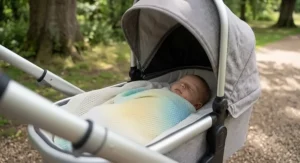
2. Silentnight Safe Nights Cellular Blanket — best budget multi-buy for new parents
Silentnight has been a household bedding name in the UK for decades, and the Safe Nights range leans on that trust rather than reinventing the cellular blanket concept. This is a traditional open-weave 100% cotton blanket sold as a two-pack, and the honest analytical take here is that the open cell construction is genuinely wide and airy, arguably more so than some premium bamboo blends, because a simpler, coarser cotton knit lets more air pass straight through it. That’s a real strength if your priority is maximum breathability for hot nights, though it does mean less insulating warmth on a cold January evening compared with a denser weave. Reviewers consistently report that the fabric holds its shape and softness across many washes, and the OEKO-TEX certified manufacturing gives a documented chemical-safety baseline rather than a vague “safe” claim. What most buyers overlook is that buying two at once, rather than one, is the actual value proposition: with SIDS-safety advice recommending you avoid folding a single blanket over (a folded blanket counts as two layers for temperature purposes), having a genuine spare on hand for wash rotation matters more than it sounds.
Pros:
- ✅ Genuinely wide-open weave for strong airflow
- ✅ OEKO-TEX certified factory production
- ✅ Two-pack means a spare during wash days
Cons:
- ❌ Less insulating than denser blends on cold nights
- ❌ Colour range is more limited than boutique brands
At around £10-£16 for the pair, this is the blanket to buy if you want proven UK-brand reliability without paying a premium markup, and it’s arguably the best value-for-breathability ratio on this list.
3. Bloomsbury Mill Organic Cotton Cellular Blanket — best organic pick on a budget
Bloomsbury Mill occupies an interesting niche: GOTS-certified organic cotton at a price that undercuts several non-organic boutique brands. GOTS certification means the cotton is grown without synthetic pesticides and processed without the harsher chemical treatments used in conventional textile finishing, which is a genuine, verifiable claim rather than a marketing flourish. The cellular construction here is on the finer side, similar in feel to MORI, and reviewers consistently describe the fabric as “thick but not flimsy” for a cellular knit, which suggests a denser thread count than some ultra-budget alternatives. Here’s what to weigh: organic certification adds real value if you’re specifically trying to reduce your baby’s exposure to processing chemicals or if pesticide residue is a personal concern, but it won’t meaningfully change how breathable the blanket feels against skin compared with a well-made conventional cotton equivalent. Available in five colourways and sold in packs of two, it functions well as a hospital-bag essential given the modest £14-£17 price point for two blankets.
Pros:
- ✅ GOTS-certified organic cotton at a competitive price
- ✅ Reviewers report a denser, less flimsy feel than expected
- ✅ Five colour options suit gifting and mixing
Cons:
- ❌ Sizing (75 x 95cm) suits newborn stage more than toddler years
- ❌ Organic certification adds cost without a breathability advantage over standard cotton
If you want to tick the organic box without paying boutique prices, Bloomsbury Mill is the most defensible choice on this list, and the twin-pack format keeps cost-per-blanket sensible.
4. aden + anais Cotton Muslin Dream Blanket — best breathable blanket for summer nights
If there’s one entry on this list built specifically to answer “best breathable blanket for summer nights”, it’s this one. Muslin is woven from cotton using a loose, open weave rather than a knitted cellular structure, and that distinction matters: muslin’s breathability comes from the looseness of the weave itself across the entire surface, not from discrete holes punched through a denser fabric. The result, based on the spec comparison with the cellular blankets above, is a noticeably lighter hand-feel and faster heat dissipation, which is exactly why muslin has been used for swaddling in hot climates for generations. At 120 x 120cm it’s considerably larger than most of the other entries here, giving genuine versatility as a play mat, pram cover or nursing cover once your baby outgrows using it as a primary sleep blanket. Reviewers consistently mention that the fabric softens dramatically with each wash, to the point where several describe it as their child’s enduring comfort object well into toddlerhood. The trade-off, and it’s a real one, is warmth: a single layer of muslin offers minimal insulation, so on cooler nights it needs pairing with a warmer sleepsuit underneath rather than relying on the blanket alone.
Pros:
- ✅ Loose weave delivers genuinely superior airflow for hot nights
- ✅ Generous 120 x 120cm size doubles as play mat and pram cover
- ✅ Gets visibly softer with every wash cycle
Cons:
- ❌ Premium pricing compared with basic cellular alternatives
- ❌ Minimal warmth on its own during colder months
Priced in the £30-£45 range depending on print, this is a “buy once, use for years” purchase rather than a like-for-like swap for a £12 cellular blanket, and reviewers’ long-term use reports back that up.
5. Snüz Cellular Blanket — best for a coordinated nursery bedding set
Snüz built its reputation on bedside cribs, and its cellular blanket is designed to slot into that ecosystem rather than stand entirely alone. Made from 100% jersey cotton, it carries an approximate 2.5 tog rating, which Snüz’s own guidance pitches as suitable for most seasons, sitting comfortably within the NHS’s mid-range tog bracket for typical UK room temperatures. What most buyers overlook when shopping cellular blankets generically is that hole size genuinely matters for safety as well as feel: Snüz specifically recommends smaller, evenly distributed cells over large gaps, since oversized holes can reduce the thermal regulation benefit and, in Snüz’s own safety guidance, potentially pose an entanglement consideration for tiny fingers. On the spec sheet that’s an easy detail to skim past, but it’s precisely the kind of practical interpretation Amazon listings rarely spell out. At 75 x 75cm the blanket is sized to match Snüz’s own crib and bassinet dimensions, so it’s the strongest pick here if you already own Snüz bedding and want a visual match rather than a mismatched patchwork nursery.
Pros:
- ✅ Smaller, evenly spaced cells balance airflow with safety
- ✅ Sized to match Snüz cribs and bassinets precisely
- ✅ Jersey cotton has a soft, stretch-friendly hand-feel
Cons:
- ❌ Dimensions are narrower than most standalone cot blankets
- ❌ Best value only if you already use Snüz bedding
Typically priced in the £14-£20 bracket, the Snüz blanket is a considered buy for coordinated nurseries rather than the cheapest way to get a breathable cot blanket in the house.

6. Dudu N Girlie Cot Bed Blanket — best size for a growing baby’s cot bed
Where several entries on this list top out around 70-95cm, the Dudu N Girlie Cot Bed Blanket comes in at a generous 100 x 150cm, specifically sized for a full cot bed rather than a newborn pram or Moses basket. That’s a genuinely useful distinction Amazon’s category pages tend to blur: a “baby blanket” sized for a pram will need replacing within months, while this one is built to still fit as your child moves from a bassinet stage into a proper cot bed around six months onward. The cellular cotton construction here is fairly standard, open enough for reasonable airflow without the finer, denser knit you’d find on MORI or Bloomsbury Mill. Reviewers consistently praise the size-to-price ratio, and several specifically mention using it well beyond the newborn stage as a everyday cot cover, which lines up with the sizing logic. Here’s what to weigh: the trade-off for that larger size at a low price point is a slightly coarser cotton feel than the premium entries, so if silky-soft-against-skin is your top priority for a newborn’s first weeks, this one’s better suited to the toddler stage of cot use than day one home from hospital.
Pros:
- ✅ Generous 100 x 150cm sizing suits a full cot bed
- ✅ Genuinely long usable lifespan versus pram-sized blankets
- ✅ Colour range covers most nursery schemes
Cons:
- ❌ Cotton feel is coarser than premium bamboo-blend options
- ❌ Less ideal for the earliest newborn weeks specifically
At roughly £10-£15, this is the pragmatic buy for parents who’d rather purchase once for the cot-bed stage than repeatedly upsize a smaller blanket.
7. The Little Green Sheep Organic Cellular Blanket — best premium pick for allergy-prone skin
The Little Green Sheep has built its whole catalogue around organic, natural nursery products, and this cellular blanket reflects that focus closely. It’s knitted, rather than woven, from 100% GOTS-certified organic cotton, and the knitted construction gives it a noticeably heavier drape and softer texture than the cheaper woven cellular blankets on this list, while still retaining the open-cell structure that defines the category. Reviewers consistently describe it as feeling like a step up from “the average cellular blanket,” specifically citing the weight and texture, and several note that it holds its quality across months of daily use rather than thinning out. Based on the spec comparison here, the trade-off for that heavier, more premium knit is a marginally lower breathability ceiling than the loosest-woven alternatives like the aden + anais muslin, though it remains comfortably within a season-spanning tog range. At 75 x 75cm it’s sized closer to Moses basket and car seat use than a full cot bed. For a baby with diagnosed skin sensitivities or a family history of eczema, the combination of organic certification and a genuinely soft knitted texture makes a reasonable case for the higher price tag.
Pros:
- ✅ Knitted organic cotton feels noticeably more premium than woven alternatives
- ✅ Strong long-term durability reported across repeated washing
- ✅ GOTS certification backs up the “organic” claim with real standards
Cons:
- ❌ 75 x 75cm size limits use once baby is in a full cot bed
- ❌ Among the more expensive picks on this list
Sitting around £18-£24, this is the “buy it for the skin, not the size” option, best suited to the newborn-to-early-months window rather than long-term cot bed use.
Benefits vs Traditional Alternatives
| Feature | Breathable Cellular/Muslin Blanket | Traditional Fleece/Fluffy Throw |
|---|---|---|
| Airflow | High — open weave lets heat escape | Low — dense pile traps heat |
| SIDS-risk considerations | Aligns with lightweight bedding advice | Higher overheating risk if overused |
| Suitable room temp range | Broad, 16-24°C+ depending on tog | Narrower, cooler rooms only |
| Best For | Everyday cot/pram use, all seasons | Occasional decorative use, supervised only |
The comparison here isn’t close once you factor in safety guidance rather than just cosiness. Fleece and fluffy throws feel lovely to touch in a shop, but their density is precisely what The Lullaby Trust and NHS guidance flags as a contributor to overheating risk when used as everyday cot bedding, since dense pile fabric doesn’t let trapped body heat escape the way an open weave does. That doesn’t make fleece unusable outright, plenty of parents use a fleece throw for supervised tummy time on the floor, but for unsupervised cot or pram sleep, the breathable options in this guide are the safer everyday default recommended by UK safer-sleep guidance.
Practical Usage Guide: Getting the Most From Your Breathable Blanket
Buying the right blanket is only half the job; using it correctly is where most of the real safety benefit comes from. On first use, always wash a new blanket before it touches your baby’s skin, most manufacturers recommend a 30-40°C machine wash, both to remove any manufacturing residue and to soften the fabric slightly ahead of first contact. When you’re first introducing any blanket into a cot, the NHS’s safer sleep advice for babies is specific: place your baby in the “feet to foot” position, with their feet touching the base of the cot, and tuck the blanket in firmly under their arms so it can’t ride up and cover their face if they wriggle in the night.
A genuinely common first-30-days mistake is folding a single blanket over for extra warmth on a cold night. It feels intuitive, but safer sleep guidance is explicit that a folded blanket counts as two layers for warmth purposes, so you can quietly double your baby’s tog level without realising it. The safer move is to add a second, separate lightweight blanket rather than folding one blanket in half. On maintenance, rotate between at least two blankets so one is always available while the other’s in the wash, tumble drying on low heat is fine for most of the cotton and bamboo-cotton blends reviewed above, though muslin in particular benefits from air-drying occasionally to preserve its texture longer. Finally, check the fabric every few months for thinning at the folds or loosening stitching around hems; a blanket that’s developing holes beyond its designed cellular structure has reached the end of its safe working life and should be retired to non-sleep use.
Real-World Scenario: Matching a Blanket to Your Situation
Picture three different households, because “best breathable baby blanket” genuinely depends on who’s asking. First, there’s a first-time parent in a Victorian terrace with a nursery that runs cold in winter and stuffy in summer thanks to single glazing; for them, a mid-tog cellular pick like MORI or Snüz, paired with layering advice below, covers both extremes without buying two entirely different wardrobes of bedding. Second, picture a family expecting their second baby in July, with a new-build flat that holds heat well into the evening; the aden + anais muslin dream blanket is the obvious answer here, since minimal insulation and maximum airflow is exactly the brief for a baby arriving into warm weather. Third, consider a budget-conscious parent furnishing a full nursery from scratch on a tight timeline before a due date; the Silentnight two-pack or Dudu N Girlie cot bed blanket deliver genuine breathability and UK-brand reliability without the premium price tags, freeing up budget for the cot itself or a proper room thermometer, arguably the single most useful nursery purchase under £15 that most new parents skip.
None of these scenarios are hypothetical extremes; they’re just different combinations of budget, home insulation and baby’s age that most parents will recognise a piece of themselves in.
How to Choose a Breathable Baby Blanket
- Check the weave, not just the label. “Breathable” on packaging isn’t regulated the way tog ratings loosely are; look at whether the fabric is a genuine open cellular knit or loose muslin weave, versus a dense fabric with a “breathable” claim printed on it but no visible structural airflow.
- Match tog to your actual room temperature, not the season on the calendar. A 2.5 tog blanket suits the NHS’s standard 16-20°C room-temperature bracket; if your nursery regularly reads warmer, a 1.0-1.5 tog option like a muslin blanket is the safer match.
- Size for the stage you’ll actually use it at. A 70 x 90cm pram-sized blanket will be outgrown within months; a 100 x 150cm cot bed blanket buys you a much longer usable window.
- Consider fabric composition for sensitive skin. Bamboo-cotton and GOTS-certified organic cotton blends consistently draw fewer irritation complaints in aggregated reviews than synthetic-blend cellular throws.
- Buy at least two of whatever you choose. Wash rotation isn’t optional with something used nightly, and having a genuine spare avoids the temptation to fold one blanket for extra warmth.
- Verify OEKO-TEX or GOTS certification where claimed. These are checkable, standardised marks rather than vague marketing language, and their presence (or absence) tells you something concrete about chemical processing.
- Read aggregated review sentiment for durability, not just initial softness. A blanket that feels lovely out of the packet but thins after ten washes isn’t the bargain its price tag suggests.
Common Mistakes When Buying a Breathable Cot Blanket
The single most common mistake, based on aggregated review patterns across the products above, is buying purely on softness-to-touch in a shop or from a product photo, without checking the actual tog rating or weave openness against your own nursery’s real temperature. A blanket can feel wonderfully soft while still being relatively dense and heat-trapping, softness and breathability are related but not identical qualities. The second common misstep is buying only one blanket, then reaching for a folded spare fleece throw on a cold night, precisely the overheating risk safer sleep guidance warns against. A third mistake worth flagging honestly: assuming a higher price automatically means better breathability. Several of the budget cellular blankets reviewed here, notably Silentnight’s genuinely wide-open weave, out-perform some premium knitted alternatives on raw airflow specifically, even if they lag on overall fabric luxury. Price buys certification, branding and finish; it doesn’t always buy more airflow.

What to Expect: Real-World Performance Through the Seasons
On paper, tog ratings look tidy and precise. In a real nursery, performance is messier and more personal. In practice, most parents using a 2.5 tog cellular cotton blanket in a room sitting around 18°C report their baby settling comfortably in a single layer, according to aggregated feedback across the reviewed products, though a baby who runs warm naturally may still need the lighter option even at that “standard” temperature. During a UK summer heatwave, when nursery temperatures can climb well past 24°C despite best efforts with blackout blinds and fans, even a lightweight cellular blanket can feel like too much, and this is precisely when a muslin option like the aden + anais dream blanket, or simply no blanket with a light vest, earns its keep. What the spec sheet won’t tell you, but reviewers note repeatedly, is that a baby’s comfort signal is far more reliable than any chart: feeling the chest or the back of the neck, not the hands or feet, remains the practical check NHS guidance recommends over relying on tog numbers alone.
Breathable Blankets vs Baby Sleeping Bags
It’s worth addressing this directly, because the two aren’t interchangeable and the choice matters for safety as much as convenience. A baby sleeping bag is a wearable, zipped garment that a baby cannot wriggle out from under, which the NHS notes helps reduce SIDS risk specifically by preventing loose bedding covering the face. A loose blanket, breathable or otherwise, carries some residual displacement risk if not tucked in correctly, which is precisely why the “feet to foot” positioning and firm tucking-in described earlier in this guide matter so much when you do choose a blanket over a sleeping bag. In practice, many UK parents use both across a baby’s first year: a sleeping bag for overnight sleep from a young age, once baby has grown past swaddling, and a breathable blanket for supervised daytime naps, pram outings, or layering on top of a sleeping bag on a genuinely cold night. Neither option is inherently “better” in isolation; the right choice depends on your baby’s age, mobility, and how consistently you can check on tucked-in bedding through the night.
Long-Term Cost & Maintenance
Thinking in cost-per-month rather than upfront price changes the picture meaningfully. A £12 two-pack of cellular blankets, replaced roughly once a year as fabric thins with heavy washing, works out to roughly £1 a month across a baby’s first year if you’re rotating two at a time. A £40 muslin dream blanket, given the aggregated review pattern of these lasting well beyond infancy into toddler and even childhood comfort-object use, can work out considerably cheaper per year of actual service, provided you’re genuinely getting multiple years of use rather than retiring it early. The honest total-cost-of-ownership take is that neither budget nor premium is objectively “better value” in isolation; it depends on how long the specific fabric in question realistically lasts in your household, how many wash cycles a week it faces, and whether you’ll actually keep using it once your baby’s needs move on from swaddling to cot-bed independence.
Features That Actually Matter (And Those That Don’t)
Genuinely important: the openness of the weave or knit, the tog rating relative to your real nursery temperature, and verifiable certifications like OEKO-TEX or GOTS. These are the features with direct, checkable safety and comfort implications. Largely marketing noise: elaborate pattern licensing, “luxury gift box” packaging, and vague claims like “temperature-regulating technology” without a stated tog figure or fabric composition to back it up. A cellular blanket doesn’t need branded “cooling technology,” the cellular structure itself is the technology, and it’s been doing this job since well before marketing copywriters got involved. If a listing leads with lifestyle photography and light on fabric specifics, that’s worth a second look before you buy.
Safety, Regulations and Compliance Guide
UK nursery bedding sits within a genuinely well-regulated space, even if blankets themselves attract less specific legislation than cots or mattresses. According to government guidance for early years providers, sleep spaces should contain only a firm, flat, waterproof mattress and lightweight bedding, firmly tucked in below the child’s shoulders, explicitly ruling out pillows, cot bumpers, and loose extra blankets, guidance that applies equally at home. The Lullaby Trust’s official room temperature advice sets the target nursery range at 16-20°C, monitored with a proper room thermometer rather than guesswork, since the risk of SIDS is measurably higher in babies who get too hot. Blankets themselves aren’t required to carry a specific British Standard mark the way cots and mattresses must under BS EN 716-1, but reputable brands voluntarily seek OEKO-TEX Standard 100 certification, which independently tests for over a thousand regulated and unregulated substances that could be harmful, giving you a genuine, checkable safety signal beyond the packaging copy.
Buyer’s Decision Framework
If your nursery reliably sits at 16-20°C, choose a mid-tog cellular cotton blanket like Silentnight or Bloomsbury Mill, because that’s precisely the temperature band standard cellular tog ratings are designed around. If your baby has diagnosed eczema or highly sensitive skin, choose a bamboo-cotton or GOTS-organic knitted option like MORI or The Little Green Sheep, because aggregated review sentiment consistently favours these fabrics for reduced irritation. If you’re expecting a summer baby or live somewhere that regularly runs warm, choose the aden + anais muslin, because its loose weave and lower tog rating are built precisely for that scenario. If budget and longevity matter more than boutique branding, choose the Dudu N Girlie cot bed blanket for its generous, long-lasting sizing. There’s no single universal winner here, only the option that matches your specific room, budget and baby.
✨ Don’t Miss These Exclusive Deals!
🔍 Take your nursery shopping to the next level with these carefully selected breathable blankets. Click on any highlighted item to check current pricing and availability. These picks will help you create a safer, comfier sleep space your baby (and you) will love!
Breathable Cot Blanket for Different Audiences
New parents often over-buy accessories in the run-up to a due date, and blankets are one area where less genuinely can be more. Two well-chosen breathable cellular blankets, in rotation, cover most of the first six months more sensibly than a drawer full of gifted throws in mixed materials. For parents of twins or multiples, who according to NHS guidance carry a somewhat higher baseline SIDS risk factor tied to prematurity and low birth weight, sticking rigorously to lightweight, breathable bedding and correct room temperature monitoring matters even more than usual, making the budget multi-buy cellular options genuinely practical for doubling up on identical, tested bedding. For grandparents or occasional carers setting up a second sleep space, a simple, widely available option like Silentnight’s Safe Nights range, sold through a major recognisable UK retailer, reduces the chance of buying something that doesn’t meet the same safety expectations as the main household’s usual choice.

FAQ
❓ What tog blanket is best for a UK summer?
❓ Is a cellular blanket safer than a normal blanket for a newborn?
❓ How many baby blankets do I actually need?
❓ Can a breathable blanket replace a baby sleeping bag?
❓ What ideal nursery room temperature reduces SIDS risk?
Conclusion
If you’ve read this far, you’ve probably realised there’s no single “best” breathable baby blanket, only the right blanket for your specific nursery temperature, your baby’s skin, and how much you want to spend across the months you’ll actually use it. What matters more than any individual product choice is the underlying principle behind all seven picks here: genuine airflow through an open weave, a tog rating that actually matches your room, and correct, firm tucking-in every single time your baby sleeps. Get those three things right and you’re following the same evidence-based guidance that’s helped bring UK SIDS rates down substantially over recent decades. Whichever blanket ends up in your nursery drawer, keep a room thermometer close by, rotate at least two blankets for washing, and trust the chest-and-neck check over any chart when you’re deciding whether your baby’s too warm.
Recommended for You
- Cotton Cellular Blanket: 7 Best Picks for Safer Baby Sleep in 2026
- Cellular Blanket vs Muslin Blanket 2026: 7 Safer Picks
- 7 Best Pram Blanket for Winter 2026: Honest Buying Guide
Disclaimer: This article contains affiliate links. As an Amazon Associate, I earn from qualifying purchases. If you purchase products through these links, we may earn a small commission at no additional cost to you.
✨ Found this helpful? Share it with your friends! 💬🤗
